Fremont County School District # 1 board amends concealed‑carry rule, keeps district discretion to fund training
August 02, 2025 | Fremont County School District # 1, School Districts, Wyoming
This article was created by AI summarizing key points discussed. AI makes mistakes, so for full details and context, please refer to the video of the full meeting. Please report any errors so we can fix them. Report an error »
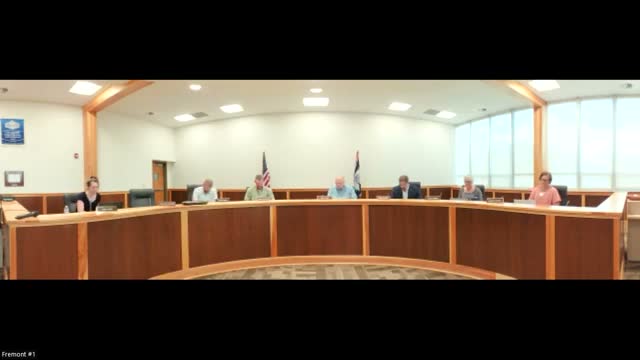
Fremont County School District # 1’s Board of Trustees voted to amend the district’s CKA concealed‑carry rule at a special meeting, approving language that strips provisions deemed inconsistent with state law while retaining specified training requirements and allowing the district to decide whether to fund that training.
Chair of the board explained the choice presented to trustees: amend CKA to remove sections no longer permitted under state law or take no action and let the rule lapse. “If we vote no tonight and we don't pass these rules, so this is a rules change, then that essentially kills CKA entirely,” the Chair said, cautioning that repeal would leave only the state’s CCW baseline in place.
The board adopted a motion to amend the rule that, as approved, eliminates sections not allowable under state statute, requires employees with a valid concealed‑carry permit who choose to carry in district facilities to meet specified training requirements, and permits the district at its discretion to provide funding for that training. The Chair moved the language and the board approved the motion by voice vote; the Chair declared the motion carried.
Trustees and staff debated legal exposure both for acting and for failing to act. One trustee urged a “wait and see” approach so other districts bear early litigation risk, while others argued that adopting rules that require robust training would make staff more prepared and could reduce harm. Staff counsel summarized the legal uncertainty: the legislature left boards some discretion and both liability from permitting and liability from imposing rules are possible.
The amended rule retains a training framework that staff described in detail: an initial 16 hours of scenario‑based training and recurring requirements cited in the draft that include scenario exercises and live‑fire components. Staff said local law enforcement and regional response agencies are routinely invited to scenario trainings. “Every time there’s a scenario‑based training in our school district, the Lander PD is invited. The county sheriffs are invited and other personnel come too,” a staff member said.
Public commenters urged care in the board’s approach. Alyssa Duncan told trustees that armed staff or volunteers can be perceived as exercising police‑like authority and urged comprehensive training to reduce the risk of excessive‑force and civil‑rights claims. “Training is absolutely essential,” Duncan said. Sarah Riley criticized the meeting notice, saying the public was not warned that the policy could disappear if the board did not act and suggested that omission risked open‑meetings concerns: “You did not tell anybody that the policy would disappear if you didn't vote on it tonight,” she said.
Board members repeatedly framed their decision as a balance between safety, training costs, and legal risk. Several trustees said they favor higher training standards but acknowledged funding and equity concerns if the district pays for training for some employees but not others. Staff noted the legislature established a fund districts can apply to for training reimbursement and that it was not yet clear how much money would be available or how the program would evolve.
As a next step staff told trustees that ancillary policies tied to the prior CKA—such as psychological‑testing provisions and firearm application paperwork—will be presented for deletion at the regular August meeting. The board closed the special meeting with standard reminders about upcoming events.
The board’s action amends CKA to align district practice with state law while keeping a district‑level training requirement and discretionary funding option; details and cleanup of related rules will return to the regular meeting for final edits.
Chair of the board explained the choice presented to trustees: amend CKA to remove sections no longer permitted under state law or take no action and let the rule lapse. “If we vote no tonight and we don't pass these rules, so this is a rules change, then that essentially kills CKA entirely,” the Chair said, cautioning that repeal would leave only the state’s CCW baseline in place.
The board adopted a motion to amend the rule that, as approved, eliminates sections not allowable under state statute, requires employees with a valid concealed‑carry permit who choose to carry in district facilities to meet specified training requirements, and permits the district at its discretion to provide funding for that training. The Chair moved the language and the board approved the motion by voice vote; the Chair declared the motion carried.
Trustees and staff debated legal exposure both for acting and for failing to act. One trustee urged a “wait and see” approach so other districts bear early litigation risk, while others argued that adopting rules that require robust training would make staff more prepared and could reduce harm. Staff counsel summarized the legal uncertainty: the legislature left boards some discretion and both liability from permitting and liability from imposing rules are possible.
The amended rule retains a training framework that staff described in detail: an initial 16 hours of scenario‑based training and recurring requirements cited in the draft that include scenario exercises and live‑fire components. Staff said local law enforcement and regional response agencies are routinely invited to scenario trainings. “Every time there’s a scenario‑based training in our school district, the Lander PD is invited. The county sheriffs are invited and other personnel come too,” a staff member said.
Public commenters urged care in the board’s approach. Alyssa Duncan told trustees that armed staff or volunteers can be perceived as exercising police‑like authority and urged comprehensive training to reduce the risk of excessive‑force and civil‑rights claims. “Training is absolutely essential,” Duncan said. Sarah Riley criticized the meeting notice, saying the public was not warned that the policy could disappear if the board did not act and suggested that omission risked open‑meetings concerns: “You did not tell anybody that the policy would disappear if you didn't vote on it tonight,” she said.
Board members repeatedly framed their decision as a balance between safety, training costs, and legal risk. Several trustees said they favor higher training standards but acknowledged funding and equity concerns if the district pays for training for some employees but not others. Staff noted the legislature established a fund districts can apply to for training reimbursement and that it was not yet clear how much money would be available or how the program would evolve.
As a next step staff told trustees that ancillary policies tied to the prior CKA—such as psychological‑testing provisions and firearm application paperwork—will be presented for deletion at the regular August meeting. The board closed the special meeting with standard reminders about upcoming events.
The board’s action amends CKA to align district practice with state law while keeping a district‑level training requirement and discretionary funding option; details and cleanup of related rules will return to the regular meeting for final edits.
View the Full Meeting & All Its Details
This article offers just a summary. Unlock complete video, transcripts, and insights as a Founder Member.
✓
Watch full, unedited meeting videos
✓
Search every word spoken in unlimited transcripts
✓
AI summaries & real-time alerts (all government levels)
✓
Permanent access to expanding government content
30-day money-back guarantee
