Mary Anne Smith, McLaughlin studio art CTE teacher, urges adding business and tech classes to better prepare students
February 15, 2025 | Milton-Freewater Unified SD 7, School Districts, Oregon
This article was created by AI summarizing key points discussed. AI makes mistakes, so for full details and context, please refer to the video of the full meeting. Please report any errors so we can fix them. Report an error »
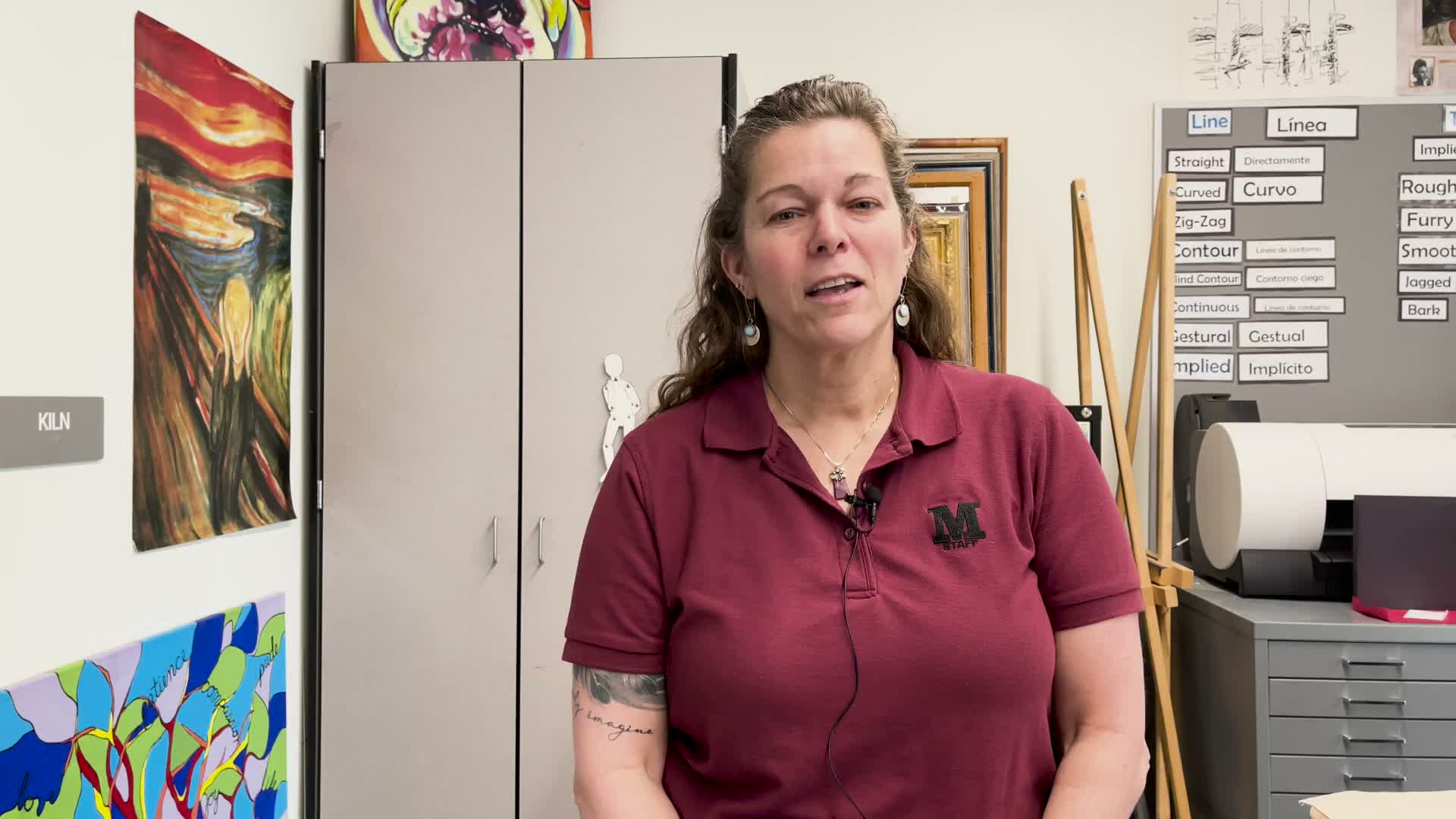
Mary Anne Smith, the studio art Career and Technical Education teacher at McLaughlin High School, told the meeting that she added Introduction to Business and Tech 1 to the school's studio art pathway to help students transition to postsecondary programs and careers.
"CTE, it stands for Career and Technical Education, and we have a number of CTE courses or pathways here at McLaughlin High School," Smith said, describing the pathway she oversees. She said the studio art pathway "falls under the arts and communication umbrella according to the state of Oregon." Smith listed the courses students can take in her pathway: Introduction to Art, Tech 1 (taught by the tech teachers) and Introduction to Business, which she said she brought into the pathway.
Smith said she introduced the business and technical courses to make art students "more well rounded." She argued that taking Introduction to Business can ease a student's transition to entrepreneurship after high school, and that Tech 1 can help students move into digital graphics or technical art programs. "If they take the intro to business class... it makes it easier," she said.
On outcomes, Smith asserted that "students who complete a pathway here at McLaughlin High School, they found that they are more likely to graduate high school. They are more likely to enter into a 2 year or a, a technical school. They're more likely to get into a career directly after high school and not only get into a career, but also get into a career that's a little more high paying than an average, high school diploma could earn them." She did not provide specific percentages, studies, or source data to support these claims.
Smith did not state any formal motion, request a board action, or present a specific implementation plan during her remarks. The testimony focused on explaining the pathway structure, the rationale for including business and tech classes, and the asserted benefits for students.
No vote or formal decision was recorded in the transcript.
"CTE, it stands for Career and Technical Education, and we have a number of CTE courses or pathways here at McLaughlin High School," Smith said, describing the pathway she oversees. She said the studio art pathway "falls under the arts and communication umbrella according to the state of Oregon." Smith listed the courses students can take in her pathway: Introduction to Art, Tech 1 (taught by the tech teachers) and Introduction to Business, which she said she brought into the pathway.
Smith said she introduced the business and technical courses to make art students "more well rounded." She argued that taking Introduction to Business can ease a student's transition to entrepreneurship after high school, and that Tech 1 can help students move into digital graphics or technical art programs. "If they take the intro to business class... it makes it easier," she said.
On outcomes, Smith asserted that "students who complete a pathway here at McLaughlin High School, they found that they are more likely to graduate high school. They are more likely to enter into a 2 year or a, a technical school. They're more likely to get into a career directly after high school and not only get into a career, but also get into a career that's a little more high paying than an average, high school diploma could earn them." She did not provide specific percentages, studies, or source data to support these claims.
Smith did not state any formal motion, request a board action, or present a specific implementation plan during her remarks. The testimony focused on explaining the pathway structure, the rationale for including business and tech classes, and the asserted benefits for students.
No vote or formal decision was recorded in the transcript.
View the Full Meeting & All Its Details
This article offers just a summary. Unlock complete video, transcripts, and insights as a Founder Member.
✓
Watch full, unedited meeting videos
✓
Search every word spoken in unlimited transcripts
✓
AI summaries & real-time alerts (all government levels)
✓
Permanent access to expanding government content
30-day money-back guarantee
