Port Orford‑Langlois SD 2CJ weighs bond options, prioritizes water and sewer repairs over new construction
February 23, 2025 | Port Orford-Langlois SD 2CJ, School Districts, Oregon
This article was created by AI summarizing key points discussed. AI makes mistakes, so for full details and context, please refer to the video of the full meeting. Please report any errors so we can fix them. Report an error »
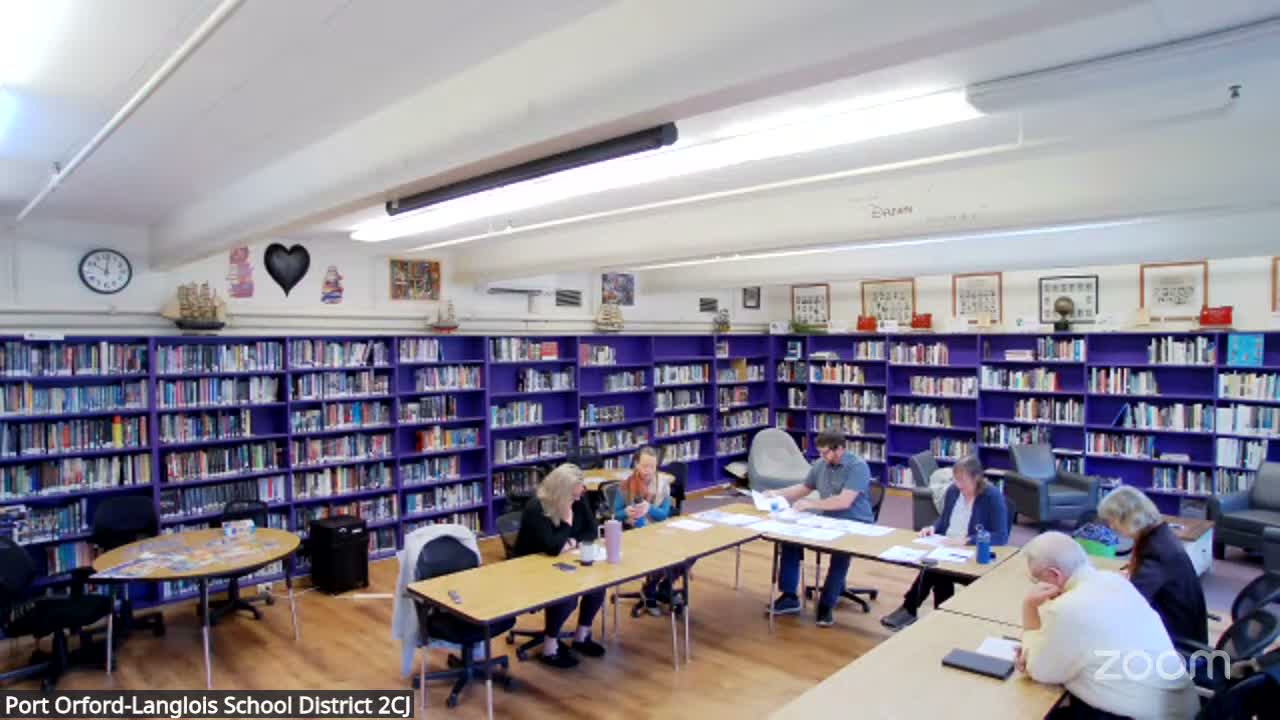
The Port Orford‑Langlois SD 2CJ board and district staff used a weekend workshop to review a long‑range planning report, discuss bond financing options and prioritize facility projects, with participants identifying on‑site water and sewer upgrades as the most urgent items.
Presenter (the district lead at the workshop) told the group the long‑range planning effort included facility assessments paid for by two $40,000 grants and that the district could be eligible for the Oregon School Capital Improvement Matching Grant (AWSM), which now offers a larger match — “very high potential that we would also have an extra $6,000,000 over and above what we just bond ourselves because of that,” the Presenter said. The audience reviewed Piper Sandler levy examples showing a $1 per $1,000 levy could generate roughly $8.8 million in project funds.
Why it matters: district officials and community volunteers framed the conversation as a balance between keeping schools safe and usable and offering visible, modern facilities that attract and retain families. Several participants warned that passing a bond for primarily aesthetic projects without first addressing basic infrastructure risks the public’s trust and the district’s ability to operate.
Board members and staff spent substantial time on a facilities menu and maps that outline options for both campuses. They described several high‑cost scenarios in the consultant proposals (including multi‑tens of millions for comprehensive rebuild options) but said many of those options are “Cadillac” plans the district may not be able to afford. Instead workshop participants repeatedly emphasized maintenance and code‑critical items, especially the water treatment and sanitary system at the Driftwood campus, which multiple speakers called the gating constraint for any campus expansion.
A staff member summarized the immediate utility needs: the transcript discussion estimated pump replacements and upgrades to water distribution and sanitary piping that together were discussed as on the order of a few million dollars (participants discussed a combined figure described in the meeting as roughly $2.7 million for a set of water/sewer upgrades). That presenter warned that without fixing water and sewage systems, other construction or grade‑reconfiguration plans cannot proceed.
Funding and grants: presenters and participants discussed aligning a bond ask with grant opportunities to maximize buying power. In addition to the AWSM match, the district plans to pursue CTE revitalization grants (commonly cited at about $250,000), COPS security grants and energy‑efficiency/LED retrofit funding that could reduce operating costs and stretch bond proceeds.
Community engagement and timing: the district posted dates for community input meetings (including evening sessions with dinner to improve turnout) and will distribute a newsletter and materials via Remind, the district website and local businesses. Multiple workshop attendees said November would be too soon to run a successful bond campaign; the Presenter said the administration is leaning away from the immediate November window and will likely target a later election (options discussed included a spring/May cycle or a 2026 date) to allow for polling, targeted outreach and grant coordination.
No formal votes or bond parameters were adopted at the workshop. Instead the board asked the superintendent/administration to refine project prioritization and communications plans, return to the board with a clearer costed priority list and run community sessions before presenting a final bond proposal.
Next steps: the Presenter said they will distribute notes and the long‑range materials to board members, hold public input meetings at multiple locations, and revisit timelines and levy‑rate modeling after additional community feedback and updated price information are available.
Presenter (the district lead at the workshop) told the group the long‑range planning effort included facility assessments paid for by two $40,000 grants and that the district could be eligible for the Oregon School Capital Improvement Matching Grant (AWSM), which now offers a larger match — “very high potential that we would also have an extra $6,000,000 over and above what we just bond ourselves because of that,” the Presenter said. The audience reviewed Piper Sandler levy examples showing a $1 per $1,000 levy could generate roughly $8.8 million in project funds.
Why it matters: district officials and community volunteers framed the conversation as a balance between keeping schools safe and usable and offering visible, modern facilities that attract and retain families. Several participants warned that passing a bond for primarily aesthetic projects without first addressing basic infrastructure risks the public’s trust and the district’s ability to operate.
Board members and staff spent substantial time on a facilities menu and maps that outline options for both campuses. They described several high‑cost scenarios in the consultant proposals (including multi‑tens of millions for comprehensive rebuild options) but said many of those options are “Cadillac” plans the district may not be able to afford. Instead workshop participants repeatedly emphasized maintenance and code‑critical items, especially the water treatment and sanitary system at the Driftwood campus, which multiple speakers called the gating constraint for any campus expansion.
A staff member summarized the immediate utility needs: the transcript discussion estimated pump replacements and upgrades to water distribution and sanitary piping that together were discussed as on the order of a few million dollars (participants discussed a combined figure described in the meeting as roughly $2.7 million for a set of water/sewer upgrades). That presenter warned that without fixing water and sewage systems, other construction or grade‑reconfiguration plans cannot proceed.
Funding and grants: presenters and participants discussed aligning a bond ask with grant opportunities to maximize buying power. In addition to the AWSM match, the district plans to pursue CTE revitalization grants (commonly cited at about $250,000), COPS security grants and energy‑efficiency/LED retrofit funding that could reduce operating costs and stretch bond proceeds.
Community engagement and timing: the district posted dates for community input meetings (including evening sessions with dinner to improve turnout) and will distribute a newsletter and materials via Remind, the district website and local businesses. Multiple workshop attendees said November would be too soon to run a successful bond campaign; the Presenter said the administration is leaning away from the immediate November window and will likely target a later election (options discussed included a spring/May cycle or a 2026 date) to allow for polling, targeted outreach and grant coordination.
No formal votes or bond parameters were adopted at the workshop. Instead the board asked the superintendent/administration to refine project prioritization and communications plans, return to the board with a clearer costed priority list and run community sessions before presenting a final bond proposal.
Next steps: the Presenter said they will distribute notes and the long‑range materials to board members, hold public input meetings at multiple locations, and revisit timelines and levy‑rate modeling after additional community feedback and updated price information are available.
View the Full Meeting & All Its Details
This article offers just a summary. Unlock complete video, transcripts, and insights as a Founder Member.
✓
Watch full, unedited meeting videos
✓
Search every word spoken in unlimited transcripts
✓
AI summaries & real-time alerts (all government levels)
✓
Permanent access to expanding government content
30-day money-back guarantee
