Bermudian Springs reports $106,414 cafeteria deficit; general fund ends ~ $15.62M
November 11, 2024 | Bermudian Springs SD, School Districts, Pennsylvania
This article was created by AI summarizing key points discussed. AI makes mistakes, so for full details and context, please refer to the video of the full meeting. Please report any errors so we can fix them. Report an error »
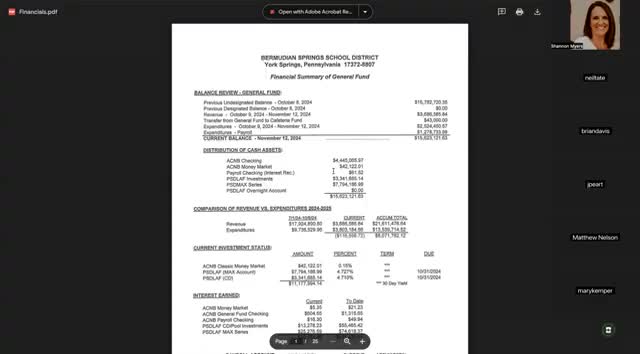
Justin, the district finance presenter, summarized the monthly financial report: the general fund began at $15,782,720.35, had revenue of $3,686,585.84, expenditures including payroll left an ending balance of $15,623,121.63. He reported the cafeteria fund began the month at negative $97,697.82, received a $43,000 transfer from the general fund, had payroll expenditures and other costs and is now at negative $106,414.15.
Justin said the primary drivers of the cafeteria deficit are increased food costs and that the month included a three-payroll month, and that federal/state reimbursements (under CEP — Community Eligibility Provision) are trending up as more students buy reimbursable meals. "That continues to grow, which is a good sign that more students are buying," he said, while also warning food costs remain elevated.
Why it matters: the cafeteria shortfall requires an operating transfer from the general fund and underscores the sensitivity of food-service budgets to commodity price increases and payroll timing. Board members asked follow-up questions about long-term mitigation strategies including menu pricing, participation incentives, and whether grant or state reimbursement adjustments could narrow the deficit.
Next steps: staff will continue to monitor the trend and answer specific board questions on revenue and expenditures; the district also discussed potential budget adjustments should multi‑year capital or operational commitments (like ACTI participation) proceed.
Justin said the primary drivers of the cafeteria deficit are increased food costs and that the month included a three-payroll month, and that federal/state reimbursements (under CEP — Community Eligibility Provision) are trending up as more students buy reimbursable meals. "That continues to grow, which is a good sign that more students are buying," he said, while also warning food costs remain elevated.
Why it matters: the cafeteria shortfall requires an operating transfer from the general fund and underscores the sensitivity of food-service budgets to commodity price increases and payroll timing. Board members asked follow-up questions about long-term mitigation strategies including menu pricing, participation incentives, and whether grant or state reimbursement adjustments could narrow the deficit.
Next steps: staff will continue to monitor the trend and answer specific board questions on revenue and expenditures; the district also discussed potential budget adjustments should multi‑year capital or operational commitments (like ACTI participation) proceed.
View the Full Meeting & All Its Details
This article offers just a summary. Unlock complete video, transcripts, and insights as a Founder Member.
✓
Watch full, unedited meeting videos
✓
Search every word spoken in unlimited transcripts
✓
AI summaries & real-time alerts (all government levels)
✓
Permanent access to expanding government content
30-day money-back guarantee
