Subcommittee orients to Errors Bill review, divides sections and schedules work session
February 27, 2026 | 2026 Legislature ME, Maine
This article was created by AI summarizing key points discussed. AI makes mistakes, so for full details and context, please refer to the video of the full meeting. Please report any errors so we can fix them. Report an error »
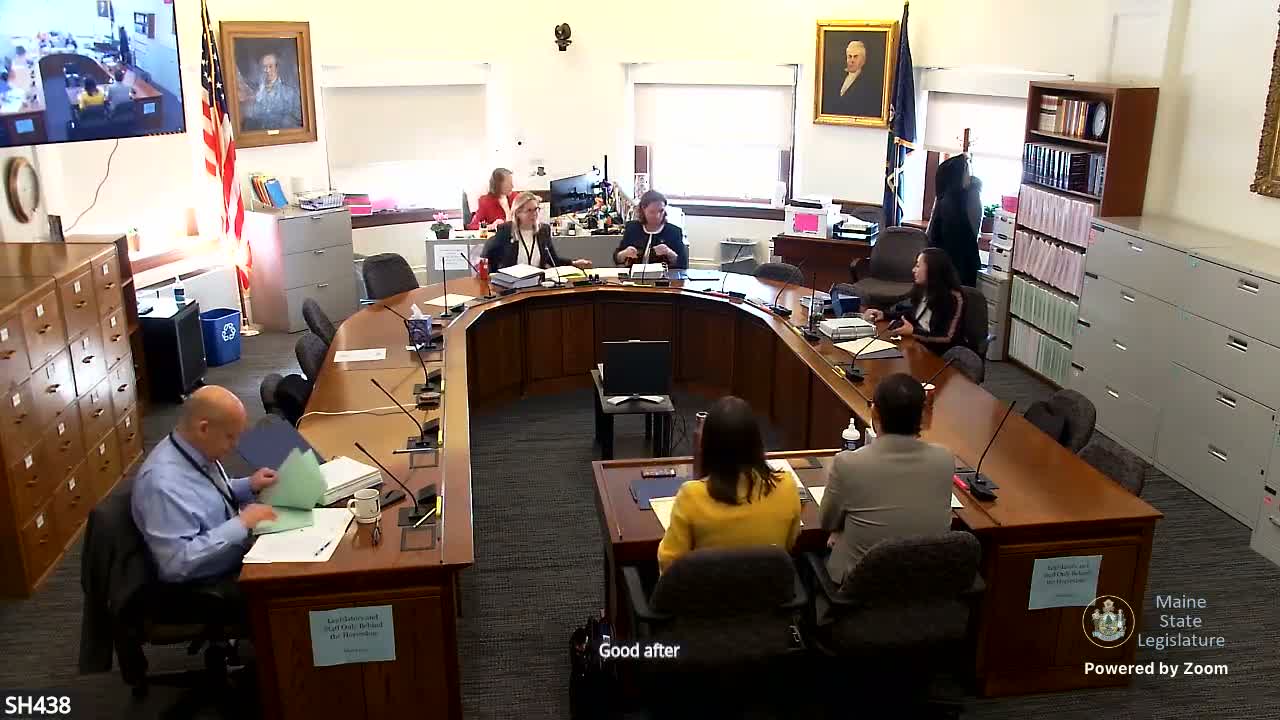
The joint Errors Bill Subcommittee of the Legislature's Joint Standing Committee on the Judiciary met for an orientation to the Errors Bill review process and assigned sections of the bill to subcommittee members, staff told the panel (date and location not specified in the transcript).
Staff directed members to a blue binder containing the bill text and supporting materials and to a green spreadsheet that will serve as the master review sheet. A staff member said the binder lists the bill section, the statute being amended, a short context summary, the type of correction (for example, cross-reference or technical punctuation), and supporting materials. "This bill is not intended to be a substantive bill. It is simply a technical fixed bill," the staff member said.
Representative Ellie Sato, who represents House District 109 in Gorham, cautioned that even small edits can matter: "As we know from law court cases in the past, punctuation can be extremely important and change millions of dollars of people's revenue," she said. Staff walked members through how the chart flags items as technical or substantive, indicates when another bill addresses the same statute (marked as a "hold"), and shows staff-suggested amendments.
House Chair Amy (first name only in the transcript), who represents House District 111, distributed review assignments: items A1–A13 to Representative Lee; A14–A27 to Representative Ellie Sato; A28–A40 to Representative David Sinclair; A41–A54 to Representative Henderson (Rachel Henderson was named in discussion); and A55 through the end of the supplements (S15) to Senator Talbot Ross. Chairs will review all sections so each item receives multiple sets of eyes, staff said.
Members asked how to handle "holds" when another bill may resolve the same statutory language. Staff gave practical examples citing LD 2001 and LD 2110 and advised members to make preliminary recommendations and continue monitoring the status of related bills. The transcript records staff telling members to mark an item as substantive and refer it to the jurisdictional committee if they conclude it is inappropriate for the Errors Bill vehicle.
The subcommittee scheduled a work session for next Friday (described in the transcript as "a week from now"), and Senator Anne Carney called for adjournment; the meeting ended on a voice vote with no roll-call recorded in the transcript.
What happens next: members will review their assigned sections using the binder and green chart, submit preliminary recommendations to the subcommittee, and reconvene at the scheduled work session to consider staff-suggested amendments, holds, and any items flagged as substantive.
Staff directed members to a blue binder containing the bill text and supporting materials and to a green spreadsheet that will serve as the master review sheet. A staff member said the binder lists the bill section, the statute being amended, a short context summary, the type of correction (for example, cross-reference or technical punctuation), and supporting materials. "This bill is not intended to be a substantive bill. It is simply a technical fixed bill," the staff member said.
Representative Ellie Sato, who represents House District 109 in Gorham, cautioned that even small edits can matter: "As we know from law court cases in the past, punctuation can be extremely important and change millions of dollars of people's revenue," she said. Staff walked members through how the chart flags items as technical or substantive, indicates when another bill addresses the same statute (marked as a "hold"), and shows staff-suggested amendments.
House Chair Amy (first name only in the transcript), who represents House District 111, distributed review assignments: items A1–A13 to Representative Lee; A14–A27 to Representative Ellie Sato; A28–A40 to Representative David Sinclair; A41–A54 to Representative Henderson (Rachel Henderson was named in discussion); and A55 through the end of the supplements (S15) to Senator Talbot Ross. Chairs will review all sections so each item receives multiple sets of eyes, staff said.
Members asked how to handle "holds" when another bill may resolve the same statutory language. Staff gave practical examples citing LD 2001 and LD 2110 and advised members to make preliminary recommendations and continue monitoring the status of related bills. The transcript records staff telling members to mark an item as substantive and refer it to the jurisdictional committee if they conclude it is inappropriate for the Errors Bill vehicle.
The subcommittee scheduled a work session for next Friday (described in the transcript as "a week from now"), and Senator Anne Carney called for adjournment; the meeting ended on a voice vote with no roll-call recorded in the transcript.
What happens next: members will review their assigned sections using the binder and green chart, submit preliminary recommendations to the subcommittee, and reconvene at the scheduled work session to consider staff-suggested amendments, holds, and any items flagged as substantive.
View the Full Meeting & All Its Details
This article offers just a summary. Unlock complete video, transcripts, and insights as a Founder Member.
✓
Watch full, unedited meeting videos
✓
Search every word spoken in unlimited transcripts
✓
AI summaries & real-time alerts (all government levels)
✓
Permanent access to expanding government content
30-day money-back guarantee
