Panel approves $1 phone-fee proposal to fund peace officers' annuity and benefit fund
February 24, 2026 | Retirement, SENATE, Committees, Legislative, Georgia
This article was created by AI summarizing key points discussed. AI makes mistakes, so for full details and context, please refer to the video of the full meeting. Please report any errors so we can fix them. Report an error »
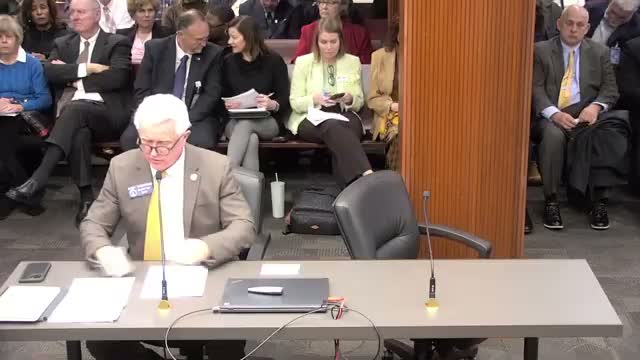
The Senate Committee on Retirement approved a substitute for SB285 (LC560625S), which would add a public-safety support surcharge to telecommunication devices and direct proceeds to the Peace Officers' Annuity and Benefit Fund (POAB).
Sen. Robertson, the sponsor, said the fee would be a simple, neutral approach to provide a sustainable revenue stream for a fund that otherwise relies heavily on member contributions and investment returns. He described the charge as a fee, not a tax, and said placing it at the point of service simplifies collection and avoids additional state processing costs.
Opponents raised distributional concerns. Sen. McLaren and other committee members supported the fund’s goal but argued the state appropriations process — which uses diversified revenue sources and can be more progressive — would be a fairer way to fund the benefit. Members also expressed affordability concerns for low-income or lifeline phone customers and asked whether exemptions were preserved; one committee member observed lifeline exemptions had been in earlier drafts.
Rhonda Chatham, representing rural telephone and broadband providers, testified she and her members support the proposal because the fee is neutral across technologies, preserves rural infrastructure by funding first responders, and reduces the risk of customer loss that could arise from uneven fee structures.
Sen. Goodman moved to do pass SB285 (LC560625S); a second was given and the committee approved the measure by voice/affirmation.
The bill now moves forward; the committee did not record a roll-call tally during the affirmation vote. Further legislative steps and any final exemption language will be determined in subsequent drafting and committee action.
Sen. Robertson, the sponsor, said the fee would be a simple, neutral approach to provide a sustainable revenue stream for a fund that otherwise relies heavily on member contributions and investment returns. He described the charge as a fee, not a tax, and said placing it at the point of service simplifies collection and avoids additional state processing costs.
Opponents raised distributional concerns. Sen. McLaren and other committee members supported the fund’s goal but argued the state appropriations process — which uses diversified revenue sources and can be more progressive — would be a fairer way to fund the benefit. Members also expressed affordability concerns for low-income or lifeline phone customers and asked whether exemptions were preserved; one committee member observed lifeline exemptions had been in earlier drafts.
Rhonda Chatham, representing rural telephone and broadband providers, testified she and her members support the proposal because the fee is neutral across technologies, preserves rural infrastructure by funding first responders, and reduces the risk of customer loss that could arise from uneven fee structures.
Sen. Goodman moved to do pass SB285 (LC560625S); a second was given and the committee approved the measure by voice/affirmation.
The bill now moves forward; the committee did not record a roll-call tally during the affirmation vote. Further legislative steps and any final exemption language will be determined in subsequent drafting and committee action.
View the Full Meeting & All Its Details
This article offers just a summary. Unlock complete video, transcripts, and insights as a Founder Member.
✓
Watch full, unedited meeting videos
✓
Search every word spoken in unlimited transcripts
✓
AI summaries & real-time alerts (all government levels)
✓
Permanent access to expanding government content
30-day money-back guarantee
