Committee advances bill to allow 15,000‑acre planned developments with 60% conservation set‑aside amid local pushback
February 26, 2026 | 2026 Legislature FL, Florida
This article was created by AI summarizing key points discussed. AI makes mistakes, so for full details and context, please refer to the video of the full meeting. Please report any errors so we can fix them. Report an error »
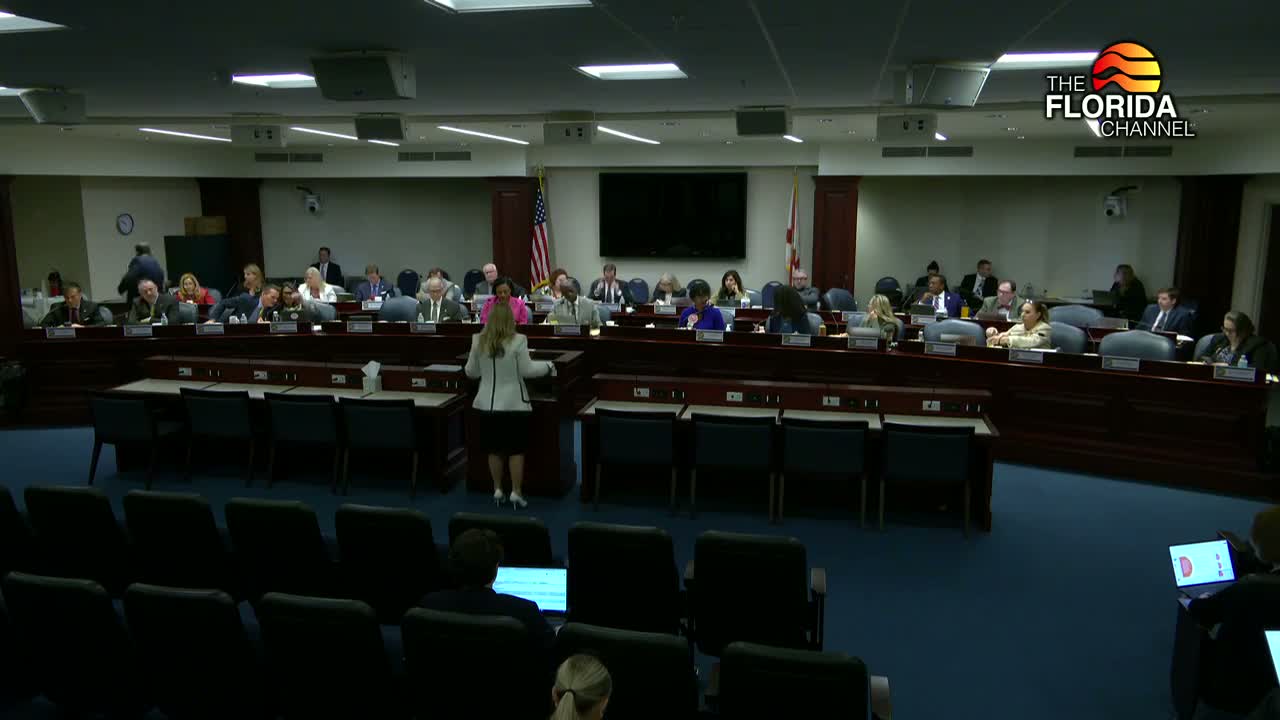
Representative Mello presented CS/CS for HB 299 and a large amendment that raised the minimum project size (amendment: 15,000 contiguous acres) and preserved the bill’s central aim: a framework to allow very large planned developments that set aside substantial conservation areas and plan for mixed‑use, walkable neighborhoods. "Imagine a community where growth and conservation work together, not against each other," Mello said in closing (Representative Mello).
The amendment requires a 60% permanent conservation set‑aside for qualifying projects, excludes certain land uses from the reserve (solar fields, golf courses, data centers) and adds procedural steps for local government participation and a review process. Supporters — including some county planning veterans and members who had participated in area‑wide planning — praised the structure as a tool for long‑range planning and conservation, with Representative Gentry calling 60% a "bargain" relative to typical outcomes (Representative Gentry).
Opponents — including residents, county officials, and conservation advocates — warned of preemption of local land‑use control and infrastructure shortfalls. Sarah Strohminger (St. Johns County) told the committee that her community lacked roads and sewer capacity for large greenfield projects and opposed the presumption of compliance with local comprehensive plans (Sarah Strohminger). Jeff Fitzgerald and other witnesses called the bill a vehicle for large corporate land acquisitions and urged more local input and demonstration of infrastructure need.
Amendments were adopted to increase local engagement and clarify reserve rules; the committee reported the bill favorably (21–5). The record shows persistent disagreement over the balance between private property rights and local home‑rule authority, and members asked for further technical work if the bill proceeds to the floor.
Next steps: HB 299 carries significant land‑use and conservation policy implications; counties and environmental groups indicated they will track implementation and possible preemption challenges in later stages.
The amendment requires a 60% permanent conservation set‑aside for qualifying projects, excludes certain land uses from the reserve (solar fields, golf courses, data centers) and adds procedural steps for local government participation and a review process. Supporters — including some county planning veterans and members who had participated in area‑wide planning — praised the structure as a tool for long‑range planning and conservation, with Representative Gentry calling 60% a "bargain" relative to typical outcomes (Representative Gentry).
Opponents — including residents, county officials, and conservation advocates — warned of preemption of local land‑use control and infrastructure shortfalls. Sarah Strohminger (St. Johns County) told the committee that her community lacked roads and sewer capacity for large greenfield projects and opposed the presumption of compliance with local comprehensive plans (Sarah Strohminger). Jeff Fitzgerald and other witnesses called the bill a vehicle for large corporate land acquisitions and urged more local input and demonstration of infrastructure need.
Amendments were adopted to increase local engagement and clarify reserve rules; the committee reported the bill favorably (21–5). The record shows persistent disagreement over the balance between private property rights and local home‑rule authority, and members asked for further technical work if the bill proceeds to the floor.
Next steps: HB 299 carries significant land‑use and conservation policy implications; counties and environmental groups indicated they will track implementation and possible preemption challenges in later stages.
Don't Miss a Word: See the Full Meeting!
Go beyond summaries. Unlock every video, transcript, and key insight with a Founder Membership.
✓
Get instant access to full meeting videos
✓
Search and clip any phrase from complete transcripts
✓
Receive AI-powered summaries & custom alerts
✓
Enjoy lifetime, unrestricted access to government data
30-day money-back guarantee
