DNR report: two years of crossbow expansion shows no population decline so far; hunters and groups disagree over long-term effects
February 26, 2026 | 2026 Legislature MN, Minnesota
This article was created by AI summarizing key points discussed. AI makes mistakes, so for full details and context, please refer to the video of the full meeting. Please report any errors so we can fix them. Report an error »
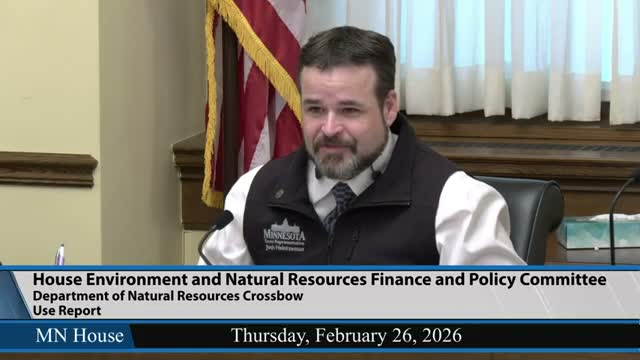
Barbara Keller, big game program leader and temporary legislative coordinator for the Minnesota Department of Natural Resources, presented an analysis the agency conducted after the 2023 statutory change that expanded crossbow use.
Keller cautioned the study covers only two years of post-change data and that pre-2023 crossbow use is not well documented because crossbows were previously allowed only for hunters age 60+ and for disability permits. "We did not find evidence that the statute change expanding crossbow use had any impact on our deer or turkey populations during those two years," Keller reported, while noting the need for continued monitoring.
The DNR found increased license sales and participation: average archery license sales rose (a 6.5% average increase, with greater gains among youth), and the proportion of archery deer hunters using crossbows rose from 43.8% in 2023 to 48.2% in 2024. Keller said 11% of hunters reported beginning archery participation because of the change, and that 62% of crossbow users were more likely to continue hunting because crossbows are legal for all hunters.
Archery deer harvest increased 2% in 2023 and 32% in 2024; Keller said that larger 2024 increase was not solely attributable to crossbow expansion and pointed to calendar effects (a later firearms season in 2024) and other factors. The DNR reported no meaningful differences in wounding rates between crossbows and vertical bows and said age and sex selection of deer taken were similar across weapon types.
Public testimony that followed was mixed. Nick Ominrude, president of Minnesota Bow Hunters, urged preserving tree-stand archery seasons and opposed full crossbow inclusion, arguing crossbows change the character of archery and risk long-term declines in traditional archers and archery programs. By contrast, Darren Lee of the Minnesota Deer Hunters Association urged continued full inclusion, calling crossbows a matter of fairness and access that can retain older or physically limited hunters and support conservation funding via stable participation.
Committee members requested further numeric breakdowns (for example, the exact counts behind percentage changes such as the share of deer taken by female crossbow hunters) and DNR offered to supply those follow-ups as the committee continues its review.
What happens next: DNR will continue monitoring harvest and participation; the committee did not vote on statutory changes at this hearing and invited additional data to inform future policy decisions.
Keller cautioned the study covers only two years of post-change data and that pre-2023 crossbow use is not well documented because crossbows were previously allowed only for hunters age 60+ and for disability permits. "We did not find evidence that the statute change expanding crossbow use had any impact on our deer or turkey populations during those two years," Keller reported, while noting the need for continued monitoring.
The DNR found increased license sales and participation: average archery license sales rose (a 6.5% average increase, with greater gains among youth), and the proportion of archery deer hunters using crossbows rose from 43.8% in 2023 to 48.2% in 2024. Keller said 11% of hunters reported beginning archery participation because of the change, and that 62% of crossbow users were more likely to continue hunting because crossbows are legal for all hunters.
Archery deer harvest increased 2% in 2023 and 32% in 2024; Keller said that larger 2024 increase was not solely attributable to crossbow expansion and pointed to calendar effects (a later firearms season in 2024) and other factors. The DNR reported no meaningful differences in wounding rates between crossbows and vertical bows and said age and sex selection of deer taken were similar across weapon types.
Public testimony that followed was mixed. Nick Ominrude, president of Minnesota Bow Hunters, urged preserving tree-stand archery seasons and opposed full crossbow inclusion, arguing crossbows change the character of archery and risk long-term declines in traditional archers and archery programs. By contrast, Darren Lee of the Minnesota Deer Hunters Association urged continued full inclusion, calling crossbows a matter of fairness and access that can retain older or physically limited hunters and support conservation funding via stable participation.
Committee members requested further numeric breakdowns (for example, the exact counts behind percentage changes such as the share of deer taken by female crossbow hunters) and DNR offered to supply those follow-ups as the committee continues its review.
What happens next: DNR will continue monitoring harvest and participation; the committee did not vote on statutory changes at this hearing and invited additional data to inform future policy decisions.
Don't Miss a Word: See the Full Meeting!
Go beyond summaries. Unlock every video, transcript, and key insight with a Founder Membership.
✓
Get instant access to full meeting videos
✓
Search and clip any phrase from complete transcripts
✓
Receive AI-powered summaries & custom alerts
✓
Enjoy lifetime, unrestricted access to government data
30-day money-back guarantee
