Attorney General urges expanded tools and staff to fight Medicaid fraud; committee adopts A5 and refers bill
February 26, 2026 | 2026 Legislature MN, Minnesota
This article was created by AI summarizing key points discussed. AI makes mistakes, so for full details and context, please refer to the video of the full meeting. Please report any errors so we can fix them. Report an error »
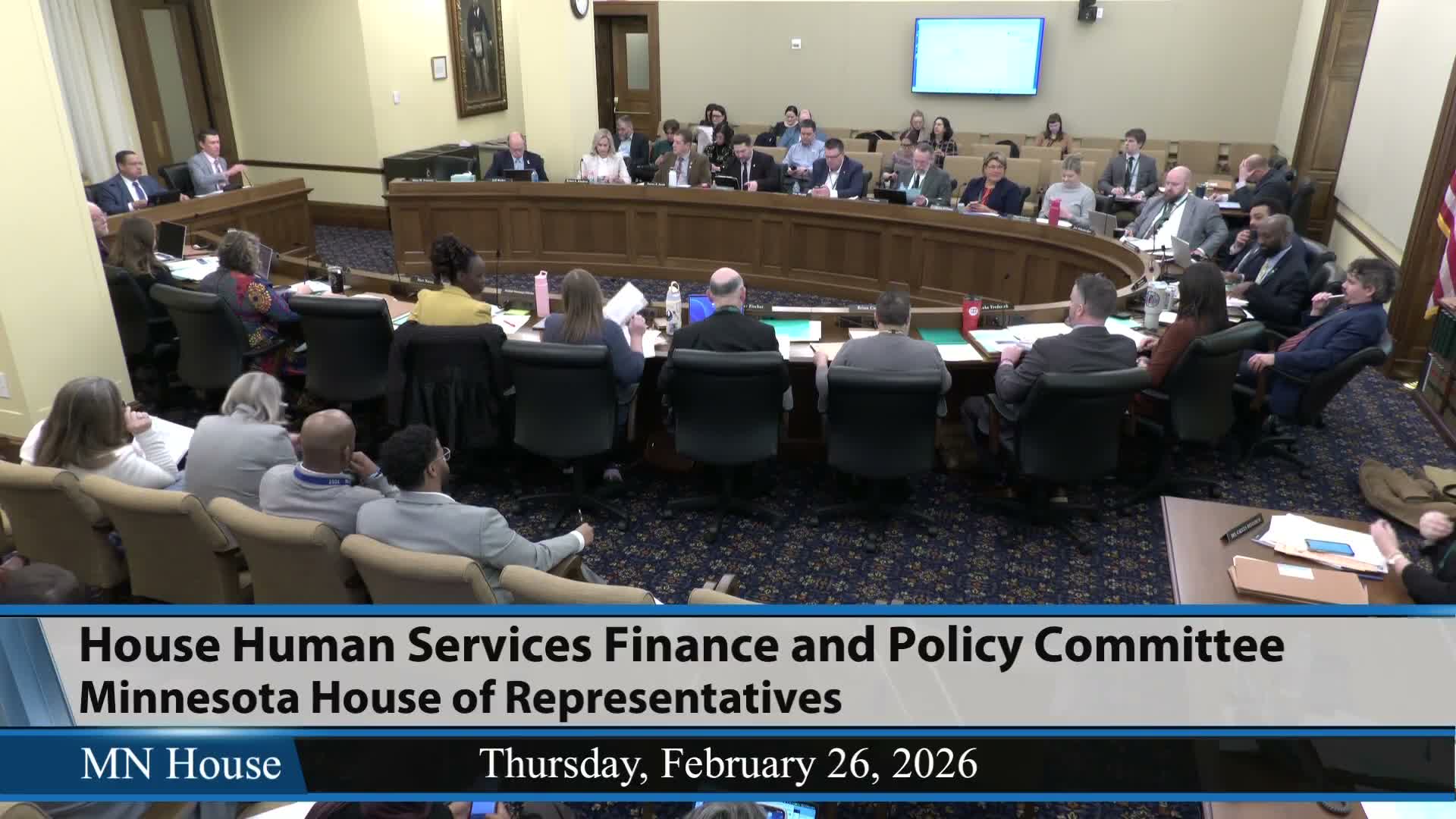
Representative Matt Norris introduced House File 23‑54 to strengthen the Medicaid Fraud Control Unit (MFCU). "Like so many Minnesotans, I am furious about fraud, and it's why I introduced this bill last year," Norris said, framing the bill as bipartisan and aimed at improving investigations and penalties.
Attorney General Keith Ellison and Nicholas (Nick) Wonka, director of the MFCU, described the bill’s main requests: 18 additional specialized staff (bringing the unit from 32 to 50), expanded statutory definitions of Medicaid fraud to close gaps cited by some district courts, additions to subpoena authority for financial records, a longer statute of limitations for continuing offenses, and enhanced restitution authority. Ellison highlighted federal matching funds, noting the federal government matches state spending for the unit on a roughly 3‑to‑1 basis.
Ben Johnson of House Research walked members through the adopted A5 amendment. Key changes in A5 include eight specified conduct categories that qualify as Medicaid fraud, a tiered penalty scheme (base maximum sentence of 10 years; up to 20 years for theft over $100,000; up to 30 years for theft over $1,000,000), a new gross‑misdemeanor penalty for failure to maintain records, continuing‑offense treatment to extend the statute of limitations, venue clarifications, expanded restitution authority, and an updated appropriation request of $1,230,000 to fund additional staff.
Director Wonka told the committee referrals to the unit have increased sharply (218 referrals in the last federal fiscal year and over 200 already in the current federal fiscal year) and that cases are larger and more complex. He said the federal Department of Health and Human Services recommended the unit reach the higher staffing level and that the proposed staffing mix focuses on investigators to convert referrals into chargeable cases.
Members raised concerns about prior judicial dismissals and the visibility of prosecutions compared with federal cases. Wonka and Ellison said inconsistent judicial readings of theft statutes have hampered some prosecutions; the amendment clarifies behaviors (for example, falsifying enrollment documents or destroying records after a lawful request) to reduce dismissals. They also said the office works with U.S. Attorney and federal partners where appropriate and continues to appeal dismissals in current cases.
Members asked about whistleblower handling, jurisdictional boundaries, and fiscal details. Wonka said the unit currently has 32 staff (seven prosecutors, 17 investigators) and that the A5 appropriation would fund three prosecutors, 11 investigators and four support staff. Ellison emphasized the unit’s prior recoveries and convictions and asked members to support the bill so the state can pursue larger, networked frauds more effectively.
The committee adopted the A5 amendment by voice vote and re‑referred HF23‑54 as amended to the judiciary, finance and civil law committees.
Attorney General Keith Ellison and Nicholas (Nick) Wonka, director of the MFCU, described the bill’s main requests: 18 additional specialized staff (bringing the unit from 32 to 50), expanded statutory definitions of Medicaid fraud to close gaps cited by some district courts, additions to subpoena authority for financial records, a longer statute of limitations for continuing offenses, and enhanced restitution authority. Ellison highlighted federal matching funds, noting the federal government matches state spending for the unit on a roughly 3‑to‑1 basis.
Ben Johnson of House Research walked members through the adopted A5 amendment. Key changes in A5 include eight specified conduct categories that qualify as Medicaid fraud, a tiered penalty scheme (base maximum sentence of 10 years; up to 20 years for theft over $100,000; up to 30 years for theft over $1,000,000), a new gross‑misdemeanor penalty for failure to maintain records, continuing‑offense treatment to extend the statute of limitations, venue clarifications, expanded restitution authority, and an updated appropriation request of $1,230,000 to fund additional staff.
Director Wonka told the committee referrals to the unit have increased sharply (218 referrals in the last federal fiscal year and over 200 already in the current federal fiscal year) and that cases are larger and more complex. He said the federal Department of Health and Human Services recommended the unit reach the higher staffing level and that the proposed staffing mix focuses on investigators to convert referrals into chargeable cases.
Members raised concerns about prior judicial dismissals and the visibility of prosecutions compared with federal cases. Wonka and Ellison said inconsistent judicial readings of theft statutes have hampered some prosecutions; the amendment clarifies behaviors (for example, falsifying enrollment documents or destroying records after a lawful request) to reduce dismissals. They also said the office works with U.S. Attorney and federal partners where appropriate and continues to appeal dismissals in current cases.
Members asked about whistleblower handling, jurisdictional boundaries, and fiscal details. Wonka said the unit currently has 32 staff (seven prosecutors, 17 investigators) and that the A5 appropriation would fund three prosecutors, 11 investigators and four support staff. Ellison emphasized the unit’s prior recoveries and convictions and asked members to support the bill so the state can pursue larger, networked frauds more effectively.
The committee adopted the A5 amendment by voice vote and re‑referred HF23‑54 as amended to the judiciary, finance and civil law committees.
Don't Miss a Word: See the Full Meeting!
Go beyond summaries. Unlock every video, transcript, and key insight with a Founder Membership.
✓
Get instant access to full meeting videos
✓
Search and clip any phrase from complete transcripts
✓
Receive AI-powered summaries & custom alerts
✓
Enjoy lifetime, unrestricted access to government data
30-day money-back guarantee
