Committee lays over bill to expand EVV after providers warn of incompatibility with some HCBS models
February 26, 2026 | 2026 Legislature MN, Minnesota
This article was created by AI summarizing key points discussed. AI makes mistakes, so for full details and context, please refer to the video of the full meeting. Please report any errors so we can fix them. Report an error »
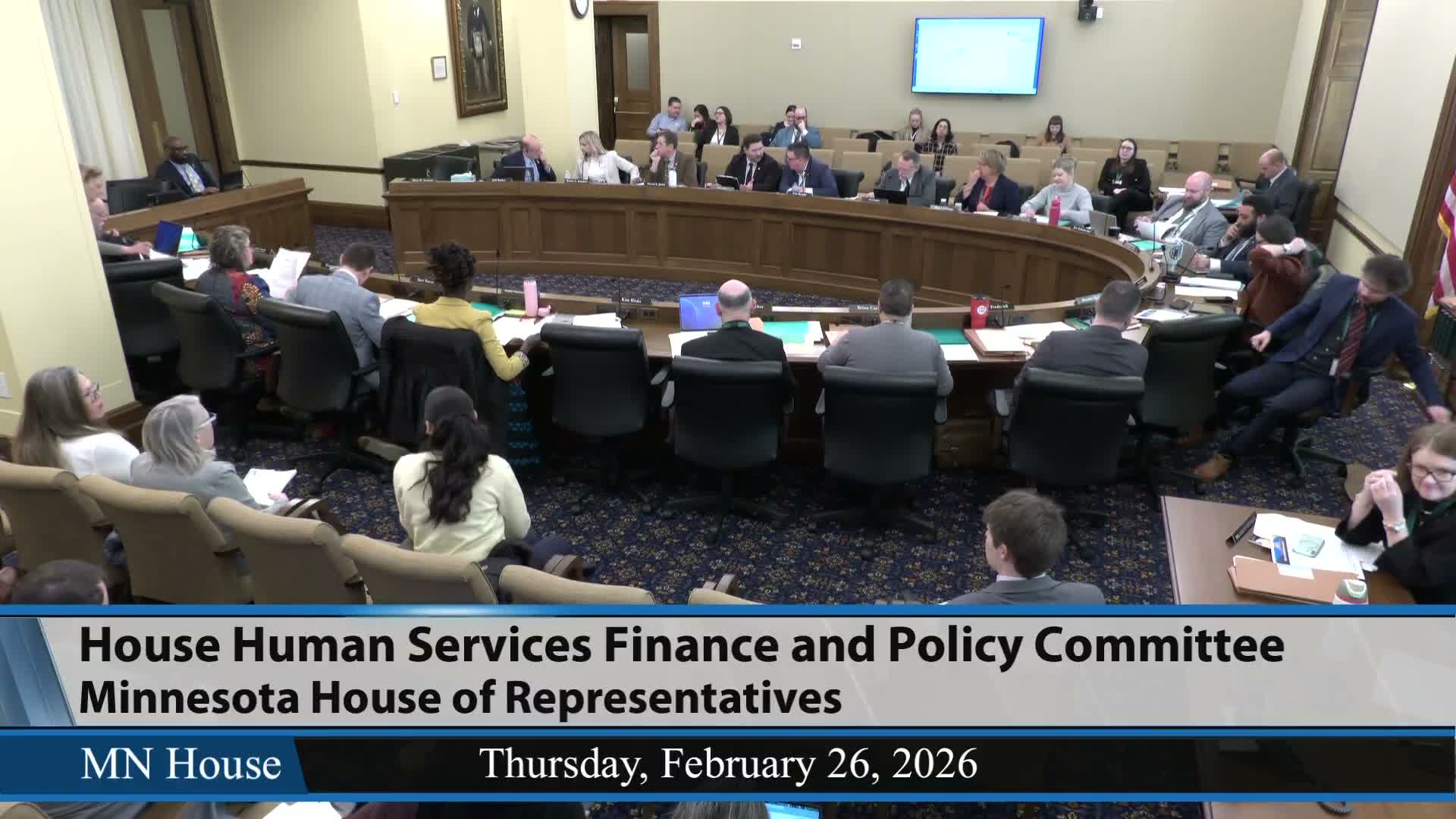
Sponsors presented House File 36‑34 to expand Electronic Visit Verification (EVV) to services the commissioner designates as high risk and to give DHS authority to apply EVV to additional services as needed. The sponsor emphasized EVV’s role in confirming that billed Medicaid services were delivered and tied the proposal to protecting federal funding and taxpayer dollars.
Providers told the committee many home‑and‑community‑based services are not built around discrete, time‑based visits and that EVV can be an ill fit for per‑diem and continuous models. Ellie Skelton, executive director at Touchstone Mental Health, said EVV could interfere with care for low‑margin services and urged the committee to ensure EVV targets program integrity rather than imposing broad administrative mandates. She also asked that DHS strengthen licensing and oversight capacity before adding mandates.
Josh Berg, director of Minnesota services and strategic growth at Accessible Space Inc., said services such as Intensive Community Supports (ICS) operate as per‑diem or continuous supports that do not have a clear arrival/departure visit to verify, making time‑clock EVV data misleading. He urged statutory clarity for ICS, stakeholder collaboration, and better alignment of definitions and enforcement before expanding EVV.
Members discussed tradeoffs: some providers report benefits from EVV for recordkeeping, while others cited rural cell‑service limitations and model incompatibility. Several members supported further work with DHS, providers and CMS to clarify where EVV improves integrity and where other tools or licensing enforcement should be used.
The sponsor said the bill was a starting point for work to protect services and federal funds; the committee laid HF36‑34 over for possible inclusion so further technical and stakeholder work can continue.
Providers told the committee many home‑and‑community‑based services are not built around discrete, time‑based visits and that EVV can be an ill fit for per‑diem and continuous models. Ellie Skelton, executive director at Touchstone Mental Health, said EVV could interfere with care for low‑margin services and urged the committee to ensure EVV targets program integrity rather than imposing broad administrative mandates. She also asked that DHS strengthen licensing and oversight capacity before adding mandates.
Josh Berg, director of Minnesota services and strategic growth at Accessible Space Inc., said services such as Intensive Community Supports (ICS) operate as per‑diem or continuous supports that do not have a clear arrival/departure visit to verify, making time‑clock EVV data misleading. He urged statutory clarity for ICS, stakeholder collaboration, and better alignment of definitions and enforcement before expanding EVV.
Members discussed tradeoffs: some providers report benefits from EVV for recordkeeping, while others cited rural cell‑service limitations and model incompatibility. Several members supported further work with DHS, providers and CMS to clarify where EVV improves integrity and where other tools or licensing enforcement should be used.
The sponsor said the bill was a starting point for work to protect services and federal funds; the committee laid HF36‑34 over for possible inclusion so further technical and stakeholder work can continue.
Don't Miss a Word: See the Full Meeting!
Go beyond summaries. Unlock every video, transcript, and key insight with a Founder Membership.
✓
Get instant access to full meeting videos
✓
Search and clip any phrase from complete transcripts
✓
Receive AI-powered summaries & custom alerts
✓
Enjoy lifetime, unrestricted access to government data
30-day money-back guarantee
