Foster youth tell Alaska lawmakers instability and lost supports hinder education, cultural ties and sibling connections
February 26, 2026 | 2026 Legislature Alaska, Alaska
This article was created by AI summarizing key points discussed. AI makes mistakes, so for full details and context, please refer to the video of the full meeting. Please report any errors so we can fix them. Report an error »
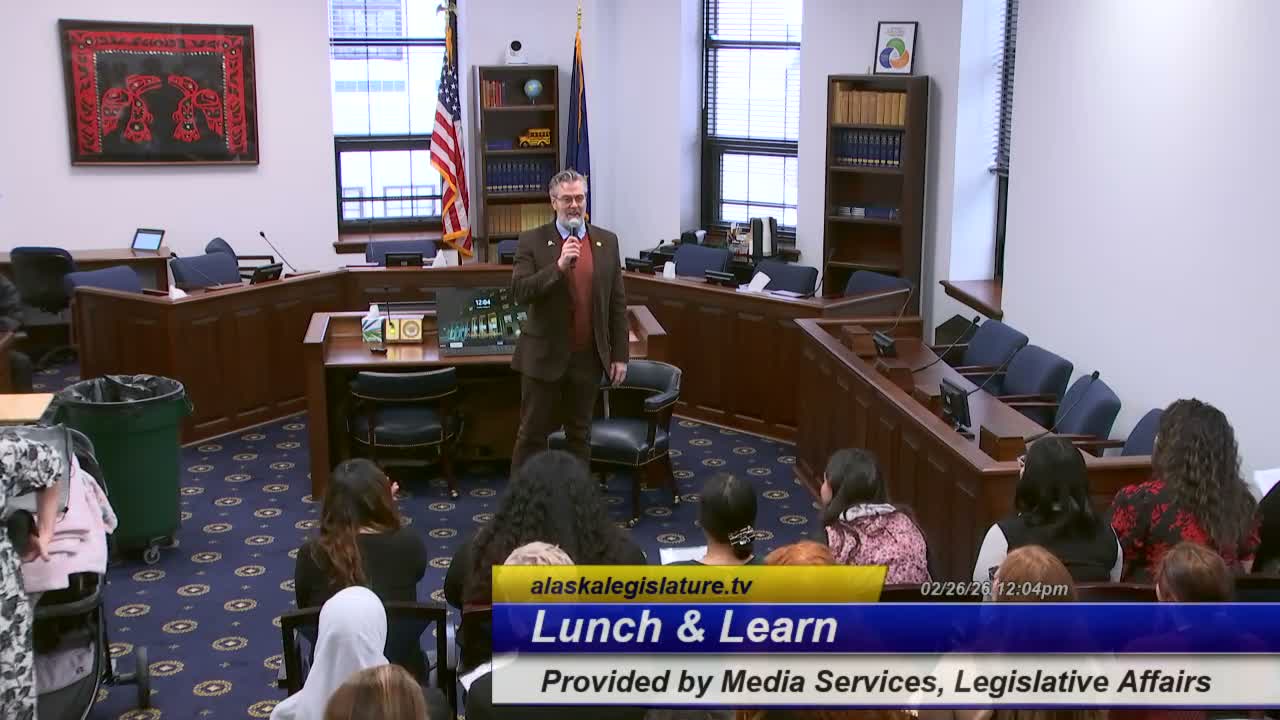
ANCHORAGE, Alaska — Representative Andrew Gray hosted a lunch-and-learn with Facing Foster Care in Alaska on the role of stability, culture and supports in youth outcomes, where about 20 current and former foster youth testified about how frequent moves, lost institutional supports and sibling separation have affected their lives.
The session featured moderated panels of youth with lived experience. “I felt at home. I felt like I was finally able to make a difference in a system that was very broken and was meant to serve me, but was hurting me,” said Angel Gonzalez, a Facing Foster Care in Alaska board member and one of the event moderators. Kilo, an Anchorage representative on FFCA’s youth leadership board, described the organization as statewide and youth-led, saying it provides advocacy training, peer support and direct services and has “an average of 300 active members annually.”
Speakers prioritized cultural continuity, especially for Alaska Native youth. Shannon Smith, who identified herself as Alaska Native, said maintaining Inupiaq language, traditional food and ties to elders helped preserve identity while in care. A presenter referenced participant-provided figures, stating roughly “69%, which is 1,690” of youth in care are Alaska Native or American Indian; attendees presented that number as an on-stage statistic rather than a formal agency report.
On education, multiple youth described how moving between placements and schools disrupted learning and access to supports. Landon, who identified himself as a high school senior, said, “Since I’ve been in high school … I’ve been in 5 homes and 3 different high schools,” describing repeated transitions and a loss of classroom continuity. Presenters said a former Office of Children’s Services (OCS) student coordinator position that helped students move into dorms, complete applications and serve as an emergency contact is no longer in place; responsibility for those tasks has, they said, shifted to independent living specialists who are handling many cases and limited time.
Speakers also underscored the harms of sibling separation. Trinity Beltz and Madison Brewer described siblings as primary sources of emotional safety and said systemic barriers — a shortage of placements willing to take sibling groups, moves across regions, unreliable transportation and sparse communication — often sever those ties. Panelists recommended policies such as sibling-first placement, guaranteed and consistent contact, trauma-informed supports and legal protections that survive adoption or permanency planning.
On transitions to adulthood, participants said practical help with housing, benefits, transportation and employment is essential. Multiple youth said employers sometimes decline applicants because of placement instability. Lotus, a participant from Fairbanks, warned that placement quality varies, saying some foster parents “will give their children alcohol and weed,” and urged stronger vetting and oversight of caregivers.
Representative Gray closed the session by thanking participants and inviting attendees to an OCS subcommittee budget presentation at 3:30 p.m. in the same room and to a Saturday deep dive on foster care hosted by Representative Ruffridge at the Terry Miller Gym at 8:30 a.m.
Next steps: organizers encouraged attendees and lawmakers to attend the OCS budget presentation and the weekend deep dive for a more detailed review of OCS funding and proposed changes.
The session featured moderated panels of youth with lived experience. “I felt at home. I felt like I was finally able to make a difference in a system that was very broken and was meant to serve me, but was hurting me,” said Angel Gonzalez, a Facing Foster Care in Alaska board member and one of the event moderators. Kilo, an Anchorage representative on FFCA’s youth leadership board, described the organization as statewide and youth-led, saying it provides advocacy training, peer support and direct services and has “an average of 300 active members annually.”
Speakers prioritized cultural continuity, especially for Alaska Native youth. Shannon Smith, who identified herself as Alaska Native, said maintaining Inupiaq language, traditional food and ties to elders helped preserve identity while in care. A presenter referenced participant-provided figures, stating roughly “69%, which is 1,690” of youth in care are Alaska Native or American Indian; attendees presented that number as an on-stage statistic rather than a formal agency report.
On education, multiple youth described how moving between placements and schools disrupted learning and access to supports. Landon, who identified himself as a high school senior, said, “Since I’ve been in high school … I’ve been in 5 homes and 3 different high schools,” describing repeated transitions and a loss of classroom continuity. Presenters said a former Office of Children’s Services (OCS) student coordinator position that helped students move into dorms, complete applications and serve as an emergency contact is no longer in place; responsibility for those tasks has, they said, shifted to independent living specialists who are handling many cases and limited time.
Speakers also underscored the harms of sibling separation. Trinity Beltz and Madison Brewer described siblings as primary sources of emotional safety and said systemic barriers — a shortage of placements willing to take sibling groups, moves across regions, unreliable transportation and sparse communication — often sever those ties. Panelists recommended policies such as sibling-first placement, guaranteed and consistent contact, trauma-informed supports and legal protections that survive adoption or permanency planning.
On transitions to adulthood, participants said practical help with housing, benefits, transportation and employment is essential. Multiple youth said employers sometimes decline applicants because of placement instability. Lotus, a participant from Fairbanks, warned that placement quality varies, saying some foster parents “will give their children alcohol and weed,” and urged stronger vetting and oversight of caregivers.
Representative Gray closed the session by thanking participants and inviting attendees to an OCS subcommittee budget presentation at 3:30 p.m. in the same room and to a Saturday deep dive on foster care hosted by Representative Ruffridge at the Terry Miller Gym at 8:30 a.m.
Next steps: organizers encouraged attendees and lawmakers to attend the OCS budget presentation and the weekend deep dive for a more detailed review of OCS funding and proposed changes.
View the Full Meeting & All Its Details
This article offers just a summary. Unlock complete video, transcripts, and insights as a Founder Member.
✓
Watch full, unedited meeting videos
✓
Search every word spoken in unlimited transcripts
✓
AI summaries & real-time alerts (all government levels)
✓
Permanent access to expanding government content
30-day money-back guarantee
