OCS tells subcommittee caseloads remain high despite HB 151 steps; members press on pay, training and tech
February 26, 2026 | 2026 Legislature Alaska, Alaska
This article was created by AI summarizing key points discussed. AI makes mistakes, so for full details and context, please refer to the video of the full meeting. Please report any errors so we can fix them. Report an error »
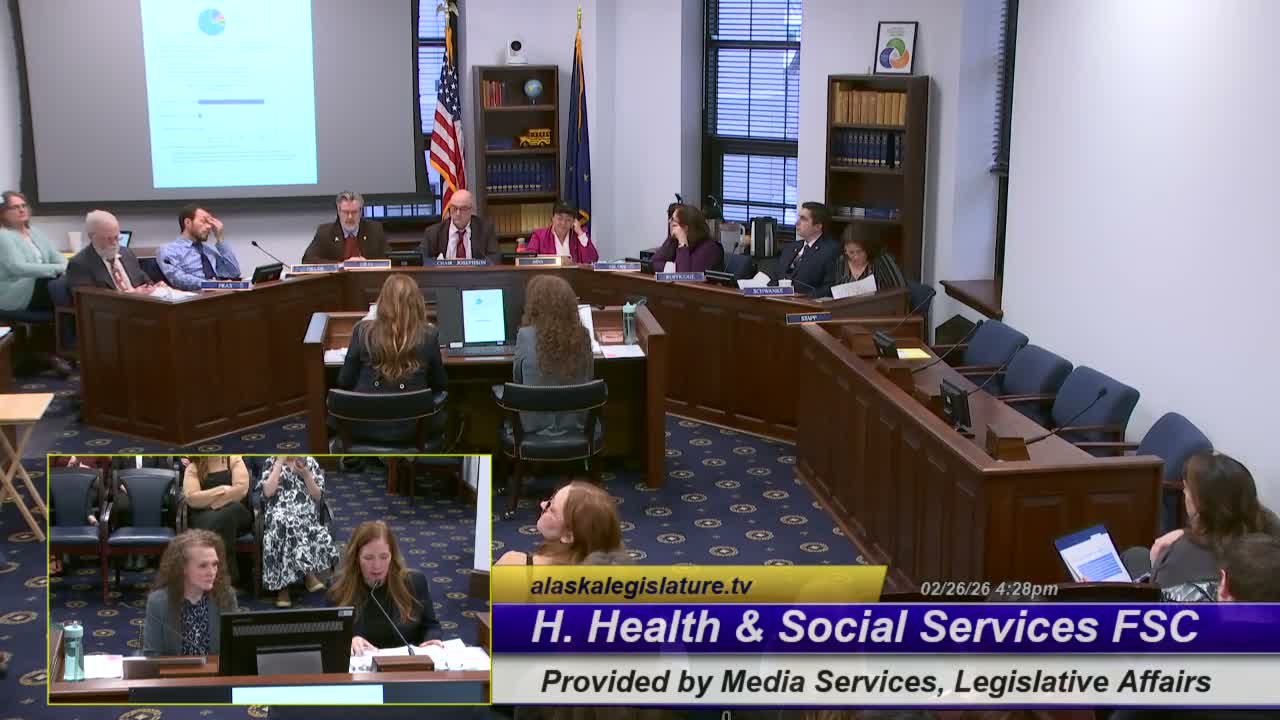
The Office of Children’s Services told the Alaska House Finance subcommittee on Thursday that, despite multi-year reforms prompted by House Bill 151, caseload pressures and staff turnover remain acute and require additional attention on pay, training, and information technology.
"The average in Anchorage, for example, is extremely high. It's over 30 cases," Director Kim Guay said when the committee reviewed a point-in-time caseload snapshot and tenure bands for caseworkers. Guay told the panel the state’s caseload standards call for far lower caseloads for experienced workers and acknowledged many regions exceed national guidance.
Guay reviewed OCS funding, saying the office employs 608 full-time staff across 21 offices statewide and that its UGF authority supports Title IV-E and other federal grant matches. On FY26 child advocacy center (CAC) funding, Guay said OCS allocated $5.3 million in awards from a $5.5 million appropriation but that two grantees declined the increases and a third had not yet accepted, leaving about $460,000 unclaimed. Assistant Commissioner Marion Sweet and Director Guay told members that CAC grantees submit quarterly reimbursement reports and that state reimbursements meet a 30-day target in practice.
Committee members pressed Guay on recruitment and retention. She listed steps taken since the governor’s $10 million allocation: retention bonuses (47% of recipients still employed), a career ladder to create more PSS-3 opportunities, occupational endorsement funding to train non-degreed staff, paid internships, expanded recruitment events, and a respite program for foster parents. Guay and members discussed possible structural steps to raise pay and retirement benefits and the PCG consultant recommendation to consider tier-4 defined-benefit retirement to reduce turnover.
On technology, Guay said OCS’s child-welfare information system (ORCA) is outdated, reduces federal reimbursement rates and complicates compliance, and that OCS intends to apply for Rural Health Transformation Program funds to replace ORCA and add modern portals for families, youth and tribal partners.
Guay also acknowledged the effect of federal and tribal legal frameworks on timelines: OCS reported months-to-permanency averaging 24.6 months (national average ~24 months) and noted that Indian Child Welfare Act (ICWA) cases require "active efforts," which raise legal burdens and can extend timelines.
Several members asked OCS to provide additional, more granular data on caseload distribution, supervisor-to-worker ratios, and the department's planned metrics to reduce average caseloads and shorten time to permanency.
What’s next: OCS agreed to provide requested follow-up data and recruitment/advertising plans; the subcommittee will consider budget amendments before the March 3 closeout.
"The average in Anchorage, for example, is extremely high. It's over 30 cases," Director Kim Guay said when the committee reviewed a point-in-time caseload snapshot and tenure bands for caseworkers. Guay told the panel the state’s caseload standards call for far lower caseloads for experienced workers and acknowledged many regions exceed national guidance.
Guay reviewed OCS funding, saying the office employs 608 full-time staff across 21 offices statewide and that its UGF authority supports Title IV-E and other federal grant matches. On FY26 child advocacy center (CAC) funding, Guay said OCS allocated $5.3 million in awards from a $5.5 million appropriation but that two grantees declined the increases and a third had not yet accepted, leaving about $460,000 unclaimed. Assistant Commissioner Marion Sweet and Director Guay told members that CAC grantees submit quarterly reimbursement reports and that state reimbursements meet a 30-day target in practice.
Committee members pressed Guay on recruitment and retention. She listed steps taken since the governor’s $10 million allocation: retention bonuses (47% of recipients still employed), a career ladder to create more PSS-3 opportunities, occupational endorsement funding to train non-degreed staff, paid internships, expanded recruitment events, and a respite program for foster parents. Guay and members discussed possible structural steps to raise pay and retirement benefits and the PCG consultant recommendation to consider tier-4 defined-benefit retirement to reduce turnover.
On technology, Guay said OCS’s child-welfare information system (ORCA) is outdated, reduces federal reimbursement rates and complicates compliance, and that OCS intends to apply for Rural Health Transformation Program funds to replace ORCA and add modern portals for families, youth and tribal partners.
Guay also acknowledged the effect of federal and tribal legal frameworks on timelines: OCS reported months-to-permanency averaging 24.6 months (national average ~24 months) and noted that Indian Child Welfare Act (ICWA) cases require "active efforts," which raise legal burdens and can extend timelines.
Several members asked OCS to provide additional, more granular data on caseload distribution, supervisor-to-worker ratios, and the department's planned metrics to reduce average caseloads and shorten time to permanency.
What’s next: OCS agreed to provide requested follow-up data and recruitment/advertising plans; the subcommittee will consider budget amendments before the March 3 closeout.
View the Full Meeting & All Its Details
This article offers just a summary. Unlock complete video, transcripts, and insights as a Founder Member.
✓
Watch full, unedited meeting videos
✓
Search every word spoken in unlimited transcripts
✓
AI summaries & real-time alerts (all government levels)
✓
Permanent access to expanding government content
30-day money-back guarantee
