Missouri officials outline proposed shift to performance-based higher education funding
February 26, 2026 | 2026 Legislature MO, Missouri
This article was created by AI summarizing key points discussed. AI makes mistakes, so for full details and context, please refer to the video of the full meeting. Please report any errors so we can fix them. Report an error »
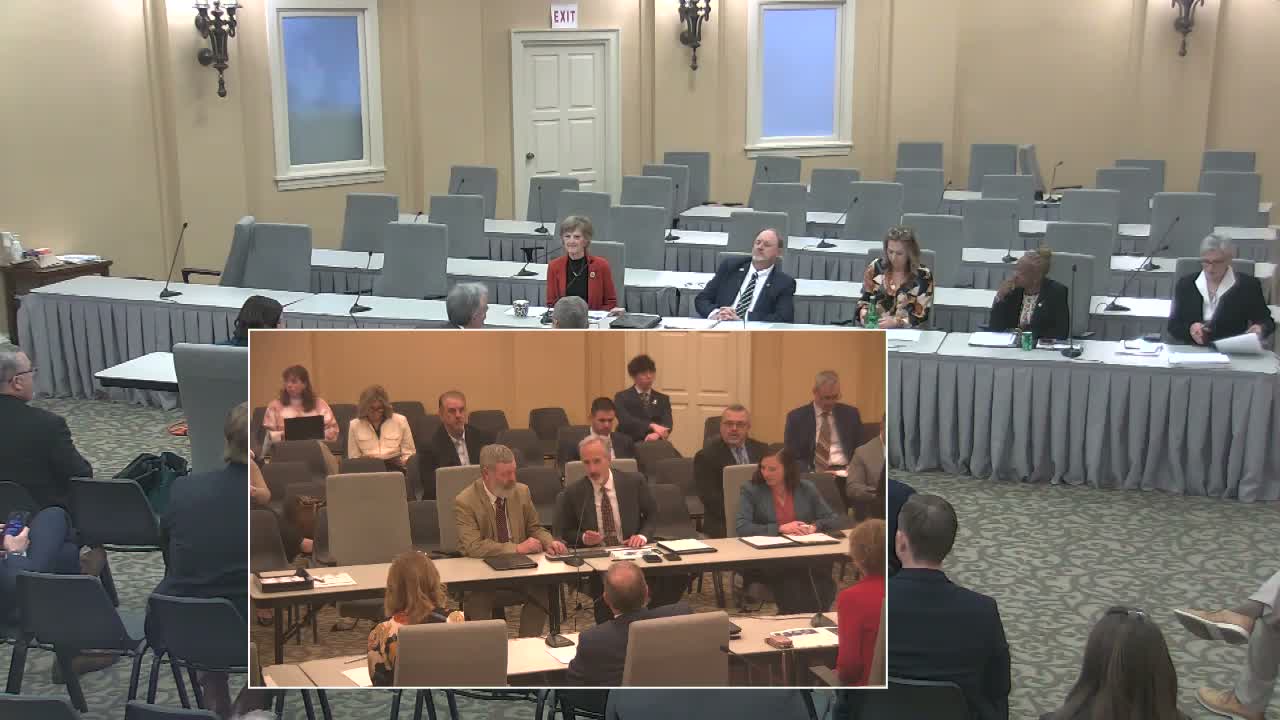
Bennett Boggs, commissioner of the Missouri Department of Higher Education and Workforce Development, told a joint House–Senate education committee on Thursday that the department is working on a performance‑based funding model intended to replace the state’s long‑standing “base plus” system. “This bill … does not ask you to vote on the funding formula,” Boggs said, but it directs the department to consult with institutions and return to the legislature with a finished proposal.
The proposed approach, described in technical detail by Deputy Commissioner Leroy Wade, combines four elements: fixed costs (facilities, staffing and core operations), variable costs (enrollment, program mix and student characteristics), an explicit performance component tied to progression and completion metrics, and a discretionary investment mechanism for targeted state priorities. “The current approach, the base plus approach, really started in 1992,” Wade said, arguing that demographic and technological shifts mean the old method no longer aligns incentives across institutions.
Why it matters: the department said Missouri’s enrollment patterns and per‑student appropriations have diverged across sectors — community colleges have grown while several regional universities have declined — producing large differences in state appropriations per full‑time equivalent student. Boggs noted FAFSA filings are up 25% this year, citing stronger student interest in postsecondary options, and said the model aims to make funding “equitable” and to incentivize collaboration such as easier transfer pathways.
Data and testing: Wade said the model is data‑driven and grounded in a 2023 study that followed a $450,000 legislative appropriation in 2022. He told the committee the department is leading a technical work group and hopes to run the core component on a test basis in "maybe 2 or 3 months" to verify the calculations before presenting final recommendations to legislators.
Questions from committee members focused on data sources and performance measures. Representative Loy asked how officials identify future workforce needs and whether the department anticipates changes to expensive degree offerings; Boggs pointed to partnerships with the Department of Economic Development and routine program review, saying the department approved about 120 new academic programs and removed more than 140 in the past year. Representative Pollitt asked whether the department tracks sophomore‑year persistence; Wade said the persistence rate is “knowable” and the agency can provide that information, noting the A+ program substantially improves year‑to‑year retention.
Bill sponsor Representative John Blackhouse (District 129) summarized the legislation he filed with a senator referenced in the hearing as "Trent," saying the measure would “put Missouri in the 21st century with regard to higher ed funding” and align institutional incentives with state workforce goals. Blackhouse said the department used the commissioned study as a starting point and that further adjustments are expected.
No formal vote or motion was taken during the informational hearing. The committee opened the floor for public comment but recorded no public speakers and adjourned. Department staff said they will continue technical refinements, run planned tests, and return to the legislature with a finalized model in the next session if directed by statute.
The proposed approach, described in technical detail by Deputy Commissioner Leroy Wade, combines four elements: fixed costs (facilities, staffing and core operations), variable costs (enrollment, program mix and student characteristics), an explicit performance component tied to progression and completion metrics, and a discretionary investment mechanism for targeted state priorities. “The current approach, the base plus approach, really started in 1992,” Wade said, arguing that demographic and technological shifts mean the old method no longer aligns incentives across institutions.
Why it matters: the department said Missouri’s enrollment patterns and per‑student appropriations have diverged across sectors — community colleges have grown while several regional universities have declined — producing large differences in state appropriations per full‑time equivalent student. Boggs noted FAFSA filings are up 25% this year, citing stronger student interest in postsecondary options, and said the model aims to make funding “equitable” and to incentivize collaboration such as easier transfer pathways.
Data and testing: Wade said the model is data‑driven and grounded in a 2023 study that followed a $450,000 legislative appropriation in 2022. He told the committee the department is leading a technical work group and hopes to run the core component on a test basis in "maybe 2 or 3 months" to verify the calculations before presenting final recommendations to legislators.
Questions from committee members focused on data sources and performance measures. Representative Loy asked how officials identify future workforce needs and whether the department anticipates changes to expensive degree offerings; Boggs pointed to partnerships with the Department of Economic Development and routine program review, saying the department approved about 120 new academic programs and removed more than 140 in the past year. Representative Pollitt asked whether the department tracks sophomore‑year persistence; Wade said the persistence rate is “knowable” and the agency can provide that information, noting the A+ program substantially improves year‑to‑year retention.
Bill sponsor Representative John Blackhouse (District 129) summarized the legislation he filed with a senator referenced in the hearing as "Trent," saying the measure would “put Missouri in the 21st century with regard to higher ed funding” and align institutional incentives with state workforce goals. Blackhouse said the department used the commissioned study as a starting point and that further adjustments are expected.
No formal vote or motion was taken during the informational hearing. The committee opened the floor for public comment but recorded no public speakers and adjourned. Department staff said they will continue technical refinements, run planned tests, and return to the legislature with a finalized model in the next session if directed by statute.
View the Full Meeting & All Its Details
This article offers just a summary. Unlock complete video, transcripts, and insights as a Founder Member.
✓
Watch full, unedited meeting videos
✓
Search every word spoken in unlimited transcripts
✓
AI summaries & real-time alerts (all government levels)
✓
Permanent access to expanding government content
30-day money-back guarantee
