Emeryville planners review 2025 General Plan and housing reports; staff cites market limits to housing production
February 27, 2026 | Emeryville City, Alameda County, California
This article was created by AI summarizing key points discussed. AI makes mistakes, so for full details and context, please refer to the video of the full meeting. Please report any errors so we can fix them. Report an error »
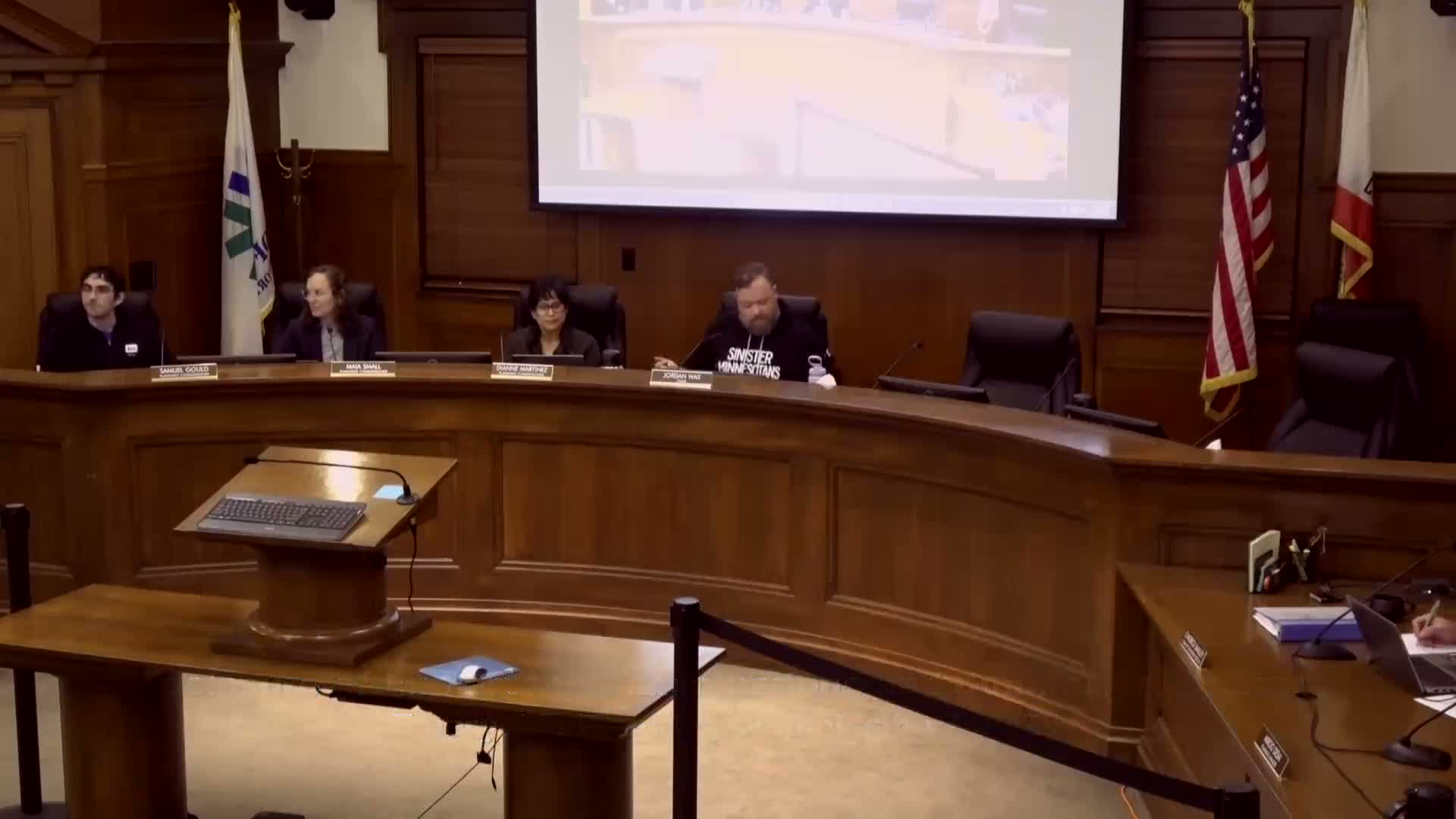
The Emeryville Planning Commission on Feb. 26 received the city’s 2025 General Plan annual progress report and the housing element annual progress report, with staff saying progress is being made on long-range planning but housing production lags regional targets because of market and financing constraints.
Valerie Bernardo, the city’s economic development and housing manager, outlined permit, entitlement and progress figures the state requires for the housing element. "So for 2025, we have 6 additional units that we can now add to our RHNA totals," Bernardo said, referring to building permits that count toward the Regional Housing Needs Assessment. She told commissioners the city’s RHNA goal for the current cycle is 1,815 units by 2031 and noted the city is approximately 8% of the way toward that goal at the 25% mark of the cycle.
Why it matters: the RHNA and annual progress report are the state’s method of tracking whether cities are making measurable progress toward planned housing production. Bernardo said the jurisdiction’s low permit counts reflect market realities rather than local zoning constraints.
Staff highlighted several 2025 accomplishments and ongoing projects, including a 100% affordable project processed under SB 35 (described in the report as 362 units), upgrades to bicycle and pedestrian detection on key corridors, and public-art and streetscape work tied to the 40th Street project. Bernardo also described resident-engagement work that led to restructuring certain advisory committees and an in-progress consultant contract to review the city’s affordable housing ordinance and development-bonus percentages.
On the housing successor report — the account that holds assets the city inherited from the former redevelopment agency — Bernardo reported $436,000 in loan repayments in fiscal year 2025, an ending balance she gave as "$20,165,000 and some change," and an asset total of about $38,000,000 consisting of real property and outstanding loans or receivables. She said $4,055 was expended in FY25 on the program audit and that Hello Housing manages owner-occupancy monitoring and loan repayments for the portfolio.
Commissioners pressed staff on barriers other jurisdictions have overcome. Bernardo cited three main constraints: limited developable land within Emeryville, loss of certain state financing advantages (the city is not in an opportunity zone and has lost a "difficult to develop" designation), and overall market conditions that reduce private developers’ interest in multifamily projects. "I would say so. I don't think it's a zoning issue," Bernardo said when asked whether zoning capacity was the limiting factor.
The city will submit the annual reports to the state by the April 1 deadline; staff said several housing-element implementation projects and code amendments remain in progress and will return to the commission and city council as needed.
Valerie Bernardo, the city’s economic development and housing manager, outlined permit, entitlement and progress figures the state requires for the housing element. "So for 2025, we have 6 additional units that we can now add to our RHNA totals," Bernardo said, referring to building permits that count toward the Regional Housing Needs Assessment. She told commissioners the city’s RHNA goal for the current cycle is 1,815 units by 2031 and noted the city is approximately 8% of the way toward that goal at the 25% mark of the cycle.
Why it matters: the RHNA and annual progress report are the state’s method of tracking whether cities are making measurable progress toward planned housing production. Bernardo said the jurisdiction’s low permit counts reflect market realities rather than local zoning constraints.
Staff highlighted several 2025 accomplishments and ongoing projects, including a 100% affordable project processed under SB 35 (described in the report as 362 units), upgrades to bicycle and pedestrian detection on key corridors, and public-art and streetscape work tied to the 40th Street project. Bernardo also described resident-engagement work that led to restructuring certain advisory committees and an in-progress consultant contract to review the city’s affordable housing ordinance and development-bonus percentages.
On the housing successor report — the account that holds assets the city inherited from the former redevelopment agency — Bernardo reported $436,000 in loan repayments in fiscal year 2025, an ending balance she gave as "$20,165,000 and some change," and an asset total of about $38,000,000 consisting of real property and outstanding loans or receivables. She said $4,055 was expended in FY25 on the program audit and that Hello Housing manages owner-occupancy monitoring and loan repayments for the portfolio.
Commissioners pressed staff on barriers other jurisdictions have overcome. Bernardo cited three main constraints: limited developable land within Emeryville, loss of certain state financing advantages (the city is not in an opportunity zone and has lost a "difficult to develop" designation), and overall market conditions that reduce private developers’ interest in multifamily projects. "I would say so. I don't think it's a zoning issue," Bernardo said when asked whether zoning capacity was the limiting factor.
The city will submit the annual reports to the state by the April 1 deadline; staff said several housing-element implementation projects and code amendments remain in progress and will return to the commission and city council as needed.
Don't Miss a Word: See the Full Meeting!
Go beyond summaries. Unlock every video, transcript, and key insight with a Founder Membership.
✓
Get instant access to full meeting videos
✓
Search and clip any phrase from complete transcripts
✓
Receive AI-powered summaries & custom alerts
✓
Enjoy lifetime, unrestricted access to government data
30-day money-back guarantee
