Attendance pilots show human-centered outreach reduces absences; counselors, nurses and psychologists say surge in ICE activity has driven declines
February 26, 2026 | 2026 Legislature MN, Minnesota
This article was created by AI summarizing key points discussed. AI makes mistakes, so for full details and context, please refer to the video of the full meeting. Please report any errors so we can fix them. Report an error »
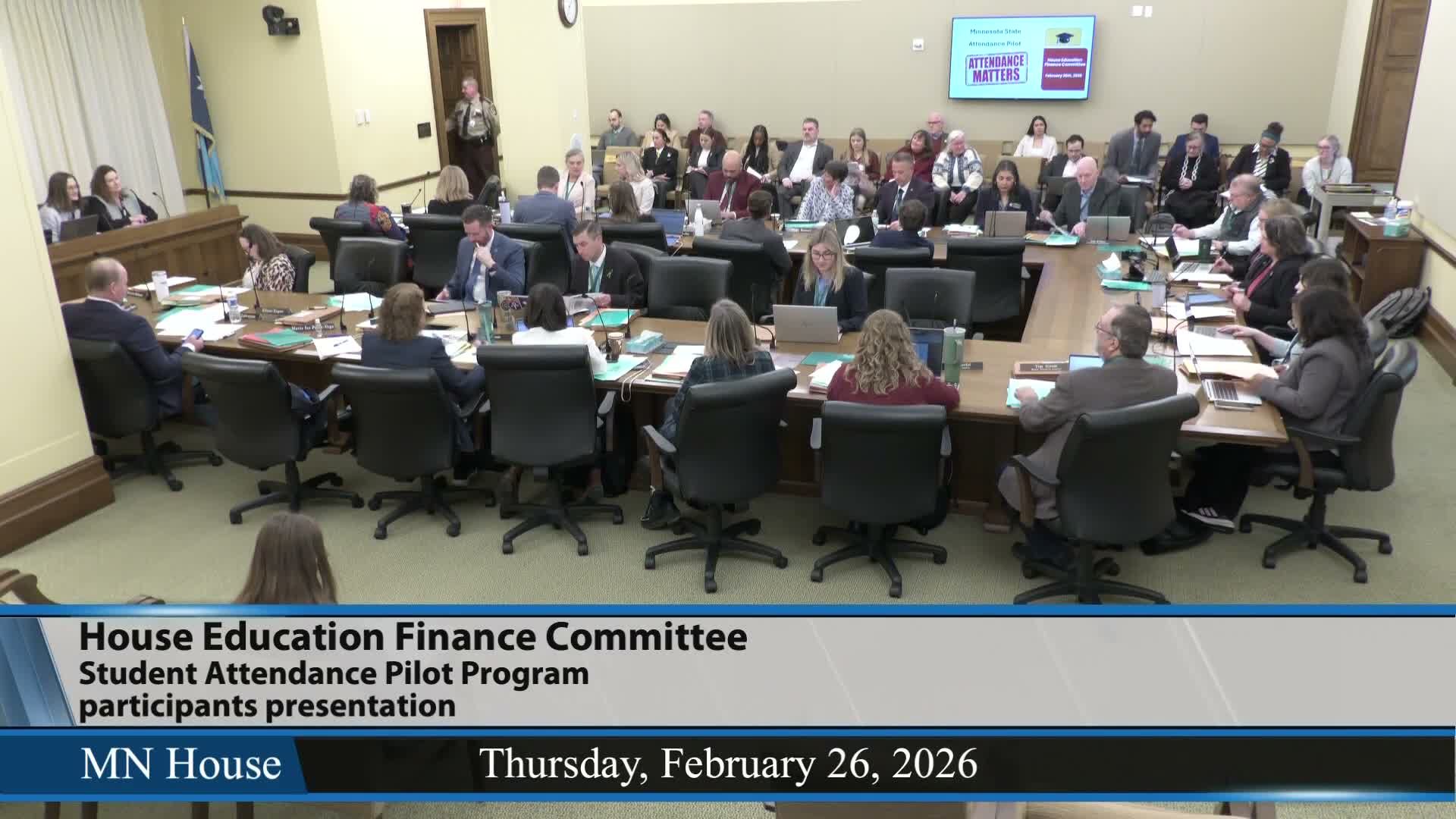
District leaders and student-support staff told the House Education Finance Committee on March 5 that the attendance pilot funded in 2024 produced practical strategies to keep students connected, but that recent immigration‑enforcement activity in parts of Minnesota has had a measurable and traumatic effect on student attendance and well‑being.
"We developed a district attendance handbook... every school in our district now has a dedicated school attendance team," said Morgan McDowell, MTSS teacher with Burnsville‑Eagan‑Savage, describing a districtwide approach that included a rapid expansion of a virtual academy (a 440% increase in elementary virtual enrollment) to preserve instruction during community instability.
Pilot districts reported a range of local interventions — mentorship, humanized outreach instead of automated notices, attendance liaisons, family engagement and county partnerships — and flagged common challenges: fractured student‑information systems, inconsistent coding of excused/half‑day/full‑day absences across districts and counties, staffing shortages for attendance coordinators and uncertainty about sustaining pilot positions after grants end.
School health and mental‑health staff described acute student needs. "School nurses reduce chronic absenteeism," said Kathy Schultz, director for the National Association of School Nurses in Minnesota, urging funding for full‑time licensed school nurses. Molly Forrest, a licensed school nurse, said roughly half of Minnesota districts employ no professional nurse and that many school nurses cover multiple buildings.
Counselors, social workers and psychologists described the human toll tied to increased immigration enforcement. "Every student... they’re terrified, scared, anxious," said Clinton Ferguson, a licensed school counselor from Minneapolis, and recounted that five of the 130 seniors on his caseload will not graduate because of the surge in enforcement he described. Hillary Horrobes, a Rochester school social worker, said daily attendance dropped from a typical 92–95% down to about 87% over six weeks, and that staff are providing door‑to‑door transportation and food deliveries to reengage students.
Dr. Anna Lee, a school psychologist, said Minnesota’s current average ratio of about one school psychologist per 1,047 students is far above the commonly cited recommendation of one per 500 students, and that the surge has created sustained mental‑health demand for which districts lack capacity.
What districts want: Pilot participants urged standardized statewide coding of attendance statuses, a state inventory of evidence‑based interventions organized by MTSS tier, and sustained funding for attendance coordinators, mentors, nurses, counselors and psychologists. Multiple districts said county practices differ across Minnesota’s 87 counties, complicating consistent application of the reporting law and county follow‑up.
Committee response and next steps: Members expressed urgency about student well‑being and asked MDE and pilot districts for more data; MDE and the pilot subcommittee said they will continue monthly work to standardize coding and promised updated statewide counts after the April MARS edit. Several members pressed for administrative clarity the department can provide without immediate legislation to help districts this school year.
"We developed a district attendance handbook... every school in our district now has a dedicated school attendance team," said Morgan McDowell, MTSS teacher with Burnsville‑Eagan‑Savage, describing a districtwide approach that included a rapid expansion of a virtual academy (a 440% increase in elementary virtual enrollment) to preserve instruction during community instability.
Pilot districts reported a range of local interventions — mentorship, humanized outreach instead of automated notices, attendance liaisons, family engagement and county partnerships — and flagged common challenges: fractured student‑information systems, inconsistent coding of excused/half‑day/full‑day absences across districts and counties, staffing shortages for attendance coordinators and uncertainty about sustaining pilot positions after grants end.
School health and mental‑health staff described acute student needs. "School nurses reduce chronic absenteeism," said Kathy Schultz, director for the National Association of School Nurses in Minnesota, urging funding for full‑time licensed school nurses. Molly Forrest, a licensed school nurse, said roughly half of Minnesota districts employ no professional nurse and that many school nurses cover multiple buildings.
Counselors, social workers and psychologists described the human toll tied to increased immigration enforcement. "Every student... they’re terrified, scared, anxious," said Clinton Ferguson, a licensed school counselor from Minneapolis, and recounted that five of the 130 seniors on his caseload will not graduate because of the surge in enforcement he described. Hillary Horrobes, a Rochester school social worker, said daily attendance dropped from a typical 92–95% down to about 87% over six weeks, and that staff are providing door‑to‑door transportation and food deliveries to reengage students.
Dr. Anna Lee, a school psychologist, said Minnesota’s current average ratio of about one school psychologist per 1,047 students is far above the commonly cited recommendation of one per 500 students, and that the surge has created sustained mental‑health demand for which districts lack capacity.
What districts want: Pilot participants urged standardized statewide coding of attendance statuses, a state inventory of evidence‑based interventions organized by MTSS tier, and sustained funding for attendance coordinators, mentors, nurses, counselors and psychologists. Multiple districts said county practices differ across Minnesota’s 87 counties, complicating consistent application of the reporting law and county follow‑up.
Committee response and next steps: Members expressed urgency about student well‑being and asked MDE and pilot districts for more data; MDE and the pilot subcommittee said they will continue monthly work to standardize coding and promised updated statewide counts after the April MARS edit. Several members pressed for administrative clarity the department can provide without immediate legislation to help districts this school year.
Don't Miss a Word: See the Full Meeting!
Go beyond summaries. Unlock every video, transcript, and key insight with a Founder Membership.
✓
Get instant access to full meeting videos
✓
Search and clip any phrase from complete transcripts
✓
Receive AI-powered summaries & custom alerts
✓
Enjoy lifetime, unrestricted access to government data
30-day money-back guarantee
