DHS outlines program‑integrity steps: prepayment review, data analytics and licensing changes
February 27, 2026 | 2026 Legislature MN, Minnesota
This article was created by AI summarizing key points discussed. AI makes mistakes, so for full details and context, please refer to the video of the full meeting. Please report any errors so we can fix them. Report an error »
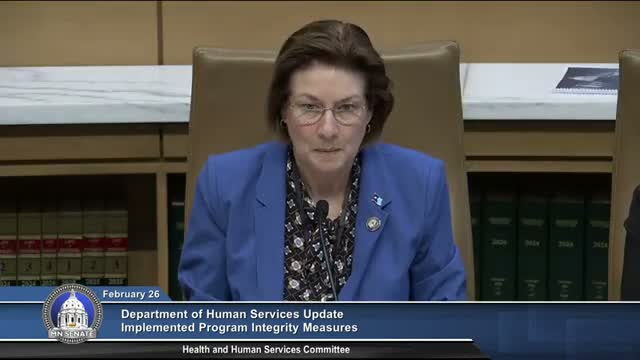
ST. PAUL, Minn. — Department of Human Services officials told the Health and Human Services Finance and Policy Committee on Feb. 26 that they have accelerated program‑integrity work to prevent and detect fraud and to strengthen oversight of Medicaid and grant payments.
Christy Graum, who led the department’s program‑integrity briefing, said DHS is emphasizing transparency, prevention, detection and enforcement. Recent steps include enhanced data analytics, a public dashboard of high‑risk provider types, targeted audits and on‑site visits for high‑risk services, and changes to licensing and enforcement authority.
Graum said the department has submitted corrective action plans to the Centers for Medicare & Medicaid Services and has implemented a range of statutory changes approved by the legislature last session: broader authority to share claims data with state and federal agencies, lifting some surety‑bond limitations to aid recovery, temporary licensing moratoria for certain home and community‑based services and a provisional licensure pathway for EIDBI providers.
Graum also described the department’s prepayment review initiative, which is designed to stop improper payments before they are disbursed. Senator Lisky raised concerns about the choice of vendor Optum for prepayment review; Graum said Optum met an urgent timeline for implementation and that the contract is approximately one year long. DHS said it plans to pursue a request for information in the future for a more competitive procurement if funding allows.
DHS confirmed the department has taken enforcement actions, including discontinuing a housing stability program when integrity concerns were identified, and said the Inspector General’s Office has shifted to a prevention‑first posture. Graum also said the department has conducted more than 3,000 investigations since 2020 and referred over 500 entities to law enforcement partners including the Bureau of Criminal Apprehension, the Attorney General and federal partners.
Committee members pressed DHS on the timing and transparency of a vendor vulnerability assessment that DHS provided in redacted form; Graum said redactions were due to a security‑data statute (cited as section 13.37) and that DHS is exploring ways to share more information with legislative chairs confidentially.
Graum said the department recognizes the need to educate new providers and grantees about program rules and to invest in administrative capacity so grant managers have time and tools to monitor contracts. She described recent and ongoing investments, including the Central Grants Office and upgrades to the contracts integration system.
What happens next: DHS said it will continue to expand prepayment review, pursue additional analytics and training, and work with the legislature on policy recommendations and potential funding for sustained administrative capacity.
Christy Graum, who led the department’s program‑integrity briefing, said DHS is emphasizing transparency, prevention, detection and enforcement. Recent steps include enhanced data analytics, a public dashboard of high‑risk provider types, targeted audits and on‑site visits for high‑risk services, and changes to licensing and enforcement authority.
Graum said the department has submitted corrective action plans to the Centers for Medicare & Medicaid Services and has implemented a range of statutory changes approved by the legislature last session: broader authority to share claims data with state and federal agencies, lifting some surety‑bond limitations to aid recovery, temporary licensing moratoria for certain home and community‑based services and a provisional licensure pathway for EIDBI providers.
Graum also described the department’s prepayment review initiative, which is designed to stop improper payments before they are disbursed. Senator Lisky raised concerns about the choice of vendor Optum for prepayment review; Graum said Optum met an urgent timeline for implementation and that the contract is approximately one year long. DHS said it plans to pursue a request for information in the future for a more competitive procurement if funding allows.
DHS confirmed the department has taken enforcement actions, including discontinuing a housing stability program when integrity concerns were identified, and said the Inspector General’s Office has shifted to a prevention‑first posture. Graum also said the department has conducted more than 3,000 investigations since 2020 and referred over 500 entities to law enforcement partners including the Bureau of Criminal Apprehension, the Attorney General and federal partners.
Committee members pressed DHS on the timing and transparency of a vendor vulnerability assessment that DHS provided in redacted form; Graum said redactions were due to a security‑data statute (cited as section 13.37) and that DHS is exploring ways to share more information with legislative chairs confidentially.
Graum said the department recognizes the need to educate new providers and grantees about program rules and to invest in administrative capacity so grant managers have time and tools to monitor contracts. She described recent and ongoing investments, including the Central Grants Office and upgrades to the contracts integration system.
What happens next: DHS said it will continue to expand prepayment review, pursue additional analytics and training, and work with the legislature on policy recommendations and potential funding for sustained administrative capacity.
View the Full Meeting & All Its Details
This article offers just a summary. Unlock complete video, transcripts, and insights as a Founder Member.
✓
Watch full, unedited meeting videos
✓
Search every word spoken in unlimited transcripts
✓
AI summaries & real-time alerts (all government levels)
✓
Permanent access to expanding government content
30-day money-back guarantee
