Committee hears overview of HB369, an energy omnibus with 40% diversified‑portfolio target by 2036
February 26, 2026 | 2026 Legislature Alaska, Alaska
This article was created by AI summarizing key points discussed. AI makes mistakes, so for full details and context, please refer to the video of the full meeting. Please report any errors so we can fix them. Report an error »
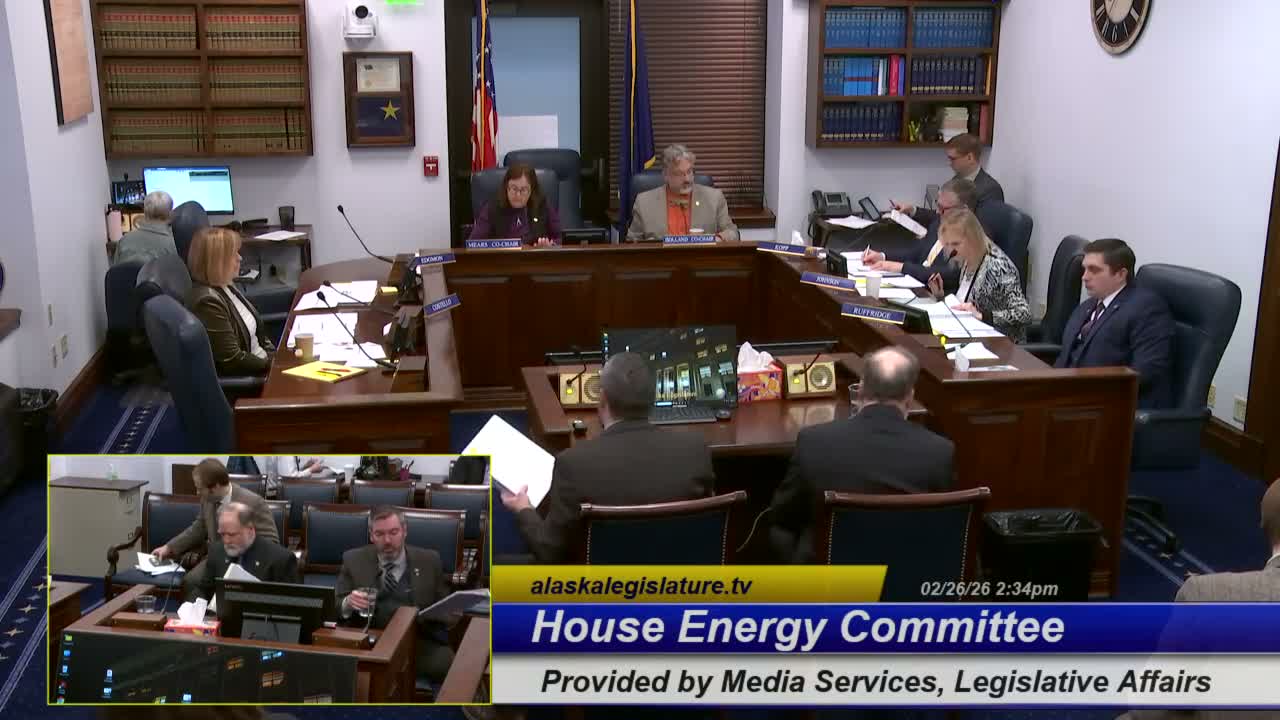
The House Special Committee on Energy received a brief overview Feb. 26 of House Bill 369, a committee omnibus intended to address energy affordability by diversifying Alaska’s electricity supply and updating related policy and program timing.
Representative Colin Holland, sponsor of the committee bill, said the measure incorporates lessons from last session’s House Bill 153 and combines multiple proposals into one vehicle intended to stabilize costs and increase supply options. Tim Truer, staff to Representative Holland, walked the committee through slides describing the bill’s goals and structure.
Key elements described in the presentation include a new diversified portfolio standard (DPS) with a single target of 40% diversified energy resources by 2036; an expanded list of resources that can count toward the DPS, including wind, hydro, solar, geothermal, nuclear and certain fossil resources that meet specified 'clean' criteria; and a provision that would allow gas delivered via a future Phase 2 pipeline to be counted under specified conditions. Truer said the target was simplified from prior versions and that the bill removes the fines previously proposed in the earlier RPS approach, instead focusing on incentives, IRP integration and preapproval of qualifying large projects.
Sections highlighted included preapproval authority for large projects that advance the DPS, updates to the Renewable Energy Fund timing and advisory committee deadlines so project recommendations can feed the governor’s budget process, and a role for the Department of Environmental Conservation in evaluating whether a fossil project meets the bill’s 'clean' criteria.
Members asked clarifying questions about wind multipliers, the definition of 'clean coal' and whether the DPS would unduly predetermine the outcome of the Rail Belt Reliability Council’s integrated resource plan (IRP). Representative Holland and staff said the bill aims to be compatible with the IRP; they acknowledged some details (for example, the precise 'clean coal' criteria and operational definitions) would require follow up and that more committee hearings will be scheduled to dive into specifics.
The committee set HB369 aside for future consideration.
Representative Colin Holland, sponsor of the committee bill, said the measure incorporates lessons from last session’s House Bill 153 and combines multiple proposals into one vehicle intended to stabilize costs and increase supply options. Tim Truer, staff to Representative Holland, walked the committee through slides describing the bill’s goals and structure.
Key elements described in the presentation include a new diversified portfolio standard (DPS) with a single target of 40% diversified energy resources by 2036; an expanded list of resources that can count toward the DPS, including wind, hydro, solar, geothermal, nuclear and certain fossil resources that meet specified 'clean' criteria; and a provision that would allow gas delivered via a future Phase 2 pipeline to be counted under specified conditions. Truer said the target was simplified from prior versions and that the bill removes the fines previously proposed in the earlier RPS approach, instead focusing on incentives, IRP integration and preapproval of qualifying large projects.
Sections highlighted included preapproval authority for large projects that advance the DPS, updates to the Renewable Energy Fund timing and advisory committee deadlines so project recommendations can feed the governor’s budget process, and a role for the Department of Environmental Conservation in evaluating whether a fossil project meets the bill’s 'clean' criteria.
Members asked clarifying questions about wind multipliers, the definition of 'clean coal' and whether the DPS would unduly predetermine the outcome of the Rail Belt Reliability Council’s integrated resource plan (IRP). Representative Holland and staff said the bill aims to be compatible with the IRP; they acknowledged some details (for example, the precise 'clean coal' criteria and operational definitions) would require follow up and that more committee hearings will be scheduled to dive into specifics.
The committee set HB369 aside for future consideration.
View the Full Meeting & All Its Details
This article offers just a summary. Unlock complete video, transcripts, and insights as a Founder Member.
✓
Watch full, unedited meeting videos
✓
Search every word spoken in unlimited transcripts
✓
AI summaries & real-time alerts (all government levels)
✓
Permanent access to expanding government content
30-day money-back guarantee
