Senate committee hears bill to expand veteran sentencing options, cites Minnesota model
February 26, 2026 | 2026 Legislature Alaska, Alaska
This article was created by AI summarizing key points discussed. AI makes mistakes, so for full details and context, please refer to the video of the full meeting. Please report any errors so we can fix them. Report an error »
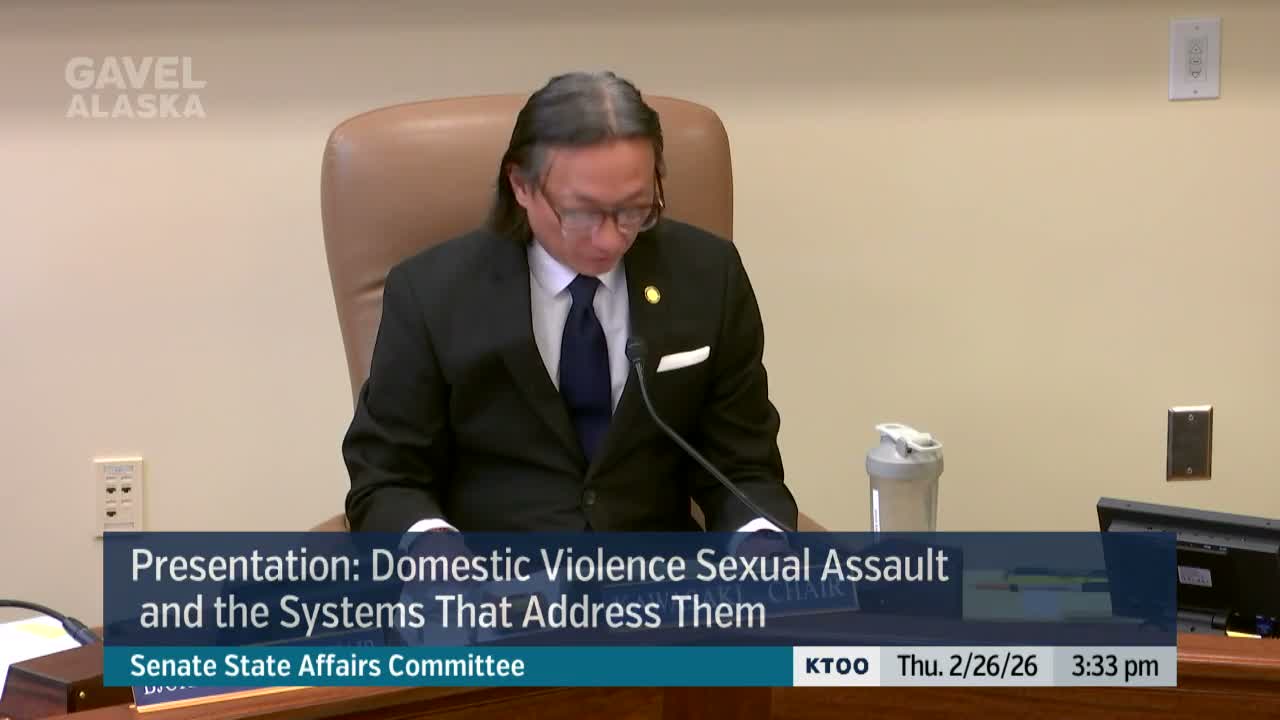
Senator Lukey Tobin introduced Senate Bill 236 on Feb. 26, saying the Veterans Justice Act would give judges the option of using probation, treatment and veteran‑specific case plans in place of incarceration for eligible veterans charged with offenses up to class C felony level. "Here in Alaska, 'thank you for your service' should be more than just words," Tobin said.
The bill would create a presumption in favor of a Veteran Sentencing Option (VSO) for eligible cases and authorize courts to set aside convictions, reduce felonies to misdemeanors, or dismiss cases when veterans successfully complete court‑ordered case plans. Staff described statutory components including an officer question at arrest about veteran status, a requirement to inform defendants about the VSO at bail or release, eligibility standards tied to service‑related mental or physical conditions, public‑safety screening, and a tracking and evaluation requirement for outcome data.
Brock Hunter, co‑founder of the Veterans Defense Project and an attorney who helped draft a similar law in Minnesota, testified that the measure builds on existing veterans treatment courts and would expand therapeutic options to parts of Alaska that lack VTCs. Hunter said Alaska currently has two VTCs (Anchorage and Fairbanks) and the statutory framework would allow judges in other jurisdictions to apply veteran‑sensitive sentencing without creating a formal VTC in every community. He pointed to Minnesota’s 2021 law and cited a Minnesota fiscal analysis the sponsor summarized as showing long‑term savings.
Phil Hokanson, chair of the Alaska Veterans Advisory Council, described the local benefits he said VTC‑style programs bring: reduced family disruption, continuity of VA benefits, and individualized supervision that can include regular check‑ins, drug testing and behavioral‑health treatment. Tammy Perot, Northwest regional liaison for the Defense State Liaison Office, said the office has backed veterans treatment court policies for over a decade and highlighted geographic barriers in Alaska that make an alternative sentencing statutory option valuable.
Committee members questioned operational and constitutional issues. Chair Kawasaki and Senator Wilikowski asked whether asking about veteran status "immediately after arrest" would conflict with Miranda protections; staff said the language derives from a national model and that stakeholders, including the Department of Law and court systems, have raised the concern and the sponsors will address it in drafting. Senator Wilikowski asked whether creating a veteran‑based sentencing category could raise equal‑protection concerns; a testifier and staff said similar concerns have been raised in other states’ VTC movements and argued the approach targets service‑connected conditions rather than creating an impermissible class.
The sponsor said she would continue collaborating with stakeholders on language and implementation. The committee set SB236 aside for a future hearing; there was no committee vote on the bill.
What happens next: SB236 was set aside for a later committee hearing and sponsors said they will work with Department of Law and court stakeholders to refine language on timing of questioning, eligibility and public‑safety screening.
The bill would create a presumption in favor of a Veteran Sentencing Option (VSO) for eligible cases and authorize courts to set aside convictions, reduce felonies to misdemeanors, or dismiss cases when veterans successfully complete court‑ordered case plans. Staff described statutory components including an officer question at arrest about veteran status, a requirement to inform defendants about the VSO at bail or release, eligibility standards tied to service‑related mental or physical conditions, public‑safety screening, and a tracking and evaluation requirement for outcome data.
Brock Hunter, co‑founder of the Veterans Defense Project and an attorney who helped draft a similar law in Minnesota, testified that the measure builds on existing veterans treatment courts and would expand therapeutic options to parts of Alaska that lack VTCs. Hunter said Alaska currently has two VTCs (Anchorage and Fairbanks) and the statutory framework would allow judges in other jurisdictions to apply veteran‑sensitive sentencing without creating a formal VTC in every community. He pointed to Minnesota’s 2021 law and cited a Minnesota fiscal analysis the sponsor summarized as showing long‑term savings.
Phil Hokanson, chair of the Alaska Veterans Advisory Council, described the local benefits he said VTC‑style programs bring: reduced family disruption, continuity of VA benefits, and individualized supervision that can include regular check‑ins, drug testing and behavioral‑health treatment. Tammy Perot, Northwest regional liaison for the Defense State Liaison Office, said the office has backed veterans treatment court policies for over a decade and highlighted geographic barriers in Alaska that make an alternative sentencing statutory option valuable.
Committee members questioned operational and constitutional issues. Chair Kawasaki and Senator Wilikowski asked whether asking about veteran status "immediately after arrest" would conflict with Miranda protections; staff said the language derives from a national model and that stakeholders, including the Department of Law and court systems, have raised the concern and the sponsors will address it in drafting. Senator Wilikowski asked whether creating a veteran‑based sentencing category could raise equal‑protection concerns; a testifier and staff said similar concerns have been raised in other states’ VTC movements and argued the approach targets service‑connected conditions rather than creating an impermissible class.
The sponsor said she would continue collaborating with stakeholders on language and implementation. The committee set SB236 aside for a future hearing; there was no committee vote on the bill.
What happens next: SB236 was set aside for a later committee hearing and sponsors said they will work with Department of Law and court stakeholders to refine language on timing of questioning, eligibility and public‑safety screening.
View the Full Meeting & All Its Details
This article offers just a summary. Unlock complete video, transcripts, and insights as a Founder Member.
✓
Watch full, unedited meeting videos
✓
Search every word spoken in unlimited transcripts
✓
AI summaries & real-time alerts (all government levels)
✓
Permanent access to expanding government content
30-day money-back guarantee
