House passes trafficking‑law overhaul aimed at narrowing offenses and protecting good‑faith employers
February 26, 2026 | 2026 Utah Legislature, Utah Legislature, Utah Legislative Branch, Utah
This article was created by AI summarizing key points discussed. AI makes mistakes, so for full details and context, please refer to the video of the full meeting. Please report any errors so we can fix them. Report an error »
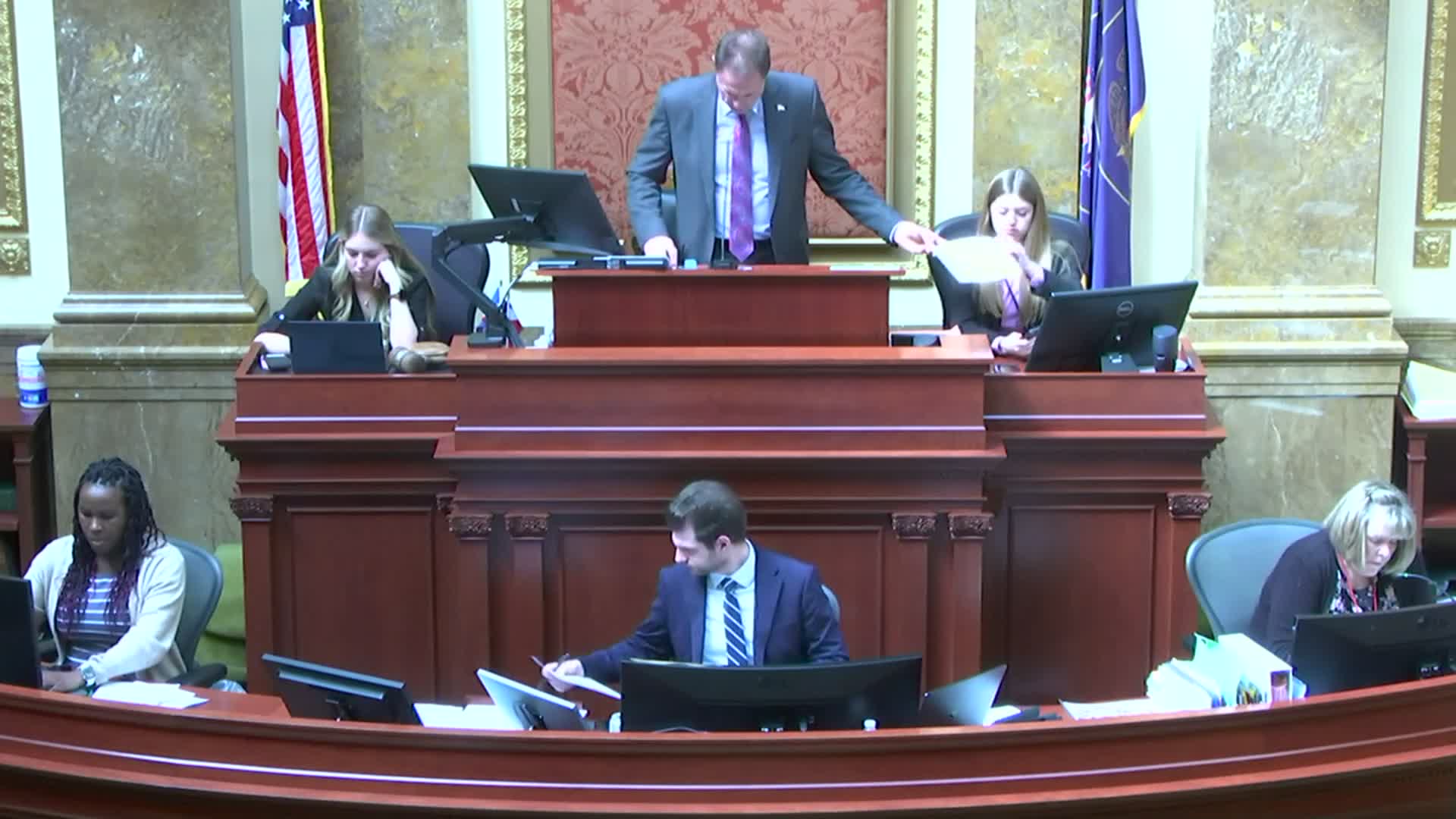
SALT LAKE CITY — The Utah House passed first substitute Senate Bill 30 on Wednesday, approving a package intended to simplify and tighten state human‑trafficking statutes while clarifying who should be liable for criminal conduct.
Sponsor Representative Wilcox told colleagues the current statutory scheme had become a ‘‘patchwork’’ of overlapping offenses and varying mens rea standards that made prosecution harder and sometimes ensnared employers acting in good faith. "What we're really going for is to fix that issue as well as the broadness of the law for good faith employers right now, where they sometimes get caught up in issues they are unaware of," Wilcox said during floor explanations.
Representative Perucci asked whether SB30 would undo last session’s enhancements to trafficking penalties; Wilcox replied it would not. The bill distinguishes between conduct that is intentional and conduct that is reckless, and applies higher penalties to traffickers who knowingly exploit others. Wilcox said the language was developed with the attorney general’s office, prosecutors and law enforcement during the interim.
The House debated the bill’s mens rea distinctions and penalty structure before voting. First substitute SB30 passed the House 42–7 and will return to the Senate for further consideration.
What the bill does
• Reorganizes trafficking and exploitation offenses to reduce overlapping offenses and clarify elements.
• Refines mens rea standards so that higher penalties apply where an actor knowingly or intentionally exploits another person; a reckless standard is used for other misconduct where appropriate.
• Adds an offense intended to address people who knowingly or recklessly use labor from someone who may be exploited.
Responses and next steps
Wilcox said the aim is to ensure prosecutors can pursue ‘‘actual traffickers’’ without unintentionally penalizing lawful employers. Questions from members focused on how the intentional and reckless standards will be applied in practice; Wilcox said the drafting involved prosecutors and the attorney general’s office to align with prosecutorial standards.
The House approved SB30 42–7. The bill will return to the Senate for its consideration, and implementation details (including prosecutorial guidance) will depend on final engrossed language and any further Senate action.
Sponsor Representative Wilcox told colleagues the current statutory scheme had become a ‘‘patchwork’’ of overlapping offenses and varying mens rea standards that made prosecution harder and sometimes ensnared employers acting in good faith. "What we're really going for is to fix that issue as well as the broadness of the law for good faith employers right now, where they sometimes get caught up in issues they are unaware of," Wilcox said during floor explanations.
Representative Perucci asked whether SB30 would undo last session’s enhancements to trafficking penalties; Wilcox replied it would not. The bill distinguishes between conduct that is intentional and conduct that is reckless, and applies higher penalties to traffickers who knowingly exploit others. Wilcox said the language was developed with the attorney general’s office, prosecutors and law enforcement during the interim.
The House debated the bill’s mens rea distinctions and penalty structure before voting. First substitute SB30 passed the House 42–7 and will return to the Senate for further consideration.
What the bill does
• Reorganizes trafficking and exploitation offenses to reduce overlapping offenses and clarify elements.
• Refines mens rea standards so that higher penalties apply where an actor knowingly or intentionally exploits another person; a reckless standard is used for other misconduct where appropriate.
• Adds an offense intended to address people who knowingly or recklessly use labor from someone who may be exploited.
Responses and next steps
Wilcox said the aim is to ensure prosecutors can pursue ‘‘actual traffickers’’ without unintentionally penalizing lawful employers. Questions from members focused on how the intentional and reckless standards will be applied in practice; Wilcox said the drafting involved prosecutors and the attorney general’s office to align with prosecutorial standards.
The House approved SB30 42–7. The bill will return to the Senate for its consideration, and implementation details (including prosecutorial guidance) will depend on final engrossed language and any further Senate action.
View the Full Meeting & All Its Details
This article offers just a summary. Unlock complete video, transcripts, and insights as a Founder Member.
✓
Watch full, unedited meeting videos
✓
Search every word spoken in unlimited transcripts
✓
AI summaries & real-time alerts (all government levels)
✓
Permanent access to expanding government content
30-day money-back guarantee
