Utah Senate advances dozens of House bills, confirms appointments and passes state employee benefits bill
February 26, 2026 | 2026 Utah Legislature, Utah Legislature, Utah Legislative Branch, Utah
This article was created by AI summarizing key points discussed. AI makes mistakes, so for full details and context, please refer to the video of the full meeting. Please report any errors so we can fix them. Report an error »
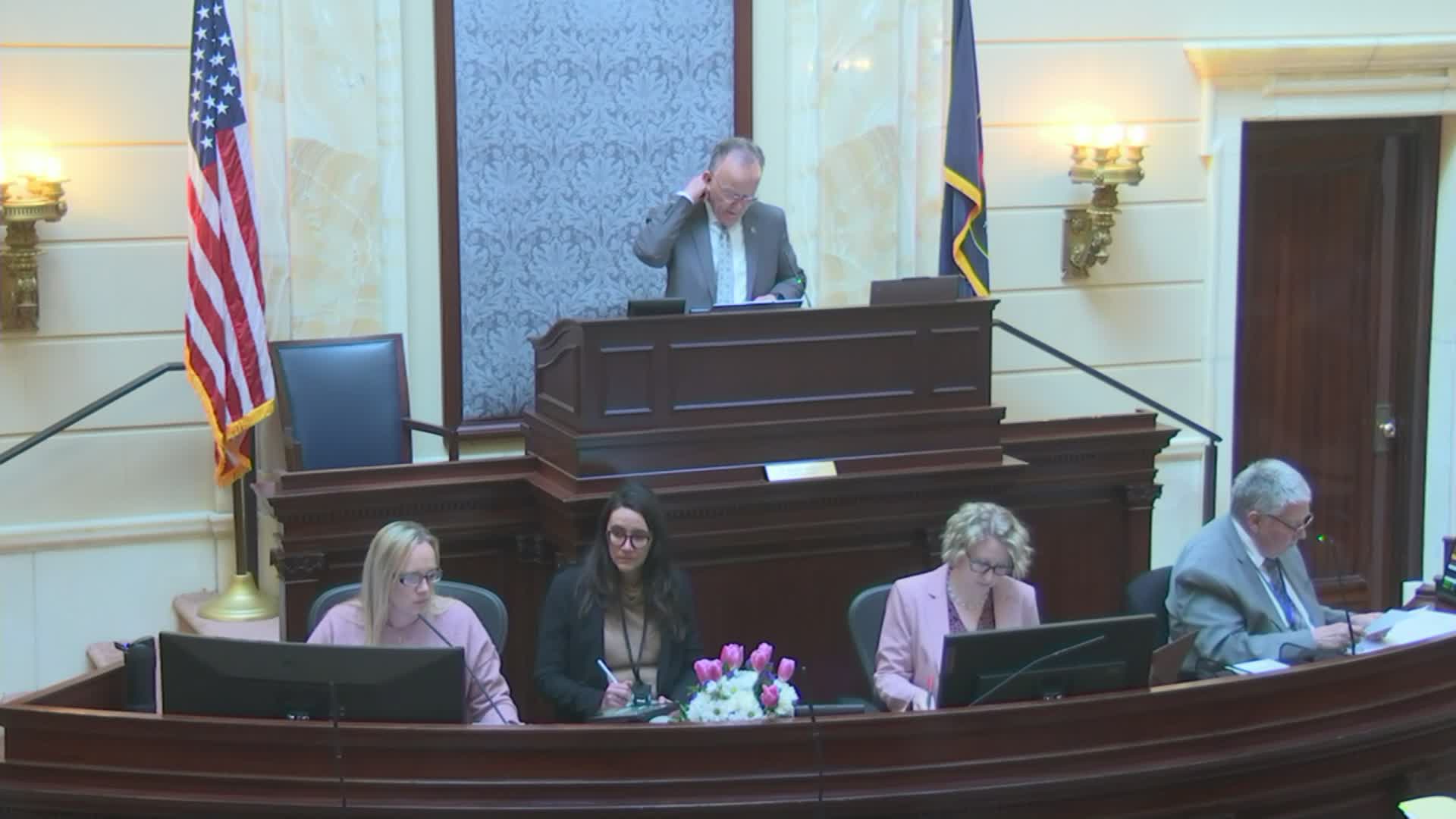
The Utah State Senate on Jan. 26 handled a broad slate of floor business: it transmitted and enrolled bills from the House, consented to gubernatorial appointments, assigned dozens of House bills to standing committees, and advanced multiple measures to third reading or final passage.
Why it matters: The floor actions sent a set of policy priorities back to the House for further action, while several bills — including a state employee benefits package and hospital workplace‑violence reporting reforms — drew substantive debate that will shape implementation and fiscal planning.
Major floor actions and outcomes
- Appointments: The Senate accepted communications from the governor transmitting appointments and, after committee recommendations, consented to the slate reported by committee (roll call recorded as 22 ayes, 0 nays, 7 absent). The transmitted appointments included Lauren Palmer to the Air Quality Board and Karen Marriott to the University of Utah Board of Trustees, among others. (Governor Spencer J. Cox transmitted the nominations.)
- Committee assignments: The Rules Committee (Chair Lincoln Fillmore) assigned many House bills to standing committees, including H.B. 462 (school bus internet access), H.B. 509 (wetlands study), and H.B. 498 (Utah App Store Accountability Act), among others.
- Third‑reading and disposition highlights: Several bills were read for a third time and either passed, were amended, or were tabled pending fiscal notes. Examples: first substitute H.B. 217 (stolen vehicle amendments) and first substitute H.B. 320 (AI policy lab) were read for a third time; H.B. 300 (school district taxation) cleared third reading (18‑5); H.B. 178 (school zone speeding) and H.B. 23 (service animal amendments) were read for a third time after sponsor presentations; some bills (including H.B. 324) were tabled on third for fiscal impact.
- Notable passage: Second substitute S.B. 229 (state employee benefits) passed the Senate and will be transmitted to the House (vote recorded 18 ayes, 9 nays, 2 absent). The measure was debated at length on employee leave, grandfathering and administrative feasibility before passage.
Debate and next steps
Floor debate frequently turned to fiscal notes and implementation details. Senators repeatedly asked sponsors to supply missing fiscal or operational details before third‑reading votes; where fiscal notes were not yet available, several motions to table or circle the bills were adopted. Where amendments were offered on the floor, sponsors and interested senators worked to reach voice agreements (for example the amendment that changed a sunset year in the hospital reporting bill was agreed by voice and then adopted). Many bills will return to committee or the House for further fiscal coordination before final enactment.
What happens next: Bills that passed the Senate will be transmitted to the House for its consideration; items tabled for fiscal impact will remain on the third‑reading calendar pending completion of fiscal analyses. The Senate recessed until its evening session at 6 p.m. on Jan. 26.
Quotation: "Thank you for your service, and thank you for being with us today," President Adams said as the chamber recognized some confirmed appointees.
Ending: The Senate recessed its afternoon session at 6 p.m.; several measures are still awaiting fiscal notes or House concurrence before becoming law.
Why it matters: The floor actions sent a set of policy priorities back to the House for further action, while several bills — including a state employee benefits package and hospital workplace‑violence reporting reforms — drew substantive debate that will shape implementation and fiscal planning.
Major floor actions and outcomes
- Appointments: The Senate accepted communications from the governor transmitting appointments and, after committee recommendations, consented to the slate reported by committee (roll call recorded as 22 ayes, 0 nays, 7 absent). The transmitted appointments included Lauren Palmer to the Air Quality Board and Karen Marriott to the University of Utah Board of Trustees, among others. (Governor Spencer J. Cox transmitted the nominations.)
- Committee assignments: The Rules Committee (Chair Lincoln Fillmore) assigned many House bills to standing committees, including H.B. 462 (school bus internet access), H.B. 509 (wetlands study), and H.B. 498 (Utah App Store Accountability Act), among others.
- Third‑reading and disposition highlights: Several bills were read for a third time and either passed, were amended, or were tabled pending fiscal notes. Examples: first substitute H.B. 217 (stolen vehicle amendments) and first substitute H.B. 320 (AI policy lab) were read for a third time; H.B. 300 (school district taxation) cleared third reading (18‑5); H.B. 178 (school zone speeding) and H.B. 23 (service animal amendments) were read for a third time after sponsor presentations; some bills (including H.B. 324) were tabled on third for fiscal impact.
- Notable passage: Second substitute S.B. 229 (state employee benefits) passed the Senate and will be transmitted to the House (vote recorded 18 ayes, 9 nays, 2 absent). The measure was debated at length on employee leave, grandfathering and administrative feasibility before passage.
Debate and next steps
Floor debate frequently turned to fiscal notes and implementation details. Senators repeatedly asked sponsors to supply missing fiscal or operational details before third‑reading votes; where fiscal notes were not yet available, several motions to table or circle the bills were adopted. Where amendments were offered on the floor, sponsors and interested senators worked to reach voice agreements (for example the amendment that changed a sunset year in the hospital reporting bill was agreed by voice and then adopted). Many bills will return to committee or the House for further fiscal coordination before final enactment.
What happens next: Bills that passed the Senate will be transmitted to the House for its consideration; items tabled for fiscal impact will remain on the third‑reading calendar pending completion of fiscal analyses. The Senate recessed until its evening session at 6 p.m. on Jan. 26.
Quotation: "Thank you for your service, and thank you for being with us today," President Adams said as the chamber recognized some confirmed appointees.
Ending: The Senate recessed its afternoon session at 6 p.m.; several measures are still awaiting fiscal notes or House concurrence before becoming law.
Don't Miss a Word: See the Full Meeting!
Go beyond summaries. Unlock every video, transcript, and key insight with a Founder Membership.
✓
Get instant access to full meeting videos
✓
Search and clip any phrase from complete transcripts
✓
Receive AI-powered summaries & custom alerts
✓
Enjoy lifetime, unrestricted access to government data
30-day money-back guarantee
