Committee advances investigative‑warrant tool for child-welfare cases after heated public comment
February 26, 2026 | 2026 Utah Legislature, Utah Legislature, Utah Legislative Branch, Utah
This article was created by AI summarizing key points discussed. AI makes mistakes, so for full details and context, please refer to the video of the full meeting. Please report any errors so we can fix them. Report an error »
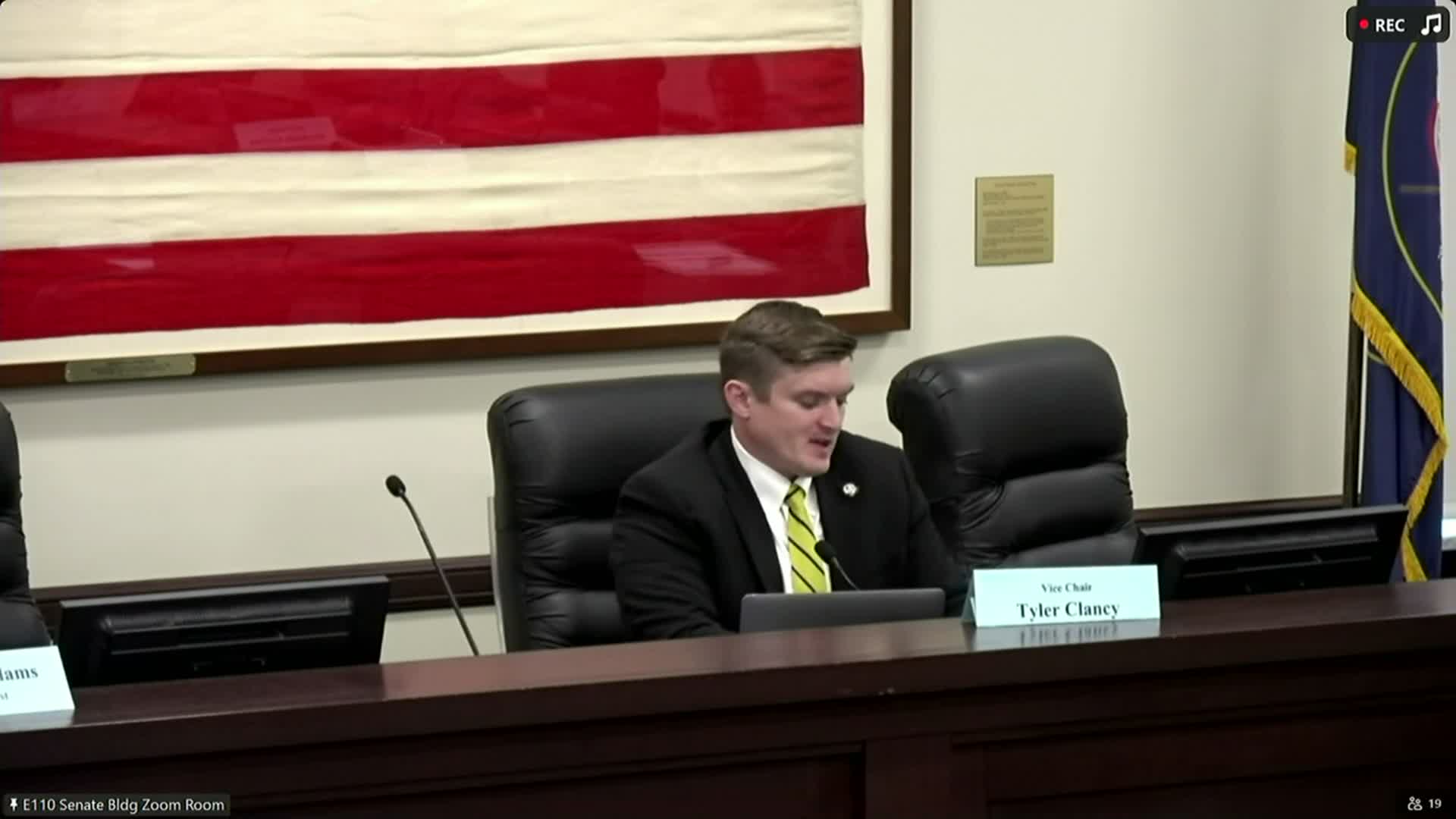
A Utah House committee voted to advance first substitute Senate Bill 124, a bill that would create a narrowly scoped investigative-warrant procedure permitting juvenile courts to authorize limited access to children when credible evidence indicates serious harm and caregivers are denying access.
Sponsor Senator Escamilla told the committee the measure responds to the death of a child, identified in committee as Gavin Peterson, whom legislators said was isolated from community visibility. "This bill creates a narrowly tailored investigative warrant that allows a court, not DCFS alone, to authorize limited access to a child when there is credible evidence-based concern for serious harm," the sponsor said, stressing that the mechanism is for investigation, not removal.
Supporters included foster-care alumni and practitioners, the Utah PTA, victim-services leaders and DCFS leadership. Natalie Clark, who said she grew up in foster care, urged the committee to support the bill as a way to avoid the binary choice between doing nothing and removal. Tanya Myroup, director of the Division of Child and Family Services, said the measure "reduces confusion and provides a stronger legal foundation for action needed to assure child safety" and reiterated that the warrant is a fact-finding tool, not an automatic removal authority.
Opponents from Utah Eagle Forum and parents who recounted adversarial experiences with DCFS warned the bill could permit intrusive searches and erode family integrity. Olivia Dawn testified of a false-report case that led to lengthy litigation and said forced entry and examinations without parental consent could cause trauma. Other speakers raised concerns about the probable-cause standard and the definition of "credible" or "reasonable person." Online commenters echoed both concerns and support.
Sponsor Escamilla offered Amendment 1 to remove draft language found unnecessary and to sharpen investigative-only scope; the committee adopted the amendment by voice vote. Representative Acton moved to favorably recommend the substitute as amended; a roll-call vote followed. The clerk reported the motion passed by a recorded vote reported as 5 to 4, and the bill will move to the House floor.
Committee debate highlighted the bill’s narrow drafting, its requirement for judicial review and probable-cause findings, and stakeholder negotiations involving defense counsel, sentencing and parole entities, victim advocates and child-welfare practitioners. Lawmakers in the majority emphasized the tool as a last resort to get "eyes on" children when a credible threat exists; opponents urged stricter limits to protect parental rights and avoid misuse.
The bill will proceed to the full House with the committee’s favorable recommendation as amended.
Sponsor Senator Escamilla told the committee the measure responds to the death of a child, identified in committee as Gavin Peterson, whom legislators said was isolated from community visibility. "This bill creates a narrowly tailored investigative warrant that allows a court, not DCFS alone, to authorize limited access to a child when there is credible evidence-based concern for serious harm," the sponsor said, stressing that the mechanism is for investigation, not removal.
Supporters included foster-care alumni and practitioners, the Utah PTA, victim-services leaders and DCFS leadership. Natalie Clark, who said she grew up in foster care, urged the committee to support the bill as a way to avoid the binary choice between doing nothing and removal. Tanya Myroup, director of the Division of Child and Family Services, said the measure "reduces confusion and provides a stronger legal foundation for action needed to assure child safety" and reiterated that the warrant is a fact-finding tool, not an automatic removal authority.
Opponents from Utah Eagle Forum and parents who recounted adversarial experiences with DCFS warned the bill could permit intrusive searches and erode family integrity. Olivia Dawn testified of a false-report case that led to lengthy litigation and said forced entry and examinations without parental consent could cause trauma. Other speakers raised concerns about the probable-cause standard and the definition of "credible" or "reasonable person." Online commenters echoed both concerns and support.
Sponsor Escamilla offered Amendment 1 to remove draft language found unnecessary and to sharpen investigative-only scope; the committee adopted the amendment by voice vote. Representative Acton moved to favorably recommend the substitute as amended; a roll-call vote followed. The clerk reported the motion passed by a recorded vote reported as 5 to 4, and the bill will move to the House floor.
Committee debate highlighted the bill’s narrow drafting, its requirement for judicial review and probable-cause findings, and stakeholder negotiations involving defense counsel, sentencing and parole entities, victim advocates and child-welfare practitioners. Lawmakers in the majority emphasized the tool as a last resort to get "eyes on" children when a credible threat exists; opponents urged stricter limits to protect parental rights and avoid misuse.
The bill will proceed to the full House with the committee’s favorable recommendation as amended.
View the Full Meeting & All Its Details
This article offers just a summary. Unlock complete video, transcripts, and insights as a Founder Member.
✓
Watch full, unedited meeting videos
✓
Search every word spoken in unlimited transcripts
✓
AI summaries & real-time alerts (all government levels)
✓
Permanent access to expanding government content
30-day money-back guarantee
