Committee advances SB 209 to study Gooseberry Narrows for possible state park despite opposition from anglers and some local interests
February 26, 2026 | 2026 Utah Legislature, Utah Legislature, Utah Legislative Branch, Utah
This article was created by AI summarizing key points discussed. AI makes mistakes, so for full details and context, please refer to the video of the full meeting. Please report any errors so we can fix them. Report an error »
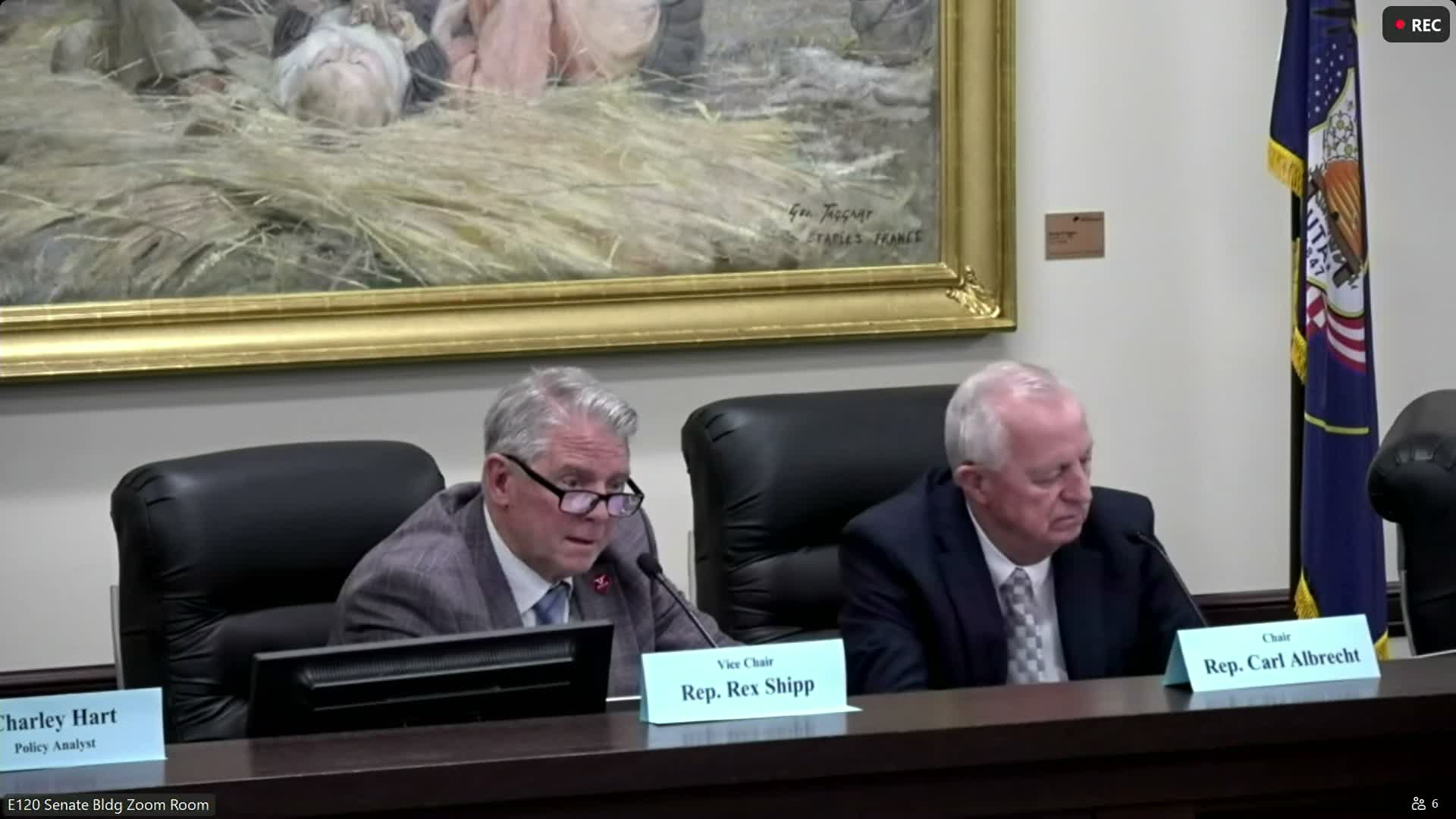
Senator Owens presented Senate Bill 209 (third substitute) on Feb. 26, asking the legislature to appropriate $5,000 to Utah State Parks to study whether Gooseberry Narrows could become a state park and to evaluate feasibility for any future storage or reservoir. Owens told the committee the measure is a study only and said it would allow State Parks to engage local communities and evaluate options.
Blake Bingham, deputy state engineer in the Division of Water Rights, summarized the complicated water‑rights history: 1941 applications sought a 17,000‑acre‑foot reservoir; approvals were later pared to about 14,500 acre‑feet, with roughly 5,400 acre‑feet associated with the Sanpete side. Scott Strong, director of Utah State Parks, said the agency routinely studies potential park sites, engages local communities, and that the $5,000 fiscal note covers the feasibility work.
Public comment was mixed. Jeff Salt of the Utah Anglers Coalition opposed using State Parks as a vehicle to advance a storage project and urged that water districts shoulder responsibilities for water projects; he cited a 2016 Army Corps of Engineers decision critical of prior analyses. Craig Smith, an attorney representing the Price River Water Improvement District, warned the project could reduce flows to Scofield Reservoir by “20% to 50%” and pointed to algal‑bloom concerns at Scofield.
Representative Watkins offered Amendment No. 1 to expand the study to explicitly include water storage impacts, Schofield/Scofield water quality, Colorado River system management and economic impacts to Sanpete and Carbon counties. Sponsor Senator Owens and other members objected to how and when the amendment was filed and argued the amendment risked turning a limited $5,000 study into a far broader mandate. The committee voted and the amendment failed (recorded as 2 in favor, 8 opposed).
Representative Albrecht then moved to pass SB 209 (third sub) with a favorable recommendation, saying the modest study will provide clarity; the committee approved the bill by recorded voice and counted votes as 9 in favor, 1 opposed. The favorable recommendation advances SB 209 for further consideration in the legislative process.
The committee record and public testimony noted decades of prior environmental impact statements and analyses. Several witnesses said technical studies and prior EIS work exist and that any future design or construction would require extensive environmental review and regulatory permits (including Army Corps of Engineers and other federal reviews). The committee did not authorize construction or appropriate funds for a reservoir; it approved a feasibility study by Utah State Parks.
Blake Bingham, deputy state engineer in the Division of Water Rights, summarized the complicated water‑rights history: 1941 applications sought a 17,000‑acre‑foot reservoir; approvals were later pared to about 14,500 acre‑feet, with roughly 5,400 acre‑feet associated with the Sanpete side. Scott Strong, director of Utah State Parks, said the agency routinely studies potential park sites, engages local communities, and that the $5,000 fiscal note covers the feasibility work.
Public comment was mixed. Jeff Salt of the Utah Anglers Coalition opposed using State Parks as a vehicle to advance a storage project and urged that water districts shoulder responsibilities for water projects; he cited a 2016 Army Corps of Engineers decision critical of prior analyses. Craig Smith, an attorney representing the Price River Water Improvement District, warned the project could reduce flows to Scofield Reservoir by “20% to 50%” and pointed to algal‑bloom concerns at Scofield.
Representative Watkins offered Amendment No. 1 to expand the study to explicitly include water storage impacts, Schofield/Scofield water quality, Colorado River system management and economic impacts to Sanpete and Carbon counties. Sponsor Senator Owens and other members objected to how and when the amendment was filed and argued the amendment risked turning a limited $5,000 study into a far broader mandate. The committee voted and the amendment failed (recorded as 2 in favor, 8 opposed).
Representative Albrecht then moved to pass SB 209 (third sub) with a favorable recommendation, saying the modest study will provide clarity; the committee approved the bill by recorded voice and counted votes as 9 in favor, 1 opposed. The favorable recommendation advances SB 209 for further consideration in the legislative process.
The committee record and public testimony noted decades of prior environmental impact statements and analyses. Several witnesses said technical studies and prior EIS work exist and that any future design or construction would require extensive environmental review and regulatory permits (including Army Corps of Engineers and other federal reviews). The committee did not authorize construction or appropriate funds for a reservoir; it approved a feasibility study by Utah State Parks.
Don't Miss a Word: See the Full Meeting!
Go beyond summaries. Unlock every video, transcript, and key insight with a Founder Membership.
✓
Get instant access to full meeting videos
✓
Search and clip any phrase from complete transcripts
✓
Receive AI-powered summaries & custom alerts
✓
Enjoy lifetime, unrestricted access to government data
30-day money-back guarantee
