Debate stalls committee action on wildlife‑crossing fund after dispute over earmark from TIF
February 26, 2026 | 2026 Utah Legislature, Utah Legislature, Utah Legislative Branch, Utah
This article was created by AI summarizing key points discussed. AI makes mistakes, so for full details and context, please refer to the video of the full meeting. Please report any errors so we can fix them. Report an error »
House Bill 431, introduced by Representative Chu, would create a non‑lapsing $2 million account within the Transportation Infrastructure Fund for wildlife and livestock safety projects, financed by sales and use tax, voluntary donations and optional additions at DMV registration or on hunting/fishing licenses. Representative Chu cited the Parleys Canyon crossing and told the committee "Wildlife vehicle collisions cost Utah taxpayers $135,000,000 annually."
Why it mattered: The bill drew broad public support from conservation groups, hunting and agriculture organizations, and wildlife advocates who cited UDOT data and studies showing crossings can sharply reduce collisions and save money over time. Isabelle Lingenfelter of the Utah Wildlife Federation told the committee "there are over 7,000 mule deer hit on Utah's roads annually" and that crossings can prevent up to 90% of collisions in targeted locations.
The sticking point in committee was funding: several senators, led by Senator Brammer, said they supported the concept but worried that earmarking $2 million annually from the TIF creates a restricted fund that could divert money from other priority transportation projects. Lisa Wilson, UDOT deputy director for engineering and operations, testified that "TIF is specifically set aside for capacity projects" and said standalone wildlife crossings typically do not qualify for TIF prioritization, though she noted the bill’s fund could accept donations to help pursue larger projects or federal matches.
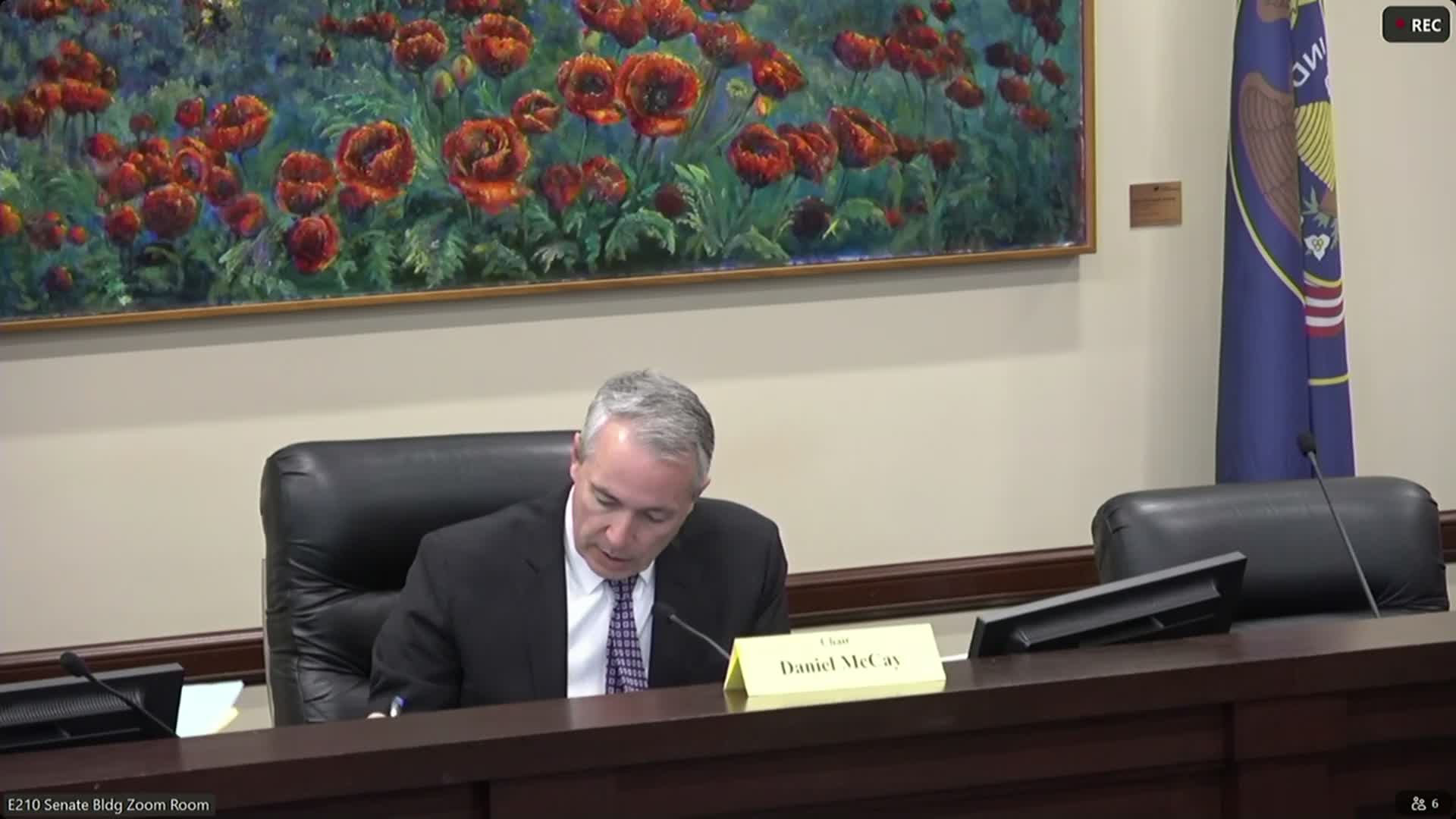
Outcome and next steps: Committee members attempted a voice vote after debate but procedural confusion followed; Chairman Dan McKay ruled the outcome a 3–3 tie. He suggested the sponsor meet with UDOT and the Transportation Commission to explore whether wildlife mitigation could be added as an evaluative criterion in the TIF prioritization process rather than created as a dedicated, restricted earmark. Representative Chu agreed to pursue those discussions and return with revised language or a strategy.
Why it mattered: The bill drew broad public support from conservation groups, hunting and agriculture organizations, and wildlife advocates who cited UDOT data and studies showing crossings can sharply reduce collisions and save money over time. Isabelle Lingenfelter of the Utah Wildlife Federation told the committee "there are over 7,000 mule deer hit on Utah's roads annually" and that crossings can prevent up to 90% of collisions in targeted locations.
The sticking point in committee was funding: several senators, led by Senator Brammer, said they supported the concept but worried that earmarking $2 million annually from the TIF creates a restricted fund that could divert money from other priority transportation projects. Lisa Wilson, UDOT deputy director for engineering and operations, testified that "TIF is specifically set aside for capacity projects" and said standalone wildlife crossings typically do not qualify for TIF prioritization, though she noted the bill’s fund could accept donations to help pursue larger projects or federal matches.
Outcome and next steps: Committee members attempted a voice vote after debate but procedural confusion followed; Chairman Dan McKay ruled the outcome a 3–3 tie. He suggested the sponsor meet with UDOT and the Transportation Commission to explore whether wildlife mitigation could be added as an evaluative criterion in the TIF prioritization process rather than created as a dedicated, restricted earmark. Representative Chu agreed to pursue those discussions and return with revised language or a strategy.
View the Full Meeting & All Its Details
This article offers just a summary. Unlock complete video, transcripts, and insights as a Founder Member.
✓
Watch full, unedited meeting videos
✓
Search every word spoken in unlimited transcripts
✓
AI summaries & real-time alerts (all government levels)
✓
Permanent access to expanding government content
30-day money-back guarantee
