Utah committee backs resolution seeking federal help on drones and contraband phones in prisons
February 26, 2026 | 2026 Utah Legislature, Utah Legislature, Utah Legislative Branch, Utah
This article was created by AI summarizing key points discussed. AI makes mistakes, so for full details and context, please refer to the video of the full meeting. Please report any errors so we can fix them. Report an error »
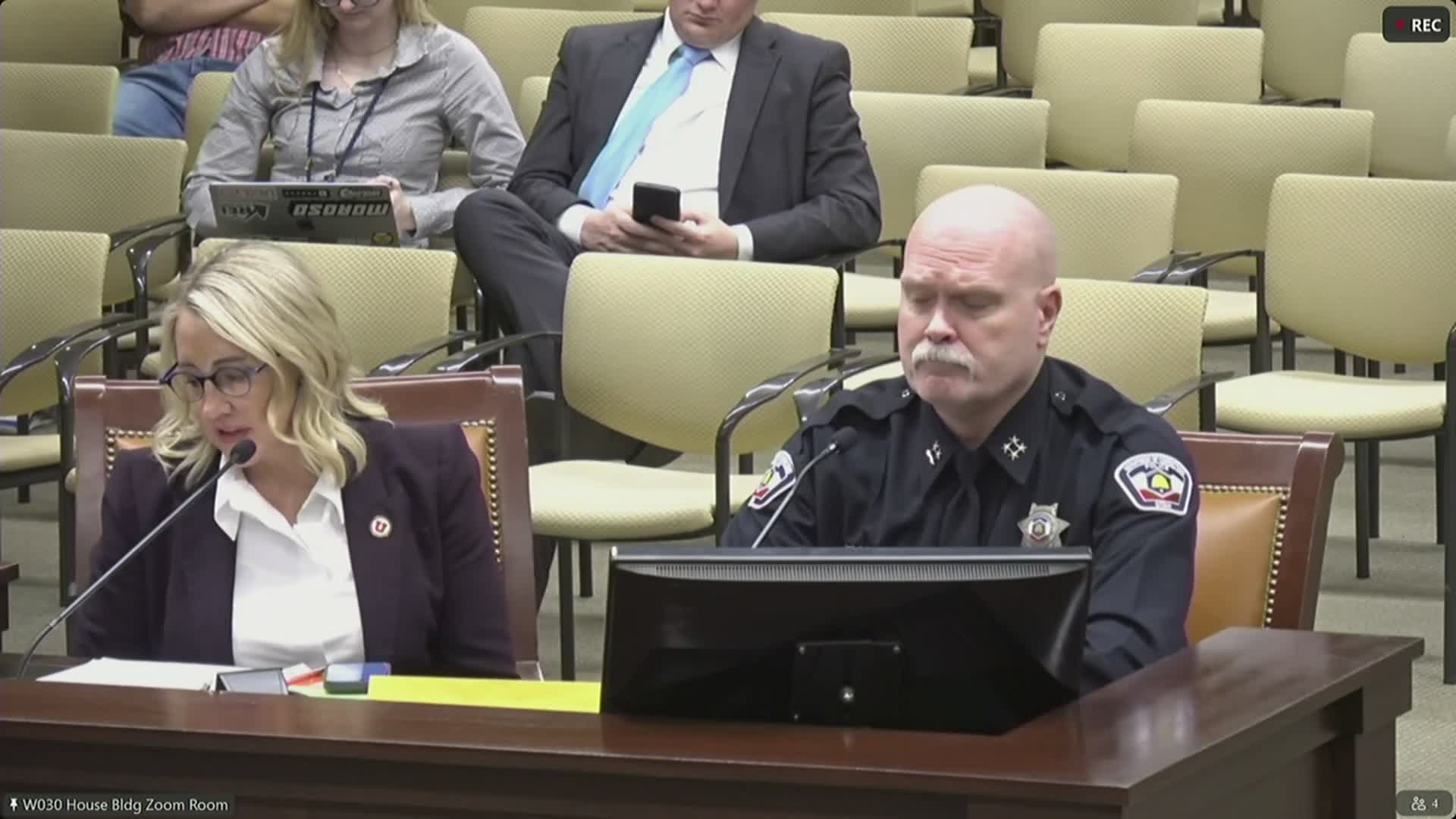
Representative Melissa G. Ballard urged the House Law Enforcement and Criminal Justice Committee to support a resolution asking Congress to protect prisons from unmanned aircraft and to back federal reauthorization of the Second Chance Reauthorization Act, and the committee voted unanimously to give that resolution a favorable recommendation.
Ballard, sponsor of HJR 4, said the measure seeks two federal responses and a state-level tool: reauthorization of the Second Chance Act funding, authority to address contraband cell phones inside state correctional facilities, and limits on drones flying over prisons. "I do think it's valuable to still keep it in here because you never know what happens to funding," Ballard said when describing the resolution's request on Second Chance Act support.
Mike Schonfeld, deputy executive director of the Utah Department of Corrections, described results from a roughly three-month pilot with AirSight, a drone-detection vendor. "We're seeing drones out in the area of our prisons here at USCF," Schonfeld said, describing detections that appear to show drones flying low and making brief drops. He told the committee that UDC served a search warrant on a detected drone operator who is a parolee and gang member and that officers found firearms and packaged drugs at the residence.
Schonfeld also detailed the scale of contraband phone issues and the challenges of detection. He said some systems picked up preprogrammed drones less reliably and that operators can mask lights and fly quietly. "We would love to be able to jam cell phones in there," he said, while also noting the need to whitelist medically necessary or approved work phones so that patients and staff retain required communications.
Committee members asked whether federal rules limit state responses. Schonfeld said Federal Aviation Administration guidelines prevent states from interfering with a drone's flight path and that the Federal Bureau of Prisons can jam phones at federal facilities; he said state authority to do the same likely requires federal action. Representative White asked whether there had been federal movement on those issues; Schonfeld said he was aware of discussion but not of any traction in Washington, D.C.
With no public commenters, Representative Hollins moved the committee give HJR 4 a favorable recommendation. After a voice vote in which members said "aye," the motion passed unanimously. The committee took a final motion and adjourned.
What happens next: The committee transmitted a favorable recommendation for HJR 4; the resolution’s path beyond committee was not discussed at the hearing.
Ballard, sponsor of HJR 4, said the measure seeks two federal responses and a state-level tool: reauthorization of the Second Chance Act funding, authority to address contraband cell phones inside state correctional facilities, and limits on drones flying over prisons. "I do think it's valuable to still keep it in here because you never know what happens to funding," Ballard said when describing the resolution's request on Second Chance Act support.
Mike Schonfeld, deputy executive director of the Utah Department of Corrections, described results from a roughly three-month pilot with AirSight, a drone-detection vendor. "We're seeing drones out in the area of our prisons here at USCF," Schonfeld said, describing detections that appear to show drones flying low and making brief drops. He told the committee that UDC served a search warrant on a detected drone operator who is a parolee and gang member and that officers found firearms and packaged drugs at the residence.
Schonfeld also detailed the scale of contraband phone issues and the challenges of detection. He said some systems picked up preprogrammed drones less reliably and that operators can mask lights and fly quietly. "We would love to be able to jam cell phones in there," he said, while also noting the need to whitelist medically necessary or approved work phones so that patients and staff retain required communications.
Committee members asked whether federal rules limit state responses. Schonfeld said Federal Aviation Administration guidelines prevent states from interfering with a drone's flight path and that the Federal Bureau of Prisons can jam phones at federal facilities; he said state authority to do the same likely requires federal action. Representative White asked whether there had been federal movement on those issues; Schonfeld said he was aware of discussion but not of any traction in Washington, D.C.
With no public commenters, Representative Hollins moved the committee give HJR 4 a favorable recommendation. After a voice vote in which members said "aye," the motion passed unanimously. The committee took a final motion and adjourned.
What happens next: The committee transmitted a favorable recommendation for HJR 4; the resolution’s path beyond committee was not discussed at the hearing.
Don't Miss a Word: See the Full Meeting!
Go beyond summaries. Unlock every video, transcript, and key insight with a Founder Membership.
✓
Get instant access to full meeting videos
✓
Search and clip any phrase from complete transcripts
✓
Receive AI-powered summaries & custom alerts
✓
Enjoy lifetime, unrestricted access to government data
30-day money-back guarantee
