House adopts SJR 1 to broaden evidence rules in sexual-assault cases
February 26, 2026 | 2026 Utah Legislature, Utah Legislature, Utah Legislative Branch, Utah
This article was created by AI summarizing key points discussed. AI makes mistakes, so for full details and context, please refer to the video of the full meeting. Please report any errors so we can fix them. Report an error »
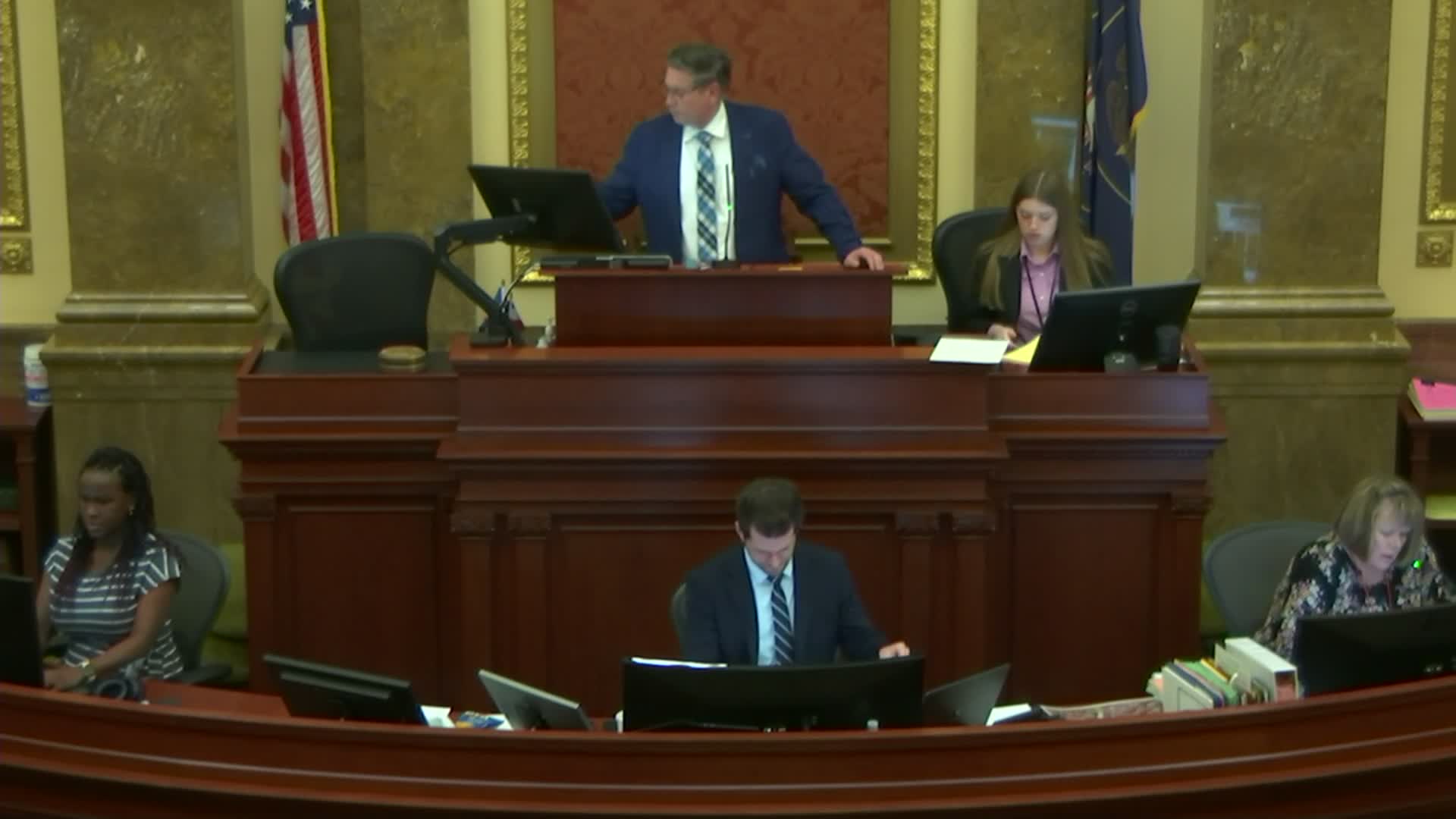
The Utah House on Feb. 26 passed Substitute SJR 1, a joint resolution revising rules of evidence to allow limited prior-act or related-evidence arguments in sexual-assault and similar trials so judges and juries can consider a broader factual record.
Representative Clancy, the House sponsor, told colleagues the resolution aims to ensure “judges and juries have the full truth of this full scope of information about what happened.” He said the standard already exists in federal courts and that the change is intended to give courts more tools to assess admissibility in weighty trials.
Clancy framed the measure as a survivor-centered reform. In his summation he quoted Rachel Denhollander — a prominent survivor and advocate — saying, in effect, that victims deserve “the truth” and that the resolution will help ensure “we have all the facts, all the evidence, and the truth.”
There was no extended floor debate after the sponsor’s presentation; the House voted with a wide margin. The clerk recorded the final tally as 67 yays, 2 nays and 6 absent. The resolution will be signed by the Speaker and transmitted to the Senate.
Supporters said the change would allow judges to make more complete admissibility determinations and better inform juries; opponents raised procedural cautions during committee review but did not sustain a floor hold. Because this is a joint resolution about rules of evidence rather than a statutory change, it operates through the legislature’s rulemaking and court-procedure mechanisms rather than creating a new criminal offense or penalty.
The next procedural step is transmittal to the Senate for its concurrence and any separate action the upper chamber may take.
Representative Clancy, the House sponsor, told colleagues the resolution aims to ensure “judges and juries have the full truth of this full scope of information about what happened.” He said the standard already exists in federal courts and that the change is intended to give courts more tools to assess admissibility in weighty trials.
Clancy framed the measure as a survivor-centered reform. In his summation he quoted Rachel Denhollander — a prominent survivor and advocate — saying, in effect, that victims deserve “the truth” and that the resolution will help ensure “we have all the facts, all the evidence, and the truth.”
There was no extended floor debate after the sponsor’s presentation; the House voted with a wide margin. The clerk recorded the final tally as 67 yays, 2 nays and 6 absent. The resolution will be signed by the Speaker and transmitted to the Senate.
Supporters said the change would allow judges to make more complete admissibility determinations and better inform juries; opponents raised procedural cautions during committee review but did not sustain a floor hold. Because this is a joint resolution about rules of evidence rather than a statutory change, it operates through the legislature’s rulemaking and court-procedure mechanisms rather than creating a new criminal offense or penalty.
The next procedural step is transmittal to the Senate for its concurrence and any separate action the upper chamber may take.
View the Full Meeting & All Its Details
This article offers just a summary. Unlock complete video, transcripts, and insights as a Founder Member.
✓
Watch full, unedited meeting videos
✓
Search every word spoken in unlimited transcripts
✓
AI summaries & real-time alerts (all government levels)
✓
Permanent access to expanding government content
30-day money-back guarantee
