Committee adopts UCC disclosure substitute in HB543 to warn investors about securities-intermediary entitlements
February 26, 2026 | 2026 Utah Legislature, Utah Legislature, Utah Legislative Branch, Utah
This article was created by AI summarizing key points discussed. AI makes mistakes, so for full details and context, please refer to the video of the full meeting. Please report any errors so we can fix them. Report an error »
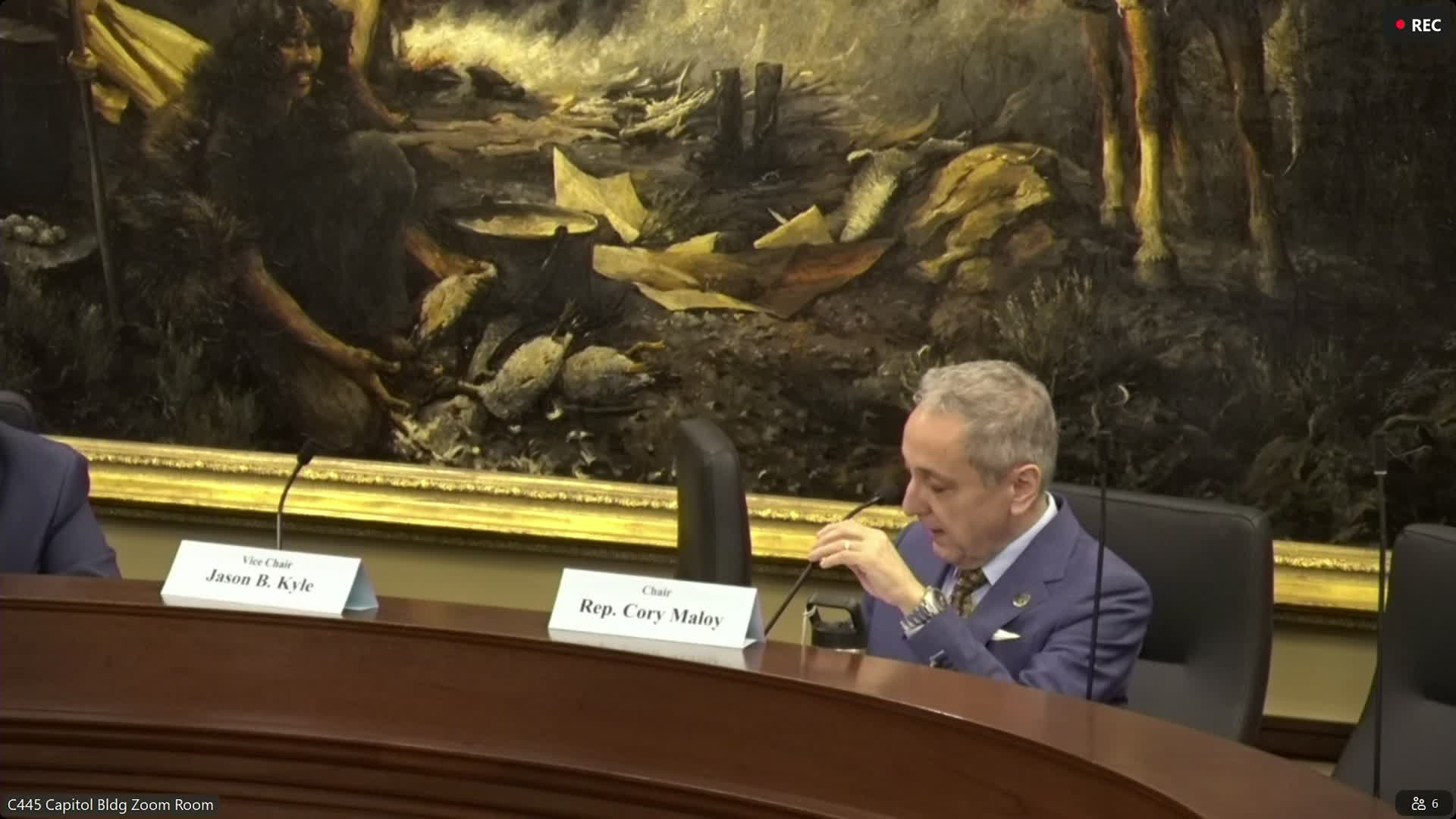
Representative Kyle presented HB543 and its substitute as a consumer-notice measure aimed at increasing investor awareness that assets held through securities intermediaries may be "entitlements" under the Uniform Commercial Code and could be used as collateral. "What the substitute does is it says you need to... give a brief description of the practical implication of the financial assets being subject to that subsection," the sponsor said.
Committee members asked whether this legal structure has led to losses for retail investors in past crises; the sponsor and members referenced the 2008 Lehman Brothers failure as an example where investors faced uncertainty. "It has happened with Lehman Brothers," the sponsor said, adding that bailouts later resolved some losses but stressing the system can be fragile.
Representative Ivory pressed on how ordinary investors would know and what consequences they might face; the sponsor said most people are unaware and that the substitute requires a conspicuous disclosure to inform investors that an intermediary may hold their entitlement and that a bank could have first priority under code sections.
The committee adopted the first substitute by voice vote and then voted to pass HB543 (first substitute) with a favorable recommendation. Members urged continued study of priority rules and potential national solutions; the committee’s action advances the disclosure requirement to later legislative steps.
Committee members asked whether this legal structure has led to losses for retail investors in past crises; the sponsor and members referenced the 2008 Lehman Brothers failure as an example where investors faced uncertainty. "It has happened with Lehman Brothers," the sponsor said, adding that bailouts later resolved some losses but stressing the system can be fragile.
Representative Ivory pressed on how ordinary investors would know and what consequences they might face; the sponsor said most people are unaware and that the substitute requires a conspicuous disclosure to inform investors that an intermediary may hold their entitlement and that a bank could have first priority under code sections.
The committee adopted the first substitute by voice vote and then voted to pass HB543 (first substitute) with a favorable recommendation. Members urged continued study of priority rules and potential national solutions; the committee’s action advances the disclosure requirement to later legislative steps.
View the Full Meeting & All Its Details
This article offers just a summary. Unlock complete video, transcripts, and insights as a Founder Member.
✓
Watch full, unedited meeting videos
✓
Search every word spoken in unlimited transcripts
✓
AI summaries & real-time alerts (all government levels)
✓
Permanent access to expanding government content
30-day money-back guarantee
