Committee backs bill to bar requiring polygraphs of sexual-assault victims
February 26, 2026 | 2026 Utah Legislature, Utah Legislature, Utah Legislative Branch, Utah
This article was created by AI summarizing key points discussed. AI makes mistakes, so for full details and context, please refer to the video of the full meeting. Please report any errors so we can fix them. Report an error »
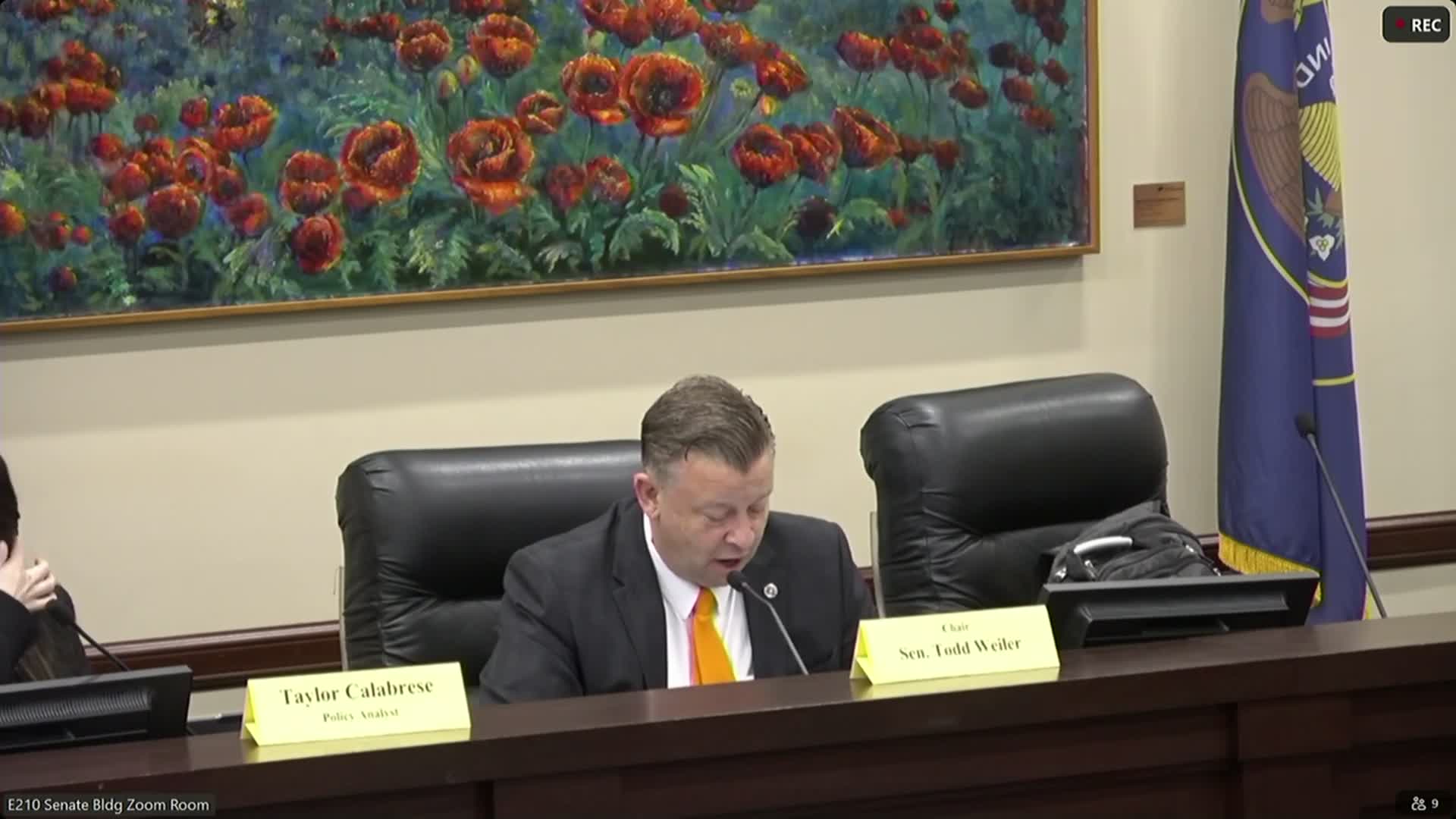
Salt Lake City — The Senate Judiciary Committee voted to favorably recommend House Bill 89, a measure that would bar law enforcement, prosecutors and courts from asking or requiring sexual-assault victims to take polygraph examinations.
Representative Romero, the bill sponsor, told the committee the measure prevents investigators or prosecutors from conditioning an investigation on whether a victim submits to a polygraph. "So basically what this bill does is ... law enforcement, prosecutors, courts or government officials may not ask or require a victim of sexual assault to submit a polygraph exam," Romero said.
Marlise Jones of the Victim Services Commission and Dan Strong of the Commission on Criminal and Juvenile Justice described the polygraph’s scientific limitations and said trauma responses—accelerated heart rate, perspiration, irregular breathing—can be misread as deception. "A polygraph is not admissible in court and shouldn't be relied on for guilt or innocence," Jones said.
Opponents included the Utah Defense Attorney Association. Steve Burton said defense counsel sometimes uses polygraphs to show an accused is willing to take a test and to request parity with an accuser. "I don't have any problem with the part of the bill that says that the law enforcement officer or the prosecutor has to require a victim to take a polygraph test. But as with Senator Brammer's concern, my concern is that they can't even ask," Burton said.
Nate Mudder, chair of the Law Enforcement Legislative Committee (participating online), said law enforcement supports the ban on asking victims to take polygraphs because polygraph results are not evidence and investigators should rely on admissible interviews and investigative work. "The polygraph is not a piece of evidence that we can rely on," Mudder said.
Senators questioned whether asking a victim—combined with clear warnings about unreliability and voluntariness—could be a less restrictive approach. Supporters replied trauma responses are autonomic and cannot be reliably mitigated by additional warnings.
After discussion, Senator Escamilla moved to favorably recommend HB 89; the committee recorded a unanimous favorable recommendation (vote recorded as 5-0 with Senator Brammer online). The motion sends HB 89 to the full Senate for further consideration.
Representative Romero, the bill sponsor, told the committee the measure prevents investigators or prosecutors from conditioning an investigation on whether a victim submits to a polygraph. "So basically what this bill does is ... law enforcement, prosecutors, courts or government officials may not ask or require a victim of sexual assault to submit a polygraph exam," Romero said.
Marlise Jones of the Victim Services Commission and Dan Strong of the Commission on Criminal and Juvenile Justice described the polygraph’s scientific limitations and said trauma responses—accelerated heart rate, perspiration, irregular breathing—can be misread as deception. "A polygraph is not admissible in court and shouldn't be relied on for guilt or innocence," Jones said.
Opponents included the Utah Defense Attorney Association. Steve Burton said defense counsel sometimes uses polygraphs to show an accused is willing to take a test and to request parity with an accuser. "I don't have any problem with the part of the bill that says that the law enforcement officer or the prosecutor has to require a victim to take a polygraph test. But as with Senator Brammer's concern, my concern is that they can't even ask," Burton said.
Nate Mudder, chair of the Law Enforcement Legislative Committee (participating online), said law enforcement supports the ban on asking victims to take polygraphs because polygraph results are not evidence and investigators should rely on admissible interviews and investigative work. "The polygraph is not a piece of evidence that we can rely on," Mudder said.
Senators questioned whether asking a victim—combined with clear warnings about unreliability and voluntariness—could be a less restrictive approach. Supporters replied trauma responses are autonomic and cannot be reliably mitigated by additional warnings.
After discussion, Senator Escamilla moved to favorably recommend HB 89; the committee recorded a unanimous favorable recommendation (vote recorded as 5-0 with Senator Brammer online). The motion sends HB 89 to the full Senate for further consideration.
View the Full Meeting & All Its Details
This article offers just a summary. Unlock complete video, transcripts, and insights as a Founder Member.
✓
Watch full, unedited meeting videos
✓
Search every word spoken in unlimited transcripts
✓
AI summaries & real-time alerts (all government levels)
✓
Permanent access to expanding government content
30-day money-back guarantee
