Committee backs HB 247 to redirect brine-shrimp royalties to Great Salt Lake projects, industry and youth voices back measure but disagree on delayed start
February 26, 2026 | 2026 Utah Legislature, Utah Legislature, Utah Legislative Branch, Utah
This article was created by AI summarizing key points discussed. AI makes mistakes, so for full details and context, please refer to the video of the full meeting. Please report any errors so we can fix them. Report an error »
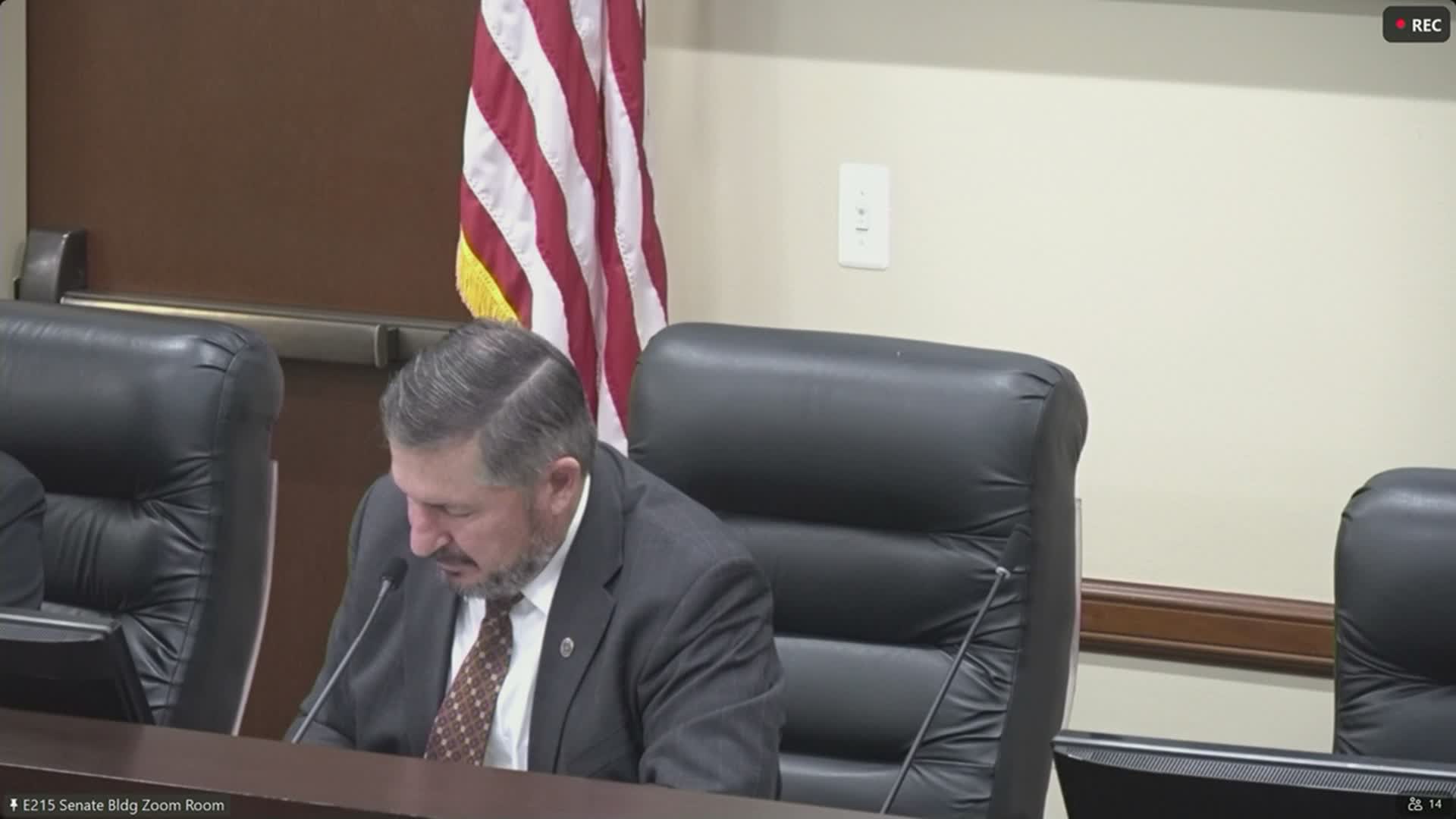
The Senate Natural Resources Committee voted to favorably recommend House Bill 247 (second substitute), which would redirect brine-shrimp royalty revenue into the state sovereign lands account for projects benefitting the Great Salt Lake, including water leases and measures to protect the brine shrimp population.
Representative Ward told the committee the bill is a continuation of recent actions to reprioritize revenue toward species protection and Great Salt Lake restoration. He said the bill delays the change in account routing by roughly a year and a half to allow anticipated new revenue from a recently enacted renewable-energy tax to materialize and to avoid shortfalls.
Industry witnesses and advisory-board members expressed mixed views. Tim Hawks, representing the Great Salt Lake brine-shrimp industry, said his group broadly supports moving revenue back to the resource "from which it's derived" but opposed the delayed implementation because a recent brine shrimp windfall will increase next year's royalty by roughly $500,000 above a normal $800,000 baseline; under the delay that money would still go to the endangered-species mitigation fund rather than to sovereign-lands projects. Bridal Summers of the Utah Mining Association and Ricky Renko Browning of the Utah Petroleum Association supported the delay, arguing it provides a runway to ensure revenues from prior tax changes materialize before redirecting funds. Farm Bureau and other advisory-board members also testified in favor of the delay to avoid destabilizing multi-year projects that rely on SPA money.
Youth and environmental groups testified in strong support of directing brine-shrimp royalties to Great Salt Lake work. Leah Mount Lamalfa, founder of Youth Coalition for Great Salt Lake, urged passage and noted the bill "does not call for any additional money from the legislature" but redirects existing industry collections to lake-specific projects. Carmen Valdez of HEAL Utah and Elizabeth Currit Thompson of Mormon Women for Ethical Government also urged passage, citing public-health, economic and stewardship reasons.
Senators discussed the ecosystem complexities linking headwaters, forest health and downstream water availability; the committee ultimately voted to pass HB 247 to the full Senate with a favorable recommendation and the chair recorded unanimous passage.
Representative Ward told the committee the bill is a continuation of recent actions to reprioritize revenue toward species protection and Great Salt Lake restoration. He said the bill delays the change in account routing by roughly a year and a half to allow anticipated new revenue from a recently enacted renewable-energy tax to materialize and to avoid shortfalls.
Industry witnesses and advisory-board members expressed mixed views. Tim Hawks, representing the Great Salt Lake brine-shrimp industry, said his group broadly supports moving revenue back to the resource "from which it's derived" but opposed the delayed implementation because a recent brine shrimp windfall will increase next year's royalty by roughly $500,000 above a normal $800,000 baseline; under the delay that money would still go to the endangered-species mitigation fund rather than to sovereign-lands projects. Bridal Summers of the Utah Mining Association and Ricky Renko Browning of the Utah Petroleum Association supported the delay, arguing it provides a runway to ensure revenues from prior tax changes materialize before redirecting funds. Farm Bureau and other advisory-board members also testified in favor of the delay to avoid destabilizing multi-year projects that rely on SPA money.
Youth and environmental groups testified in strong support of directing brine-shrimp royalties to Great Salt Lake work. Leah Mount Lamalfa, founder of Youth Coalition for Great Salt Lake, urged passage and noted the bill "does not call for any additional money from the legislature" but redirects existing industry collections to lake-specific projects. Carmen Valdez of HEAL Utah and Elizabeth Currit Thompson of Mormon Women for Ethical Government also urged passage, citing public-health, economic and stewardship reasons.
Senators discussed the ecosystem complexities linking headwaters, forest health and downstream water availability; the committee ultimately voted to pass HB 247 to the full Senate with a favorable recommendation and the chair recorded unanimous passage.
Don't Miss a Word: See the Full Meeting!
Go beyond summaries. Unlock every video, transcript, and key insight with a Founder Membership.
✓
Get instant access to full meeting videos
✓
Search and clip any phrase from complete transcripts
✓
Receive AI-powered summaries & custom alerts
✓
Enjoy lifetime, unrestricted access to government data
30-day money-back guarantee
