Museum lecture recounts Little Rock Arsenal crisis and the February 1861 surrender of weapons to the governor
February 26, 2026 | Little Rock City, Pulaski County, Arkansas
This article was created by AI summarizing key points discussed. AI makes mistakes, so for full details and context, please refer to the video of the full meeting. Please report any errors so we can fix them. Report an error »
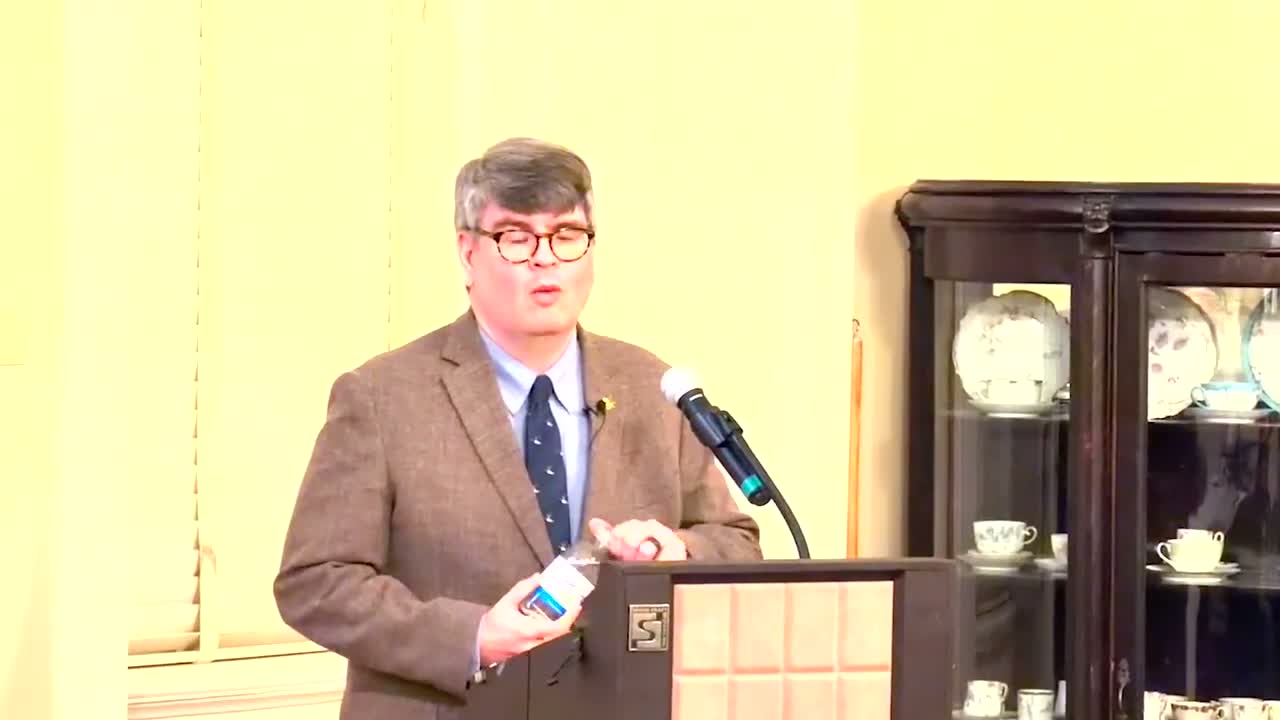
Dr. David Sesser, an associate professor and library director, told a museum audience that the Little Rock Arsenal crisis in February 1861 grew from overlapping elections, new telegraph communications and competing authorities in Little Rock City.
Sesser said the federal post at the Little Rock Arsenal held hundreds of weapons — about 1,300 percussion small arms, roughly 54 rifles, smoothbore muskets and four pieces of field artillery — and that the arrival of a U.S. Army battery commanded by Captain James Totten (about 76 men) in December 1860 placed a small federal garrison in a politically tense southern city.
“The telegraph connected Little Rock to the Eastern Seaboard, and with it came rumors,” Sesser said, describing telegraphed reports attributed to U.S. Attorney John M. Harrell that federal reinforcements were en route. “Those messages prompted offers of volunteers — one reply offered ‘500 volunteers’ to take the arsenal before reinforcements could arrive.”
Those volunteer offers, Sesser said, were not federal troops but militia drawn from counties across the state (Sesser listed Phillips, Jefferson, Prairie, White, Monroe, Hot Springs, Saline and Montgomery among contributors). Local leaders and militia units converged on the city, and the Little Rock City Council called out the capital guards on Feb. 6 to try to contain armed men in the streets, Sesser said.
Tensions escalated between Governor Henry Rector and Captain Totten. Rector instructed Totten not to send additional federal forces and urged him to ‘quiet the public mind.’ Totten, Sesser said, repeatedly appealed to Washington for guidance and made clear he reported to Army superiors, not the governor.
Facing thousands of armed volunteers and without timely direction from Washington, Rector appointed John Selden Roane as acting commander of militia in Little Rock and ordered two companies to march on the arsenal. Sesser said the federal garrison formally evacuated and that at 3:00 a.m. on Feb. 8, 1861, Captain Totten entrusted the arsenal’s weapons personally to Governor Rector “until Arkansas decided to leave the union.” Totten and his men then camped on the riverbank and later boarded a steamboat to St. Louis, Sesser said.
Sesser framed those developments as part of broader southern collapses of federal arsenals in early 1861 — citing similar surrenders at Texas, Georgia and Louisiana posts — and described how Arkansas voters on Feb. 18, 1861, approved calling a secession convention (about 27,000 to 15,000). Sesser noted that while convention delegates initially delayed a final decision, the attack on Fort Sumter and subsequent events led the convention to vote to secede, with Isaac Murphy the lone delegate to oppose secession.
Sesser closed by saying the episode shows how new technology (the telegraph) mixed with local politics and militia mobilization to create a volatile environment in Little Rock City, and he expressed relief that the first blood of the Civil War did not begin there.
The museum hosted the event in partnership with the Civil War Roundtable of Arkansas; Sesser is the author of a book on the Little Rock Arsenal crisis and a recipient of recognitions for his regional Civil War scholarship.
Sesser said the federal post at the Little Rock Arsenal held hundreds of weapons — about 1,300 percussion small arms, roughly 54 rifles, smoothbore muskets and four pieces of field artillery — and that the arrival of a U.S. Army battery commanded by Captain James Totten (about 76 men) in December 1860 placed a small federal garrison in a politically tense southern city.
“The telegraph connected Little Rock to the Eastern Seaboard, and with it came rumors,” Sesser said, describing telegraphed reports attributed to U.S. Attorney John M. Harrell that federal reinforcements were en route. “Those messages prompted offers of volunteers — one reply offered ‘500 volunteers’ to take the arsenal before reinforcements could arrive.”
Those volunteer offers, Sesser said, were not federal troops but militia drawn from counties across the state (Sesser listed Phillips, Jefferson, Prairie, White, Monroe, Hot Springs, Saline and Montgomery among contributors). Local leaders and militia units converged on the city, and the Little Rock City Council called out the capital guards on Feb. 6 to try to contain armed men in the streets, Sesser said.
Tensions escalated between Governor Henry Rector and Captain Totten. Rector instructed Totten not to send additional federal forces and urged him to ‘quiet the public mind.’ Totten, Sesser said, repeatedly appealed to Washington for guidance and made clear he reported to Army superiors, not the governor.
Facing thousands of armed volunteers and without timely direction from Washington, Rector appointed John Selden Roane as acting commander of militia in Little Rock and ordered two companies to march on the arsenal. Sesser said the federal garrison formally evacuated and that at 3:00 a.m. on Feb. 8, 1861, Captain Totten entrusted the arsenal’s weapons personally to Governor Rector “until Arkansas decided to leave the union.” Totten and his men then camped on the riverbank and later boarded a steamboat to St. Louis, Sesser said.
Sesser framed those developments as part of broader southern collapses of federal arsenals in early 1861 — citing similar surrenders at Texas, Georgia and Louisiana posts — and described how Arkansas voters on Feb. 18, 1861, approved calling a secession convention (about 27,000 to 15,000). Sesser noted that while convention delegates initially delayed a final decision, the attack on Fort Sumter and subsequent events led the convention to vote to secede, with Isaac Murphy the lone delegate to oppose secession.
Sesser closed by saying the episode shows how new technology (the telegraph) mixed with local politics and militia mobilization to create a volatile environment in Little Rock City, and he expressed relief that the first blood of the Civil War did not begin there.
The museum hosted the event in partnership with the Civil War Roundtable of Arkansas; Sesser is the author of a book on the Little Rock Arsenal crisis and a recipient of recognitions for his regional Civil War scholarship.
Don't Miss a Word: See the Full Meeting!
Go beyond summaries. Unlock every video, transcript, and key insight with a Founder Membership.
✓
Get instant access to full meeting videos
✓
Search and clip any phrase from complete transcripts
✓
Receive AI-powered summaries & custom alerts
✓
Enjoy lifetime, unrestricted access to government data
30-day money-back guarantee
