Irving staff proposes inspections, parking and location limits in bid to curb short-term rental clustering
February 26, 2026 | Irving, Dallas County, Texas
This article was created by AI summarizing key points discussed. AI makes mistakes, so for full details and context, please refer to the video of the full meeting. Please report any errors so we can fix them. Report an error »
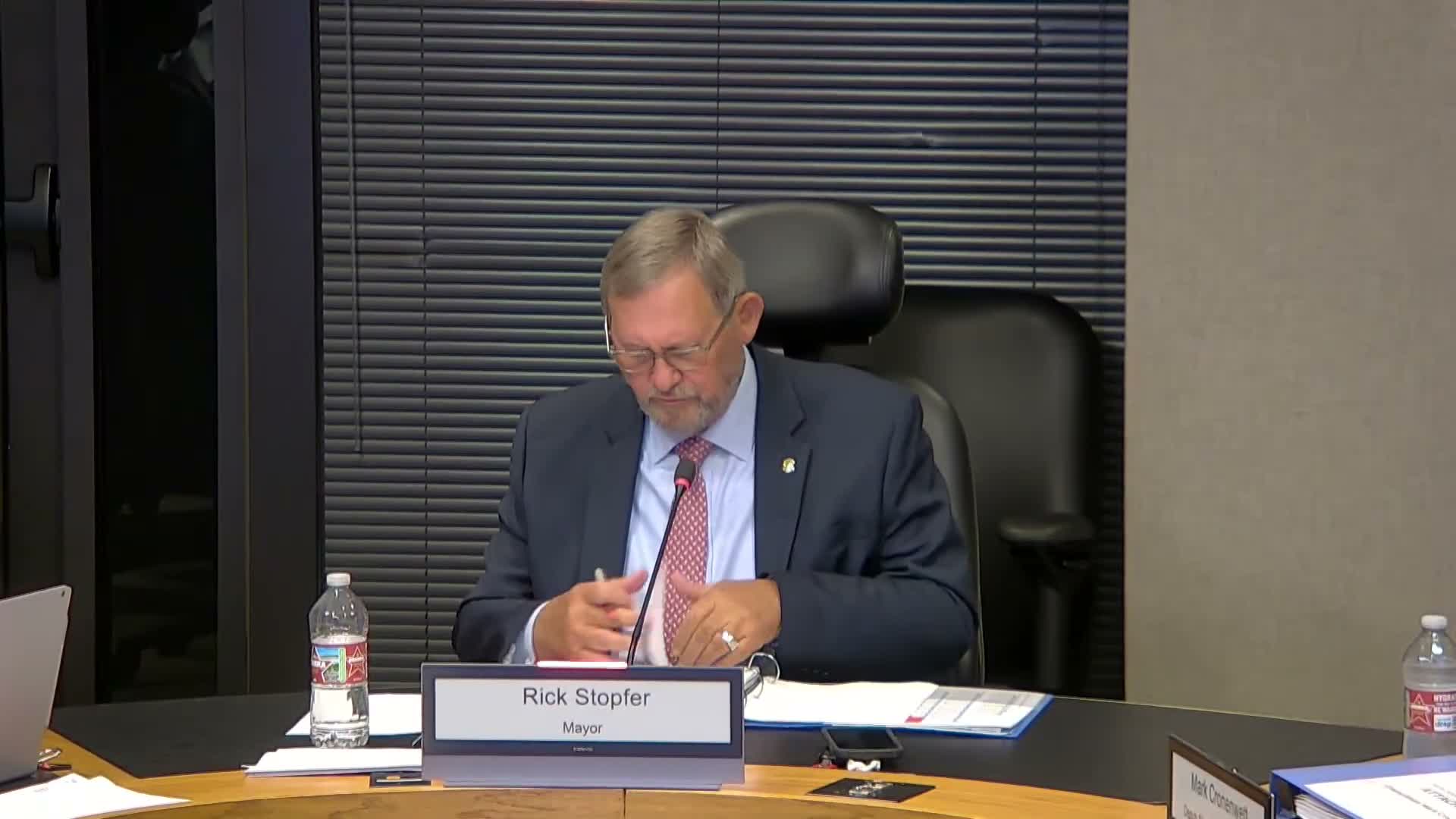
City staff on Feb. 26 proposed a package of short-term rental (STR) rules intended to reduce clustering of rentals in residential neighborhoods and strengthen enforcement.
In a detailed presentation, Enforcement Director Shane Gellert told the council that Irving's STR rules already require registration, hot-tax reporting and liability insurance but that residents and councilmembers have asked for stronger tools to preserve neighborhood character. "When multiple short term rentals operate side by side ... that character neighborhood changes sometimes dramatically," a public commentator said during the meeting.
Gellert proposed several operational changes staff would amend into the city code: initial and annual on-site inspections plus monthly exterior drive-by checks; a requirement that hosts submit a floor plan on application; mandatory smoke and carbon-monoxide detectors and a 5-pound ABC fire extinguisher; limits tied to the city's occupancy rule (two people per bedroom plus one); and a prohibition on multiple, simultaneous leases for the same living unit during a single rental period.
To address neighborhood clustering, staff outlined three location-based approaches:
- an "Arlington-style" model allowing STRs only within a one-mile buffer of Las Colinas Urban Center and freeway frontages;
- a conditional-use-permit (CUP) requirement for STRs in single-family zones; and
- a percentage cap on STRs per block face (examples ranged from 10% to 25%).
Gellert warned council that zoning changes would trigger broad statutory notice to tens of thousands of single-family property owners and estimated postcard-notice costs in the tens of thousands of dollars. He also said inspections and enforcement would require new staffing and workspace; initial HR estimates put one-year costs for three new positions and related expenses at roughly $300,000. Using an illustrative estimate of 400 STRs, staff suggested a recovered-fee range "somewhere above $700 and below $900 a year" per STR to cover program costs.
Council members asked about legal risks and enforcement practicalities. Staff acknowledged limits — for example, a host's house rule cannot legally prevent a guest parking on a public street — and said the proposed host rule would instead require hosts to post and encourage off-street parking. Several members signaled support for combining a CUP approach with a block-limit measure and adopting the operational inspections and safety requirements, while deferring legal questions to executive session.
Next steps described by staff included drafting ordinance language, a fee study to ensure cost recovery, public noticing if zoning changes are selected, and returning to council for formal amendment and possible zoning hearings. No final vote on an STR ordinance amendment occurred at the work session.
In a detailed presentation, Enforcement Director Shane Gellert told the council that Irving's STR rules already require registration, hot-tax reporting and liability insurance but that residents and councilmembers have asked for stronger tools to preserve neighborhood character. "When multiple short term rentals operate side by side ... that character neighborhood changes sometimes dramatically," a public commentator said during the meeting.
Gellert proposed several operational changes staff would amend into the city code: initial and annual on-site inspections plus monthly exterior drive-by checks; a requirement that hosts submit a floor plan on application; mandatory smoke and carbon-monoxide detectors and a 5-pound ABC fire extinguisher; limits tied to the city's occupancy rule (two people per bedroom plus one); and a prohibition on multiple, simultaneous leases for the same living unit during a single rental period.
To address neighborhood clustering, staff outlined three location-based approaches:
- an "Arlington-style" model allowing STRs only within a one-mile buffer of Las Colinas Urban Center and freeway frontages;
- a conditional-use-permit (CUP) requirement for STRs in single-family zones; and
- a percentage cap on STRs per block face (examples ranged from 10% to 25%).
Gellert warned council that zoning changes would trigger broad statutory notice to tens of thousands of single-family property owners and estimated postcard-notice costs in the tens of thousands of dollars. He also said inspections and enforcement would require new staffing and workspace; initial HR estimates put one-year costs for three new positions and related expenses at roughly $300,000. Using an illustrative estimate of 400 STRs, staff suggested a recovered-fee range "somewhere above $700 and below $900 a year" per STR to cover program costs.
Council members asked about legal risks and enforcement practicalities. Staff acknowledged limits — for example, a host's house rule cannot legally prevent a guest parking on a public street — and said the proposed host rule would instead require hosts to post and encourage off-street parking. Several members signaled support for combining a CUP approach with a block-limit measure and adopting the operational inspections and safety requirements, while deferring legal questions to executive session.
Next steps described by staff included drafting ordinance language, a fee study to ensure cost recovery, public noticing if zoning changes are selected, and returning to council for formal amendment and possible zoning hearings. No final vote on an STR ordinance amendment occurred at the work session.
View the Full Meeting & All Its Details
This article offers just a summary. Unlock complete video, transcripts, and insights as a Founder Member.
✓
Watch full, unedited meeting videos
✓
Search every word spoken in unlimited transcripts
✓
AI summaries & real-time alerts (all government levels)
✓
Permanent access to expanding government content
30-day money-back guarantee
