Baltimore City State's Attorney cites federal takedown, urges resources for juvenile system
February 21, 2026 | No. 2 - Carroll and Frederick Counties, Select Committees, SENATE, SENATE, Committees, Legislative, Maryland
This article was created by AI summarizing key points discussed. AI makes mistakes, so for full details and context, please refer to the video of the full meeting. Please report any errors so we can fix them. Report an error »
Baltimore City State's Attorney Ivan Bates told the Baltimore City Senate delegation that a recent, coordinated multiagency operation with federal partners removed “about 200 violent offenders off the streets” and that many of those cases will be prosecuted federally. Bates said the effort — involving ATF, DEA, the U.S. Attorney’s Office and the Baltimore Police Department — was the result of weeks of joint preparation and partnerships with local community organizations.
Bates said his office has grown from roughly 140 prosecutors when he took office to nearly 200, and he described juvenile justice as the office’s top priority. “We put together a 100 page juvenile booklet to allow everybody to understand the state of the juvenile system,” Bates said, explaining the office's focus on prevention, diversion and the need to ensure prosecutorial resources align with any legislative changes.
Bates highlighted a legislative priority tied to the District Court commissioners, explaining that he supports a bill that would limit commissioners’ authority to issue arrest warrants and require the state's attorney’s office time to investigate before an arrest warrant issues. Bates said commissioners sometimes issue warrants that later prove incorrect and that his office should be involved so it can “see is this a viable case” before an arrest warrant is pursued.
Delegation members praised the partnerships and pressed Bates on data-quality issues that can affect prosecutions and on whether the state or city can help ensure accurate records. Bates repeated that his immediate operational need is more prosecutors, clerks and staff if proposals such as an automatic-charging bill proceed, because the office does not currently have excess capacity to absorb added filings.
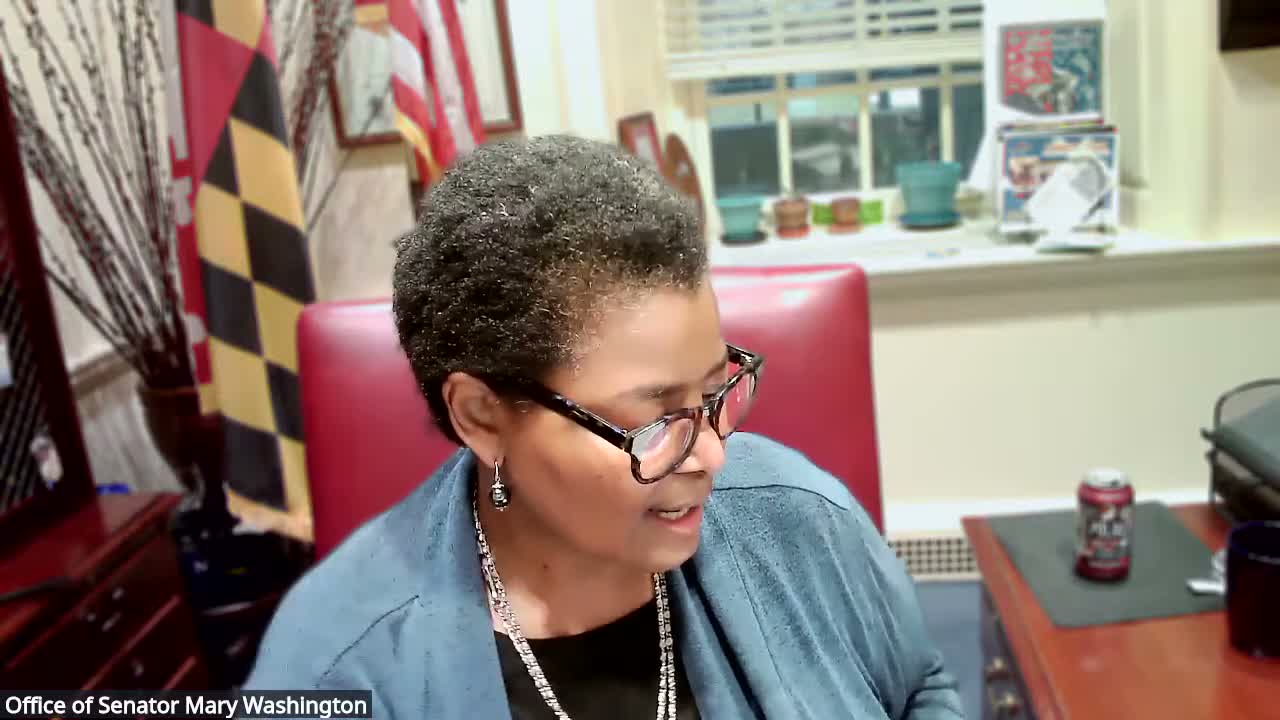
The briefing concluded with recognition from Chair Mary Washington and a commitment to follow up on legislative priorities in upcoming hearings.
Bates said his office has grown from roughly 140 prosecutors when he took office to nearly 200, and he described juvenile justice as the office’s top priority. “We put together a 100 page juvenile booklet to allow everybody to understand the state of the juvenile system,” Bates said, explaining the office's focus on prevention, diversion and the need to ensure prosecutorial resources align with any legislative changes.
Bates highlighted a legislative priority tied to the District Court commissioners, explaining that he supports a bill that would limit commissioners’ authority to issue arrest warrants and require the state's attorney’s office time to investigate before an arrest warrant issues. Bates said commissioners sometimes issue warrants that later prove incorrect and that his office should be involved so it can “see is this a viable case” before an arrest warrant is pursued.
Delegation members praised the partnerships and pressed Bates on data-quality issues that can affect prosecutions and on whether the state or city can help ensure accurate records. Bates repeated that his immediate operational need is more prosecutors, clerks and staff if proposals such as an automatic-charging bill proceed, because the office does not currently have excess capacity to absorb added filings.
The briefing concluded with recognition from Chair Mary Washington and a commitment to follow up on legislative priorities in upcoming hearings.
View the Full Meeting & All Its Details
This article offers just a summary. Unlock complete video, transcripts, and insights as a Founder Member.
✓
Watch full, unedited meeting videos
✓
Search every word spoken in unlimited transcripts
✓
AI summaries & real-time alerts (all government levels)
✓
Permanent access to expanding government content
30-day money-back guarantee
