Senate committee advances redraft of bill to fund cemetery vandalism repairs using $5 burial-permit charge
February 26, 2026 | Government Operations, SENATE, Committees, Legislative , Vermont
This article was created by AI summarizing key points discussed. AI makes mistakes, so for full details and context, please refer to the video of the full meeting. Please report any errors so we can fix them. Report an error »
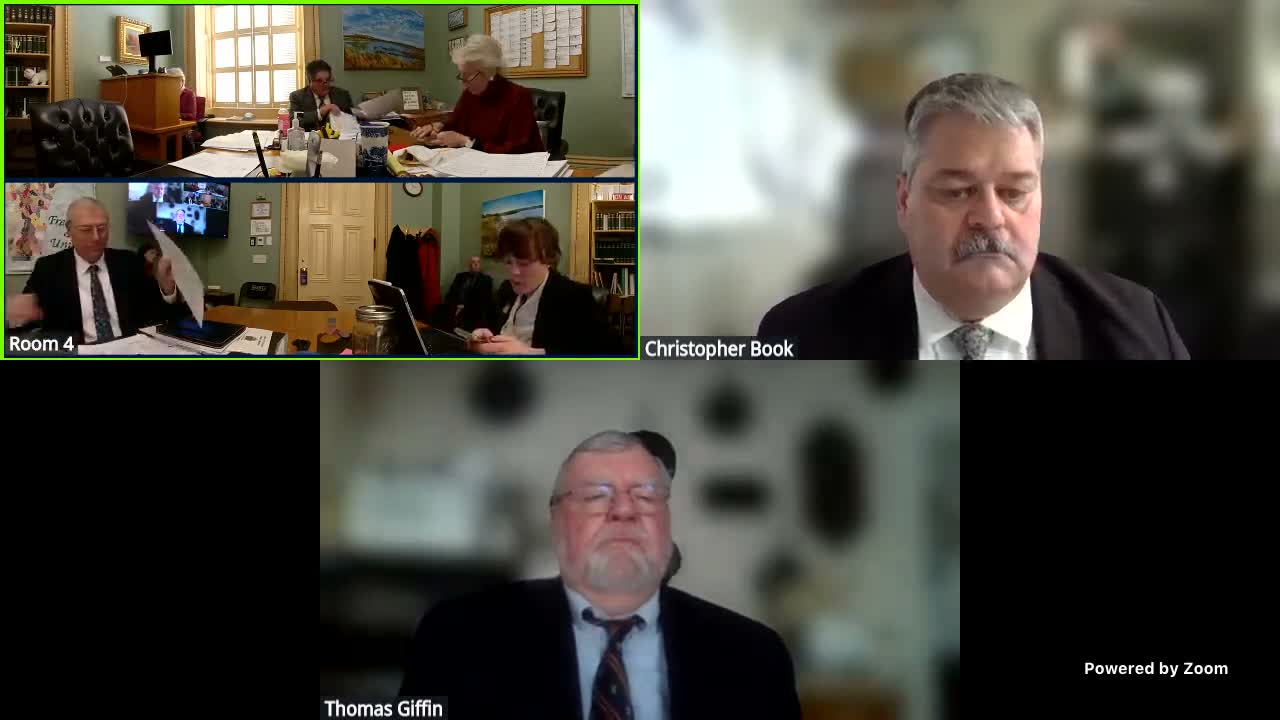
The Senate Committee on Government Operations took up S.275 on Feb. 26, a bill that would create a Cemetery Vandalism Response Fund financed by repurposing an existing $5 burial-permit fee rather than adding a new assessment. Chair opened the discussion and invited testimony from Tom Giffin and Christopher (representing the Vermont funeral directors), who described how the fund might be administered.
Committee members zeroed in on two practical matters: how the $5 would be collected and who should be eligible for support. Chair said the bill is drafted to replace the burial-permit charge with the vandalism fund fee so “there wouldn't be any difference” in aggregate cost, but members noted the burial fee is infrequently collected and that the bill does not name a specific collection mechanism. Tom Giffin said the money would be collected by the state agency the legislation designates and distributed to pay for local repairs; he said he would follow up with the committee about how New York’s comparable program routes funds.
Several senators raised equity concerns for low-income families and for burials that do not receive monuments. Senator Wagner warned the bill as drafted would require payment even where a family does not receive a headstone and recommended exploring a waiver aligned with Vermont’s existing general-assistance funeral support. Christopher and others said funeral homes can apply to an existing assistance fund on behalf of families and suggested the new fee could be made waivable for those who qualify.
The committee also clarified that cemetery insurance typically cannot cover individual family-owned monuments because cemeteries do not own headstones; that means families — or the new fund — would be the most likely avenue for repair payments when monuments are vandalized. Members discussed possible host agencies for fund administration (examples raised included the Division of Historic Preservation within the Department of Housing and Community Development and state victim-service funds) but did not assign a specific recipient in the bill language.
Rather than vote, the committee agreed to request redrafted language. Senators asked staff and legislative counsel ( John Gray) to draft potential waiver provisions, prioritize applicants (with an option discussed to prioritize vandalism tied to protected-class bias), and return with revisions the week of March 9. No formal action or appropriation was taken at the hearing.
Committee members zeroed in on two practical matters: how the $5 would be collected and who should be eligible for support. Chair said the bill is drafted to replace the burial-permit charge with the vandalism fund fee so “there wouldn't be any difference” in aggregate cost, but members noted the burial fee is infrequently collected and that the bill does not name a specific collection mechanism. Tom Giffin said the money would be collected by the state agency the legislation designates and distributed to pay for local repairs; he said he would follow up with the committee about how New York’s comparable program routes funds.
Several senators raised equity concerns for low-income families and for burials that do not receive monuments. Senator Wagner warned the bill as drafted would require payment even where a family does not receive a headstone and recommended exploring a waiver aligned with Vermont’s existing general-assistance funeral support. Christopher and others said funeral homes can apply to an existing assistance fund on behalf of families and suggested the new fee could be made waivable for those who qualify.
The committee also clarified that cemetery insurance typically cannot cover individual family-owned monuments because cemeteries do not own headstones; that means families — or the new fund — would be the most likely avenue for repair payments when monuments are vandalized. Members discussed possible host agencies for fund administration (examples raised included the Division of Historic Preservation within the Department of Housing and Community Development and state victim-service funds) but did not assign a specific recipient in the bill language.
Rather than vote, the committee agreed to request redrafted language. Senators asked staff and legislative counsel ( John Gray) to draft potential waiver provisions, prioritize applicants (with an option discussed to prioritize vandalism tied to protected-class bias), and return with revisions the week of March 9. No formal action or appropriation was taken at the hearing.
Don't Miss a Word: See the Full Meeting!
Go beyond summaries. Unlock every video, transcript, and key insight with a Founder Membership.
✓
Get instant access to full meeting videos
✓
Search and clip any phrase from complete transcripts
✓
Receive AI-powered summaries & custom alerts
✓
Enjoy lifetime, unrestricted access to government data
30-day money-back guarantee
