Department of Liquor and Lottery asks for time to take on wholesaler licensing, pledges enforcement focus
February 26, 2026 | Economic Development, Housing & General Affairs, SENATE, Committees, Legislative , Vermont
This article was created by AI summarizing key points discussed. AI makes mistakes, so for full details and context, please refer to the video of the full meeting. Please report any errors so we can fix them. Report an error »
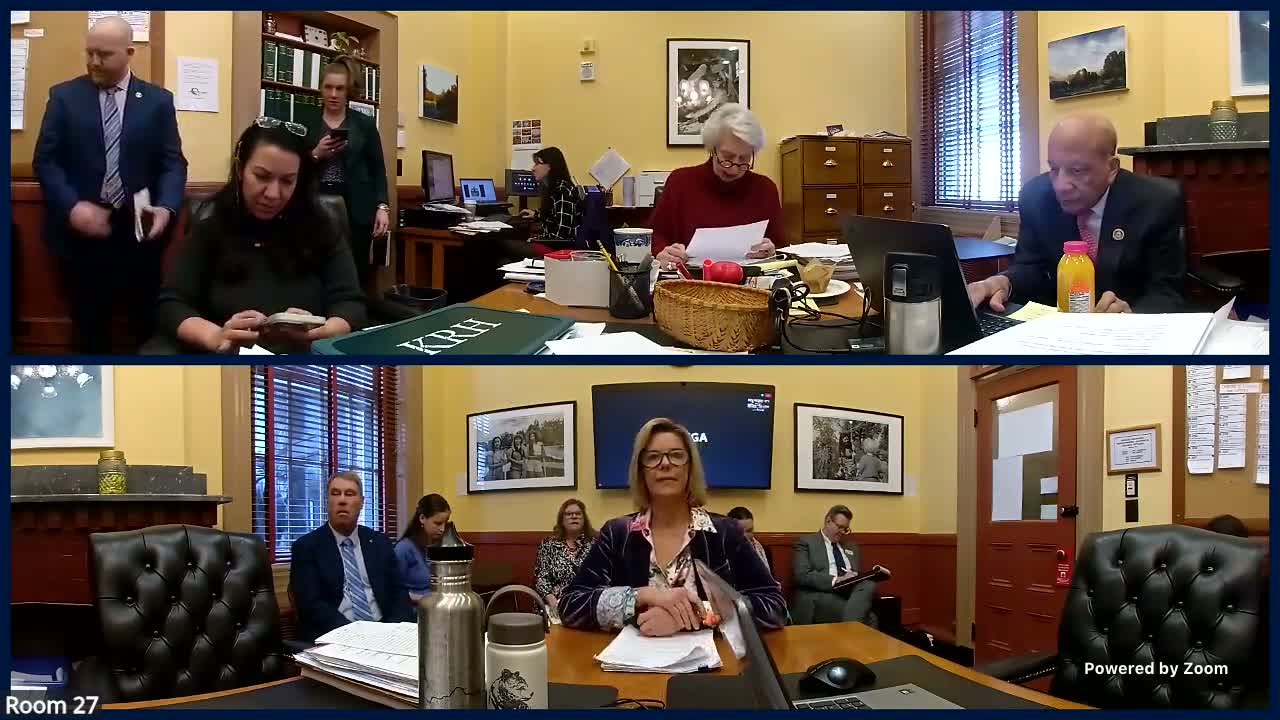
The Department of Liquor and Lottery told the Senate Economic Development, Housing & General Affairs Committee that it is prepared to assume licensing authority for tobacco wholesalers but needs time to build the regulatory and IT systems to do so.
Wendy Knight, who identified herself as commissioner of the Department of Liquor and Lottery, said the department has licensing authority for retailers and that bringing wholesaler licensing under DLL's oversight "makes sense." Knight said DLL would need statutory language giving explicit regulatory authority and asked the committee to set an effective date of July 1, 2027, to allow vendor work, testing and vetting of a licensing module in the department's Salesforce platform.
Committee members pressed DLL on enforcement capacity. Brandon King, introduced as DLL's deputy chief of enforcement, said investigators routinely perform compliance checks on online sellers and brick‑and‑mortar outlets. King told the committee that DLL conducted more than 100 online compliance checks last year and referred roughly 35 cases to the Attorney General's office for civil action.
Assistant Attorney General Rose Kennedy described the AG's civil enforcement approach: DLL documents online sales, the AG's office subpoenas records, seeks penalties and negotiating injunctive remedies requiring websites to stop shipping to Vermont. Kennedy said settlements and enforcement actions, including a past settlement with Amazon, have recovered money and achieved site restrictions. She noted the statutory maximum penalties per sale are large under Vermont law but typically the parties negotiate lesser sums and injunctive relief.
The committee asked DLL for data on compliance trends, including counts of violations and retail compliance rates, to help determine whether the department needs an additional investigator or other resources. DLL agreed to provide enforcement and violation statistics to the committee. Knight cautioned against funding an investigator position from penalty revenue, calling it a potential "perverse incentive" because it would create a funding link between enforcement fines and staffing.
On retailer licensing structure, committee members discussed Vermont's practice of coupling alcohol and tobacco licenses (retailers pay an alcohol license fee and the tobacco license is effectively $0). Several senators urged decoupling the fees so that retailers could choose not to sell tobacco products; DLL and others said the applications are separate but that existing statute affects fee treatment and local practice.
The committee left several technical elements (licensing language, penalties and fee structure) for further work and directed staff to collect the requested compliance data from DLL and the Attorney General's office. The department reiterated it would join a study with the Tax Department on taxation methods and packaging stamping.
The committee scheduled follow-up testimony and asked DLL to return with proposed statutory language and enforcement data before finalizing the bill.
Wendy Knight, who identified herself as commissioner of the Department of Liquor and Lottery, said the department has licensing authority for retailers and that bringing wholesaler licensing under DLL's oversight "makes sense." Knight said DLL would need statutory language giving explicit regulatory authority and asked the committee to set an effective date of July 1, 2027, to allow vendor work, testing and vetting of a licensing module in the department's Salesforce platform.
Committee members pressed DLL on enforcement capacity. Brandon King, introduced as DLL's deputy chief of enforcement, said investigators routinely perform compliance checks on online sellers and brick‑and‑mortar outlets. King told the committee that DLL conducted more than 100 online compliance checks last year and referred roughly 35 cases to the Attorney General's office for civil action.
Assistant Attorney General Rose Kennedy described the AG's civil enforcement approach: DLL documents online sales, the AG's office subpoenas records, seeks penalties and negotiating injunctive remedies requiring websites to stop shipping to Vermont. Kennedy said settlements and enforcement actions, including a past settlement with Amazon, have recovered money and achieved site restrictions. She noted the statutory maximum penalties per sale are large under Vermont law but typically the parties negotiate lesser sums and injunctive relief.
The committee asked DLL for data on compliance trends, including counts of violations and retail compliance rates, to help determine whether the department needs an additional investigator or other resources. DLL agreed to provide enforcement and violation statistics to the committee. Knight cautioned against funding an investigator position from penalty revenue, calling it a potential "perverse incentive" because it would create a funding link between enforcement fines and staffing.
On retailer licensing structure, committee members discussed Vermont's practice of coupling alcohol and tobacco licenses (retailers pay an alcohol license fee and the tobacco license is effectively $0). Several senators urged decoupling the fees so that retailers could choose not to sell tobacco products; DLL and others said the applications are separate but that existing statute affects fee treatment and local practice.
The committee left several technical elements (licensing language, penalties and fee structure) for further work and directed staff to collect the requested compliance data from DLL and the Attorney General's office. The department reiterated it would join a study with the Tax Department on taxation methods and packaging stamping.
The committee scheduled follow-up testimony and asked DLL to return with proposed statutory language and enforcement data before finalizing the bill.
View the Full Meeting & All Its Details
This article offers just a summary. Unlock complete video, transcripts, and insights as a Founder Member.
✓
Watch full, unedited meeting videos
✓
Search every word spoken in unlimited transcripts
✓
AI summaries & real-time alerts (all government levels)
✓
Permanent access to expanding government content
30-day money-back guarantee
