Joint committee advances supplemental budget with major DHHS measures, HR1 implementation spending
February 26, 2026 | 2026 Legislature ME, Maine
This article was created by AI summarizing key points discussed. AI makes mistakes, so for full details and context, please refer to the video of the full meeting. Please report any errors so we can fix them. Report an error »
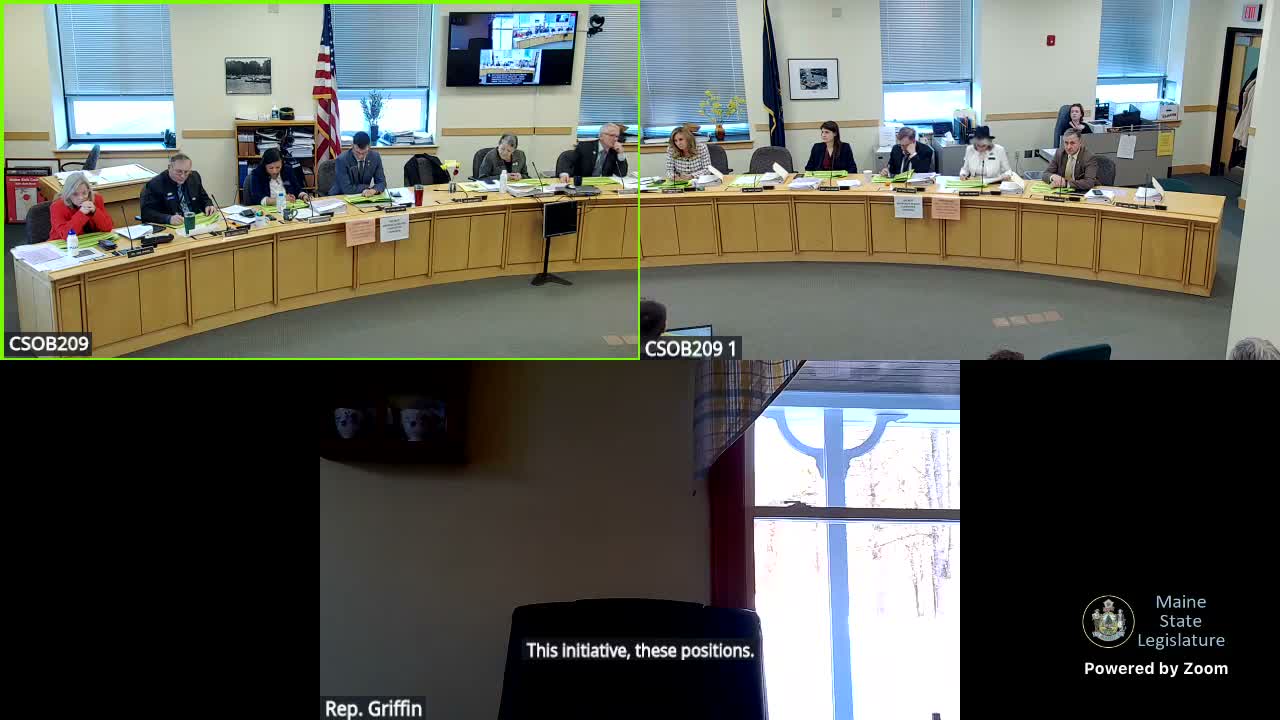
A joint legislative work session on the supplemental budget on Thursday advanced a package of Department of Health and Human Services (DHHS) initiatives that the committee said are needed to implement recent federal requirements and to align appropriations with projected costs.
The committee voted in blocks to move dozens of line items into the budget. Key approvals included transferring Riverview Psychiatric Center security funding to the Department of Public Safety to support five positions (four Capitol Police officers and one sergeant), authorizing $3,399,680 for a youth psychiatric residential treatment facility (PRTF), and advancing initiatives tied to the Lifespan HCBS waiver, SNAP payment‑error mitigation and hospital tax rebasing.
Todd Haber, Acting Deputy Commissioner of Finance for DHHS, told the panel that unused position dollars in general fund accounts “will lapse back to the big state general fund at the end of the state fiscal year,” with limited exceptions for certain hospital accounts such as Dorothea Dix and Riverview that carry balances (Todd Haber, Acting Deputy Commissioner of Finance, SEG 132–140). The committee used some unencumbered balances as offsets while moving other items forward.
The Department asked for funding to begin enrolling people in the Lifespan waiver in fiscal year 2027, contingent on federal Centers for Medicare & Medicaid Services approval. Molly Bogart of the department said the Lifespan request is to pay for those slots “once we are enrolling folks” (Molly Bogart, department representative, SEG 762–766). The committee voted to move the Lifespan-related lines into the budget.
Several votes were tied to implementation of Public Law 119.21 and the statute referred to in the hearing as “HR1,” which imposes new MaineCare work and verification requirements. Ian Yaffe, director of the Office for Family Independence, said the changes will substantially increase manual work and verification volume—estimating tens of thousands of additional manual renewals and a need for new staff and system improvements to avoid backlog and federal noncompliance. “We need these positions to essentially deal with all the increased work,” Yaffe said, describing a plan to hire and train staff over the summer so they are operational by December (Ian Yaffe, Director, Office for Family Independence, SEG 1388–1395; SEG 1486–1493).
The committee advanced a slate of HR1‑related positions and technology requests, including dozens of eligibility and processing positions and funding for ACEs (Automated Client Eligibility System) modernization, task‑management integration and optical character recognition for income documentation. Members debated the scale and pace of hiring and whether retraining existing staff or lower‑cost software changes could reduce the ask; some members expressed concern about authorizing new positions while vacancies exist elsewhere in DHHS.
SNAP payment‑error mitigation measures were a prominent element of the debate. Committee materials cited a current payment‑error rate and projected financial penalties tied to that metric; staff said targeted investments (including roughly 40 eligibility specialist positions and system upgrades) could cost state funds in FY27 but avoid much larger federal cost‑sharing penalties later. The committee approved those lines.
On hospital finance, staff explained hospital tax rebasing and related language addressing federal provider‑tax rules (Public Law 119.21). The companion initiatives would reinvest hospital tax revenue to cover Medicare‑related cost growth and prospective interim payments; the committee advanced the companion budget lines.
Votes at a glance
• Lines 1–2 (Riverview security transfer to DPS; five positions): advanced (motion/second recorded; committee voice vote).
• Lines 19–24 (positions to implement psychotropic medication settlement; positions established): advanced.
• Lines 44 (youth PRTF, $3,399,680): advanced unanimously.
• Lines 52–53 (Lifespan waiver slots for FY27 contingent on CMS approval): advanced.
• Lines 64–92 and 164–175 (multiple HR1‑related positions and IT modernization requests): advanced in blocks.
• Lines 164–165 (SNAP staffing to reduce payment‑error rate): advanced.
• Lines 171–173 (ACEs modernization, federal match/state stabilization fund split): advanced.
What it means
The package bundles programmatic, staffing and technology changes DHHS argues are necessary to implement federal changes and to stabilize program operations. Department witnesses warned the state risks processing backlogs, delayed eligibility decisions and potential federal penalties without the investments. Legislators voiced differing views on scale, cost and whether training or vendor updates could be more cost‑effective.
Next steps
The committee concluded the work session after approving language and line items and will send its recommendations and report language to the AFA committee and the Legislature for further consideration. Some items remain contingent on federal approvals (for example, the Lifespan waiver) and on final reconciliation in the larger budget process.
The committee voted in blocks to move dozens of line items into the budget. Key approvals included transferring Riverview Psychiatric Center security funding to the Department of Public Safety to support five positions (four Capitol Police officers and one sergeant), authorizing $3,399,680 for a youth psychiatric residential treatment facility (PRTF), and advancing initiatives tied to the Lifespan HCBS waiver, SNAP payment‑error mitigation and hospital tax rebasing.
Todd Haber, Acting Deputy Commissioner of Finance for DHHS, told the panel that unused position dollars in general fund accounts “will lapse back to the big state general fund at the end of the state fiscal year,” with limited exceptions for certain hospital accounts such as Dorothea Dix and Riverview that carry balances (Todd Haber, Acting Deputy Commissioner of Finance, SEG 132–140). The committee used some unencumbered balances as offsets while moving other items forward.
The Department asked for funding to begin enrolling people in the Lifespan waiver in fiscal year 2027, contingent on federal Centers for Medicare & Medicaid Services approval. Molly Bogart of the department said the Lifespan request is to pay for those slots “once we are enrolling folks” (Molly Bogart, department representative, SEG 762–766). The committee voted to move the Lifespan-related lines into the budget.
Several votes were tied to implementation of Public Law 119.21 and the statute referred to in the hearing as “HR1,” which imposes new MaineCare work and verification requirements. Ian Yaffe, director of the Office for Family Independence, said the changes will substantially increase manual work and verification volume—estimating tens of thousands of additional manual renewals and a need for new staff and system improvements to avoid backlog and federal noncompliance. “We need these positions to essentially deal with all the increased work,” Yaffe said, describing a plan to hire and train staff over the summer so they are operational by December (Ian Yaffe, Director, Office for Family Independence, SEG 1388–1395; SEG 1486–1493).
The committee advanced a slate of HR1‑related positions and technology requests, including dozens of eligibility and processing positions and funding for ACEs (Automated Client Eligibility System) modernization, task‑management integration and optical character recognition for income documentation. Members debated the scale and pace of hiring and whether retraining existing staff or lower‑cost software changes could reduce the ask; some members expressed concern about authorizing new positions while vacancies exist elsewhere in DHHS.
SNAP payment‑error mitigation measures were a prominent element of the debate. Committee materials cited a current payment‑error rate and projected financial penalties tied to that metric; staff said targeted investments (including roughly 40 eligibility specialist positions and system upgrades) could cost state funds in FY27 but avoid much larger federal cost‑sharing penalties later. The committee approved those lines.
On hospital finance, staff explained hospital tax rebasing and related language addressing federal provider‑tax rules (Public Law 119.21). The companion initiatives would reinvest hospital tax revenue to cover Medicare‑related cost growth and prospective interim payments; the committee advanced the companion budget lines.
Votes at a glance
• Lines 1–2 (Riverview security transfer to DPS; five positions): advanced (motion/second recorded; committee voice vote).
• Lines 19–24 (positions to implement psychotropic medication settlement; positions established): advanced.
• Lines 44 (youth PRTF, $3,399,680): advanced unanimously.
• Lines 52–53 (Lifespan waiver slots for FY27 contingent on CMS approval): advanced.
• Lines 64–92 and 164–175 (multiple HR1‑related positions and IT modernization requests): advanced in blocks.
• Lines 164–165 (SNAP staffing to reduce payment‑error rate): advanced.
• Lines 171–173 (ACEs modernization, federal match/state stabilization fund split): advanced.
What it means
The package bundles programmatic, staffing and technology changes DHHS argues are necessary to implement federal changes and to stabilize program operations. Department witnesses warned the state risks processing backlogs, delayed eligibility decisions and potential federal penalties without the investments. Legislators voiced differing views on scale, cost and whether training or vendor updates could be more cost‑effective.
Next steps
The committee concluded the work session after approving language and line items and will send its recommendations and report language to the AFA committee and the Legislature for further consideration. Some items remain contingent on federal approvals (for example, the Lifespan waiver) and on final reconciliation in the larger budget process.
Don't Miss a Word: See the Full Meeting!
Go beyond summaries. Unlock every video, transcript, and key insight with a Founder Membership.
✓
Get instant access to full meeting videos
✓
Search and clip any phrase from complete transcripts
✓
Receive AI-powered summaries & custom alerts
✓
Enjoy lifetime, unrestricted access to government data
30-day money-back guarantee
