Senator’s bill would let schools adopt one‑year expulsions for incidents transcribed as “****** assault”; advocates warn of harm to young children
February 27, 2026 | 2026 Legislature ME, Maine
This article was created by AI summarizing key points discussed. AI makes mistakes, so for full details and context, please refer to the video of the full meeting. Please report any errors so we can fix them. Report an error »
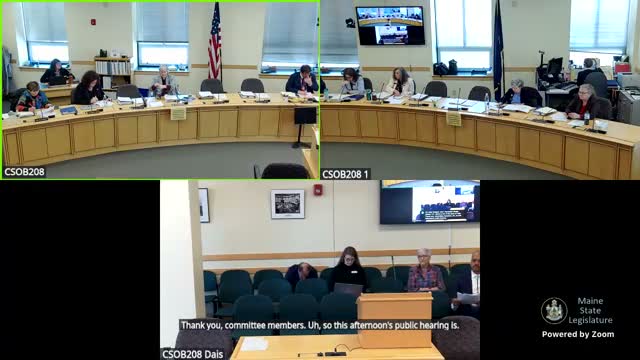
Sen. Craig Hickman, sponsor of LD 2204, told the Joint Standing Committee on Education and Cultural Affairs the bill responds to a constituent report about repeated assaults on a kindergarten student and would require school boards to adopt policies expelling any student determined to have committed what the bill text transcribes as “****** assault” on school grounds.
"I stand before you to introduce LD 2204, an act to allow schools to expel students for committing '****** assault'," Hickman said, adding the draft mirrors language already in statute for firearm‑related expulsions and includes an option for a school board to authorize the superintendent in writing to modify expulsion requirements on a case‑by‑case basis.
Why it matters: the proposal would alter current protections that prohibit expelling students enrolled in pre‑K through grade 5 except for limited circumstances. Sponsor Hickman said the change is intended to give local school leaders tools to address "reprehensible behavior," while preserving statutory investigation and due‑process provisions located elsewhere in the same chapter of law.
Opponents and cautions: Atlee Riley, managing attorney at Disability Rights Maine, testified in opposition and warned the bill would expose very young children — ages five through ten — to processes that reference Maine’s criminal code (Title 17A). Riley noted Maine set a minimum age for juvenile‑court jurisdiction at 11 in 2025 and said criminal statutes range from gross offenses to lesser touching offenses; he added that criminal law presumes innocence and requires capacity and that school principals or boards applying criminal‑code definitions raises “serious concerns.”
Eric Waddell, executive director of the Maine School Management Association, said administrators recognize the need to ensure safe schools but cautioned that expulsion removes opportunities for targeted interventions and can have “profoundly negative and lasting impact on a young child's education.” Waddell urged an amendment to limit expulsions to older students (suggesting grade 6 and up) or otherwise narrow the application.
Committee response and next steps: Committee members pressed the sponsor on who would make determinations that the elements of the offense were met; Hickman said determinations should be made by those with the facts and that the bill preserves existing investigatory and due‑process guardrails. Members asked staff to review prior testimony and related bills (including LD 252, which the committee considered previously) and signaled interest in reviewing comparative state approaches and expert guidance on problem behaviors in very young children. The public hearing was closed with no committee recommendation recorded; the bill will be considered further at work session.
The committee did not vote on LD 2204 during this session. The public hearing record will be supplemented by submitted written testimony noted by witnesses during the hearing.
"I stand before you to introduce LD 2204, an act to allow schools to expel students for committing '****** assault'," Hickman said, adding the draft mirrors language already in statute for firearm‑related expulsions and includes an option for a school board to authorize the superintendent in writing to modify expulsion requirements on a case‑by‑case basis.
Why it matters: the proposal would alter current protections that prohibit expelling students enrolled in pre‑K through grade 5 except for limited circumstances. Sponsor Hickman said the change is intended to give local school leaders tools to address "reprehensible behavior," while preserving statutory investigation and due‑process provisions located elsewhere in the same chapter of law.
Opponents and cautions: Atlee Riley, managing attorney at Disability Rights Maine, testified in opposition and warned the bill would expose very young children — ages five through ten — to processes that reference Maine’s criminal code (Title 17A). Riley noted Maine set a minimum age for juvenile‑court jurisdiction at 11 in 2025 and said criminal statutes range from gross offenses to lesser touching offenses; he added that criminal law presumes innocence and requires capacity and that school principals or boards applying criminal‑code definitions raises “serious concerns.”
Eric Waddell, executive director of the Maine School Management Association, said administrators recognize the need to ensure safe schools but cautioned that expulsion removes opportunities for targeted interventions and can have “profoundly negative and lasting impact on a young child's education.” Waddell urged an amendment to limit expulsions to older students (suggesting grade 6 and up) or otherwise narrow the application.
Committee response and next steps: Committee members pressed the sponsor on who would make determinations that the elements of the offense were met; Hickman said determinations should be made by those with the facts and that the bill preserves existing investigatory and due‑process guardrails. Members asked staff to review prior testimony and related bills (including LD 252, which the committee considered previously) and signaled interest in reviewing comparative state approaches and expert guidance on problem behaviors in very young children. The public hearing was closed with no committee recommendation recorded; the bill will be considered further at work session.
The committee did not vote on LD 2204 during this session. The public hearing record will be supplemented by submitted written testimony noted by witnesses during the hearing.
Don't Miss a Word: See the Full Meeting!
Go beyond summaries. Unlock every video, transcript, and key insight with a Founder Membership.
✓
Get instant access to full meeting videos
✓
Search and clip any phrase from complete transcripts
✓
Receive AI-powered summaries & custom alerts
✓
Enjoy lifetime, unrestricted access to government data
30-day money-back guarantee
