Committee splits over bell‑to‑bell cell‑phone language and teacher minimum‑salary schedule; members weigh local control against statewide standards
February 27, 2026 | 2026 Legislature ME, Maine
This article was created by AI summarizing key points discussed. AI makes mistakes, so for full details and context, please refer to the video of the full meeting. Please report any errors so we can fix them. Report an error »
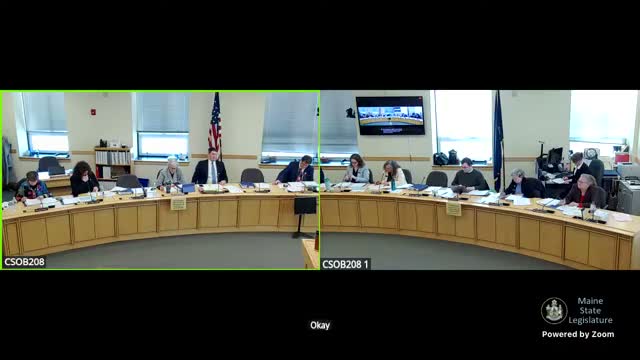
The committee debated and voted separately on statutory language and funding tied to a proposed ban on personal electronic devices during the school day (often called a "bell‑to‑bell" policy) and on a multi‑year plan to raise the certified teacher minimum salary to $50,000.
Cell‑phone policy: Members debated a two‑part approach: (1) funding ($700,000 line item discussed as reference number 180) and (2) statutory language (part GG) that would set parameters for a statewide model policy. Some members urged patience, arguing the state had only recently asked school boards to adopt local policies and districts needed time to refine their approaches; others cited research supporting bell‑to‑bell bans and pressed for state guidance and model language. The committee voted the funding item and the language in separate votes (funding recorded 6‑5; language recorded 7‑4). Several members said they supported the policy direction but resisted providing a statewide appropriation that might be an unfunded mandate.
Teacher minimum salary (part SSS): The committee considered language related to a multi‑year phase‑in of minimum teacher salaries to $50,000 and debated technical language to ensure local funding and payment models match implementation (language mirrors prior LD 34 work in committee). Members later amended the language to include teachers working in the Education in the Unorganized Territory (EUT). Part SSS was tabled for caucus earlier in the session and later moved as amended; the final recorded vote on the amended language was 8‑3 in favor.
Why it matters: The cell‑phone language would standardize expectations across districts; the salary language enacts a statewide minimum schedule that could materially affect local budgets, negotiations and bargaining units. Multiple members expressed concern about potential unfunded mandates if policy language is required while funding is not provided at the 90% threshold some members expect for state mandates.
Next steps: Language and funding recommendations will be forwarded in the committee report and proceed to the Appropriations Committee; some members signaled they will record minority views in the committee narrative where they supported the policy but not the funding approach.
Cell‑phone policy: Members debated a two‑part approach: (1) funding ($700,000 line item discussed as reference number 180) and (2) statutory language (part GG) that would set parameters for a statewide model policy. Some members urged patience, arguing the state had only recently asked school boards to adopt local policies and districts needed time to refine their approaches; others cited research supporting bell‑to‑bell bans and pressed for state guidance and model language. The committee voted the funding item and the language in separate votes (funding recorded 6‑5; language recorded 7‑4). Several members said they supported the policy direction but resisted providing a statewide appropriation that might be an unfunded mandate.
Teacher minimum salary (part SSS): The committee considered language related to a multi‑year phase‑in of minimum teacher salaries to $50,000 and debated technical language to ensure local funding and payment models match implementation (language mirrors prior LD 34 work in committee). Members later amended the language to include teachers working in the Education in the Unorganized Territory (EUT). Part SSS was tabled for caucus earlier in the session and later moved as amended; the final recorded vote on the amended language was 8‑3 in favor.
Why it matters: The cell‑phone language would standardize expectations across districts; the salary language enacts a statewide minimum schedule that could materially affect local budgets, negotiations and bargaining units. Multiple members expressed concern about potential unfunded mandates if policy language is required while funding is not provided at the 90% threshold some members expect for state mandates.
Next steps: Language and funding recommendations will be forwarded in the committee report and proceed to the Appropriations Committee; some members signaled they will record minority views in the committee narrative where they supported the policy but not the funding approach.
View the Full Meeting & All Its Details
This article offers just a summary. Unlock complete video, transcripts, and insights as a Founder Member.
✓
Watch full, unedited meeting videos
✓
Search every word spoken in unlimited transcripts
✓
AI summaries & real-time alerts (all government levels)
✓
Permanent access to expanding government content
30-day money-back guarantee
