Maine committee pares back agency motor‑vehicle bill, defers plate‑shop funding debate and keeps online used‑car pilot
February 26, 2026 | 2026 Legislature ME, Maine
This article was created by AI summarizing key points discussed. AI makes mistakes, so for full details and context, please refer to the video of the full meeting. Please report any errors so we can fix them. Report an error »
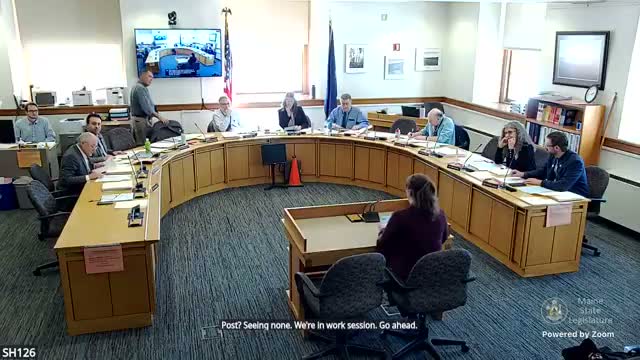
Committee staff opened the LD 2179 work session by summarizing the agency bill, which includes multiple changes to motor‑vehicle statutes: removing the statutory requirement to produce license plates at the correctional plate shop, expanding the definition of dealers to include certain equipment, and establishing a two‑year pilot that would license online used‑car dealers with specific disclosure and inspection arrangements.
Deputy Secretary of State Kathy Curtis and Department of Corrections witnesses described operational risks at the state plate shop in Warren: aging and customized equipment (an oven repeatedly needing repairs), structural cracks in buttresses, rising maintenance costs, and staffing challenges. Curtis presented BMV estimates: average annual operating cost about $1.4 million, average annual repairs around $270,000, contingency of roughly $172,000, producing about 654,000 plates per year (≈325,000 pairs), and an in‑house cost estimate of about $2.89 per plate compared with an external bid estimate near $3.37 per plate (a projected $312,000 additional annual cost if all plates were contracted), while short‑term repairs to keep the shop running 2–5 years were estimated at $2–2.5 million and a full rebuild with modernized equipment at $10–20 million.
Members questioned procurement timing, the confidentiality of RFPs, whether outsourcing would create a private monopoly, and whether it was appropriate to move such a major structural change late in the session. DOC and BMV witnesses said the shop could likely continue to operate for roughly two years if repairs are completed but stressed that long‑term investment decisions require a formal engineering study and clearer cost estimates.
On dealer definitions, members raised concerns that adding broad categories of 'equipment' could unintentionally sweep in small sellers and hobbyists; staff noted existing statutory definitions in Title 29‑A for dealer plates and suggested the language could be narrowed.
After extended discussion, the committee voted to strike sections 1–5 (which had included the plate‑shop provisions and equipment‑dealer expansion) from LD 2179 and to retain section 6, the online used‑car dealer pilot (licensing, inspection contracts with stations near Maine borders, required disclosures and inspection standards, and reporting back). The retained pilot remains subject to rulemaking and reporting requirements described in the bill draft.
What happens next: Staff will redraft LD 2179 to remove the struck sections and preserve the online dealer pilot; agencies were asked to supply additional cost estimates, engineering reports, and statutory language clarifications for future sessions.
Deputy Secretary of State Kathy Curtis and Department of Corrections witnesses described operational risks at the state plate shop in Warren: aging and customized equipment (an oven repeatedly needing repairs), structural cracks in buttresses, rising maintenance costs, and staffing challenges. Curtis presented BMV estimates: average annual operating cost about $1.4 million, average annual repairs around $270,000, contingency of roughly $172,000, producing about 654,000 plates per year (≈325,000 pairs), and an in‑house cost estimate of about $2.89 per plate compared with an external bid estimate near $3.37 per plate (a projected $312,000 additional annual cost if all plates were contracted), while short‑term repairs to keep the shop running 2–5 years were estimated at $2–2.5 million and a full rebuild with modernized equipment at $10–20 million.
Members questioned procurement timing, the confidentiality of RFPs, whether outsourcing would create a private monopoly, and whether it was appropriate to move such a major structural change late in the session. DOC and BMV witnesses said the shop could likely continue to operate for roughly two years if repairs are completed but stressed that long‑term investment decisions require a formal engineering study and clearer cost estimates.
On dealer definitions, members raised concerns that adding broad categories of 'equipment' could unintentionally sweep in small sellers and hobbyists; staff noted existing statutory definitions in Title 29‑A for dealer plates and suggested the language could be narrowed.
After extended discussion, the committee voted to strike sections 1–5 (which had included the plate‑shop provisions and equipment‑dealer expansion) from LD 2179 and to retain section 6, the online used‑car dealer pilot (licensing, inspection contracts with stations near Maine borders, required disclosures and inspection standards, and reporting back). The retained pilot remains subject to rulemaking and reporting requirements described in the bill draft.
What happens next: Staff will redraft LD 2179 to remove the struck sections and preserve the online dealer pilot; agencies were asked to supply additional cost estimates, engineering reports, and statutory language clarifications for future sessions.
Don't Miss a Word: See the Full Meeting!
Go beyond summaries. Unlock every video, transcript, and key insight with a Founder Membership.
✓
Get instant access to full meeting videos
✓
Search and clip any phrase from complete transcripts
✓
Receive AI-powered summaries & custom alerts
✓
Enjoy lifetime, unrestricted access to government data
30-day money-back guarantee
