Maine committee OKs 3‑work‑zone automated enforcement pilot with data and privacy safeguards
February 26, 2026 | 2026 Legislature ME, Maine
This article was created by AI summarizing key points discussed. AI makes mistakes, so for full details and context, please refer to the video of the full meeting. Please report any errors so we can fix them. Report an error »
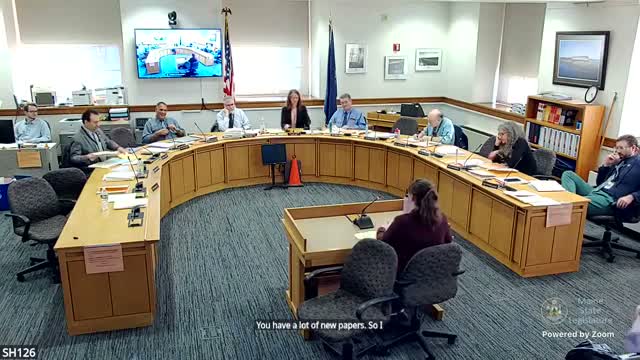
The committee considered a sponsor's amendment and accompanying materials for a pilot program authorizing the Maine Turnpike Authority to operate automated speed enforcement in up to three work zones along the Turnpike. Staff and Turnpike officials described the pilot as a limited, time‑bound experiment that would combine advance signage, variable‑message trailers, optional blue lights on designated vehicles or trailers, a grace period for notice, and camera/radar enforcement tied to a civil‑penalty administrative process.
Key elements adopted or discussed in the amendment:
- Pilot scope: limited to a small number of Turnpike work zones (three pilot sites identified by the authority) to gather operational data and safety outcomes.
- Blue‑light authority: the amendment explicitly authorizes the Turnpike Authority or its vendor to equip trailers/vehicles used in the pilot with blue lights to alert drivers; staff recommended pulling that provision into its own subsection for clarity so the system’s operation is not conditional on blue lights being present.
- Signage: the pilot requires prominent signage in advance of enforcement (the amendment specifies a minimum number of signs; committee adjusted to require at least three signs at pilot sites when blue lights are used).
- Data custody and privacy: personally identifiable information captured in the pilot is owned and maintained by the Turnpike Authority; vendors may not disclose that data without authority permission except to the subject of the data or by lawful order; the amendment requires destruction of identifying imagery within a defined retention window (committee discussed aligning retention with 21 days used elsewhere in related programs) and an annual independent audit of privacy safeguards.
- Appeals and enforcement: the authority must provide an administrative review pathway (registrant may pay or contest within 30 days); if a registrant is found liable and fails to pay, the authority will notify the Secretary of State to pursue suspension practices analogous to existing toll enforcement procedures; the judicial branch noted appeals of final agency actions would likely follow the Administrative Procedure Act (appeal to Superior Court) and flagged the choice of a resolve vs codified statute as an item with appellate implications.
- Reporting: the authority agreed to provide a progress briefing after approximately 12 months of operation so the committee can review outcomes prior to any statutory expansion.
Committee debate was robust. Proponents stressed evidence from other states showing speed reductions and lives saved when automated enforcement and clear advance warning are combined. Opponents raised civil‑liberties concerns about automated photo enforcement and the potential for a parallel administrative penalty regime; the judiciary's representatives urged careful drafting of appeal rights and highlighted that Judgeable review of final agency actions may be expected.
Final committee action: the committee voted to pass the sponsor’s amendment and advance the pilot as amended; staff were authorized to work with the Turnpike Authority to finalize statutory drafting and to include a reporting requirement and privacy safeguards in the language to be printed for the bill record.
What happens next: Committee staff will work with the Turnpike Authority on final amendment language, including clarifying the blue‑light subsection, specifying signage minimums, aligning the data retention timeframe (21 days was discussed), establishing the administrative review flow, and requiring a progress report to the Legislature roughly one year after pilot start.
Key elements adopted or discussed in the amendment:
- Pilot scope: limited to a small number of Turnpike work zones (three pilot sites identified by the authority) to gather operational data and safety outcomes.
- Blue‑light authority: the amendment explicitly authorizes the Turnpike Authority or its vendor to equip trailers/vehicles used in the pilot with blue lights to alert drivers; staff recommended pulling that provision into its own subsection for clarity so the system’s operation is not conditional on blue lights being present.
- Signage: the pilot requires prominent signage in advance of enforcement (the amendment specifies a minimum number of signs; committee adjusted to require at least three signs at pilot sites when blue lights are used).
- Data custody and privacy: personally identifiable information captured in the pilot is owned and maintained by the Turnpike Authority; vendors may not disclose that data without authority permission except to the subject of the data or by lawful order; the amendment requires destruction of identifying imagery within a defined retention window (committee discussed aligning retention with 21 days used elsewhere in related programs) and an annual independent audit of privacy safeguards.
- Appeals and enforcement: the authority must provide an administrative review pathway (registrant may pay or contest within 30 days); if a registrant is found liable and fails to pay, the authority will notify the Secretary of State to pursue suspension practices analogous to existing toll enforcement procedures; the judicial branch noted appeals of final agency actions would likely follow the Administrative Procedure Act (appeal to Superior Court) and flagged the choice of a resolve vs codified statute as an item with appellate implications.
- Reporting: the authority agreed to provide a progress briefing after approximately 12 months of operation so the committee can review outcomes prior to any statutory expansion.
Committee debate was robust. Proponents stressed evidence from other states showing speed reductions and lives saved when automated enforcement and clear advance warning are combined. Opponents raised civil‑liberties concerns about automated photo enforcement and the potential for a parallel administrative penalty regime; the judiciary's representatives urged careful drafting of appeal rights and highlighted that Judgeable review of final agency actions may be expected.
Final committee action: the committee voted to pass the sponsor’s amendment and advance the pilot as amended; staff were authorized to work with the Turnpike Authority to finalize statutory drafting and to include a reporting requirement and privacy safeguards in the language to be printed for the bill record.
What happens next: Committee staff will work with the Turnpike Authority on final amendment language, including clarifying the blue‑light subsection, specifying signage minimums, aligning the data retention timeframe (21 days was discussed), establishing the administrative review flow, and requiring a progress report to the Legislature roughly one year after pilot start.
Don't Miss a Word: See the Full Meeting!
Go beyond summaries. Unlock every video, transcript, and key insight with a Founder Membership.
✓
Get instant access to full meeting videos
✓
Search and clip any phrase from complete transcripts
✓
Receive AI-powered summaries & custom alerts
✓
Enjoy lifetime, unrestricted access to government data
30-day money-back guarantee
