House Education panel debates regional high school models, stops short of action
February 26, 2026 | Education, HOUSE OF REPRESENTATIVES, Committees, Legislative , Vermont
This article was created by AI summarizing key points discussed. AI makes mistakes, so for full details and context, please refer to the video of the full meeting. Please report any errors so we can fix them. Report an error »
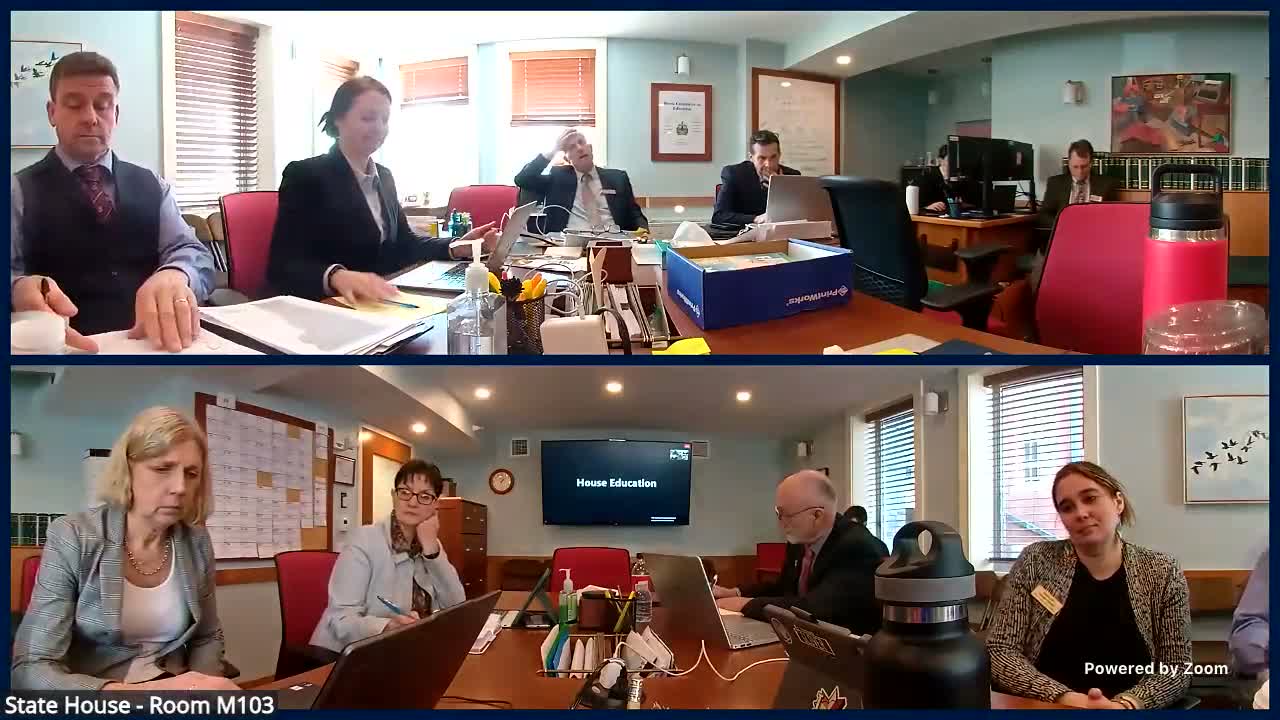
The House Education committee continued its Feb. 26 discussion of regional high schools and district consolidation, with members weighing voluntary 'model' programs and financial incentives against mandatory action.
Speaker 2, committee member, opened the session by revisiting the committee’s prior discussion and proposing a demonstration approach: "let's do a a pilot project so people can see how it works," they said, while acknowledging broad geographic differences across the state that could limit a one-size-fits-all model.
Why it matters: Committee members framed the debate around opportunity and equity. Proponents said larger districts could offer more programming and stability under the foundation funding formula; critics warned that forced closures would harm local communities and that voluntary approaches may leave some towns behind.
Speakers disagreed on the role of incentives and compulsion. Speaker 5 urged presenting the effort as a "model" towns could opt into and suggested building a clear framework for participation. Speaker 3 emphasized local voice, saying they were "not in favor of forced closures for communities that want to try a little bit harder" but supported some larger regional high schools where appropriate.
Discussion reviewed lessons from earlier consolidation legislation. Members recalled Act 46 incentives that included an ongoing merger-support grant and a one-time grant cited in the discussion as "at least a $100,000" to offset transition costs; participants also referenced tax-rate adjustments described in cents, but the total fiscal cost of those incentives was not specified in the committee exchange. As Speaker 2 put it, "Do we start thinking about the same sorts of incentives that we did with Act 46?"
Practical barriers dominated part of the debate. Members noted difficulties aligning contracts and salary schedules, and the operational strain of specialty staff covering multiple buildings — issues likely to complicate mergers. Speaker 6 warned of "piecemeal" effects in which some communities join consolidation while neighboring towns are left at a disadvantage.
On funding and responsibility, Speaker 5 said they had asked the agency secretary whether larger districts would be expected to help offset costs for struggling smaller schools and that the secretary "said yes" — a secondhand report by Speaker 5 and not a direct statement from the secretary in the transcript.
No formal proposals, motions or votes were recorded during the session. Speaker 2 closed by saying the committee would adjourn the meeting but remain present to observe another committee’s proceedings.
What’s next: Committee members asked staff and colleagues to continue work on design options and funding questions; the committee did not set a formal deadline or vote to request a bill at this session.
Sources: Committee discussion Feb. 26 as recorded in the committee transcript; direct quotations in this story are attributed to speakers labeled in the committee record.
Speaker 2, committee member, opened the session by revisiting the committee’s prior discussion and proposing a demonstration approach: "let's do a a pilot project so people can see how it works," they said, while acknowledging broad geographic differences across the state that could limit a one-size-fits-all model.
Why it matters: Committee members framed the debate around opportunity and equity. Proponents said larger districts could offer more programming and stability under the foundation funding formula; critics warned that forced closures would harm local communities and that voluntary approaches may leave some towns behind.
Speakers disagreed on the role of incentives and compulsion. Speaker 5 urged presenting the effort as a "model" towns could opt into and suggested building a clear framework for participation. Speaker 3 emphasized local voice, saying they were "not in favor of forced closures for communities that want to try a little bit harder" but supported some larger regional high schools where appropriate.
Discussion reviewed lessons from earlier consolidation legislation. Members recalled Act 46 incentives that included an ongoing merger-support grant and a one-time grant cited in the discussion as "at least a $100,000" to offset transition costs; participants also referenced tax-rate adjustments described in cents, but the total fiscal cost of those incentives was not specified in the committee exchange. As Speaker 2 put it, "Do we start thinking about the same sorts of incentives that we did with Act 46?"
Practical barriers dominated part of the debate. Members noted difficulties aligning contracts and salary schedules, and the operational strain of specialty staff covering multiple buildings — issues likely to complicate mergers. Speaker 6 warned of "piecemeal" effects in which some communities join consolidation while neighboring towns are left at a disadvantage.
On funding and responsibility, Speaker 5 said they had asked the agency secretary whether larger districts would be expected to help offset costs for struggling smaller schools and that the secretary "said yes" — a secondhand report by Speaker 5 and not a direct statement from the secretary in the transcript.
No formal proposals, motions or votes were recorded during the session. Speaker 2 closed by saying the committee would adjourn the meeting but remain present to observe another committee’s proceedings.
What’s next: Committee members asked staff and colleagues to continue work on design options and funding questions; the committee did not set a formal deadline or vote to request a bill at this session.
Sources: Committee discussion Feb. 26 as recorded in the committee transcript; direct quotations in this story are attributed to speakers labeled in the committee record.
Don't Miss a Word: See the Full Meeting!
Go beyond summaries. Unlock every video, transcript, and key insight with a Founder Membership.
✓
Get instant access to full meeting videos
✓
Search and clip any phrase from complete transcripts
✓
Receive AI-powered summaries & custom alerts
✓
Enjoy lifetime, unrestricted access to government data
30-day money-back guarantee
