House Appropriations hears H.660 on opioid-abatement allocations; vote delayed for fiscal details
February 26, 2026 | Appropriations, HOUSE OF REPRESENTATIVES, Committees, Legislative , Vermont
This article was created by AI summarizing key points discussed. AI makes mistakes, so for full details and context, please refer to the video of the full meeting. Please report any errors so we can fix them. Report an error »
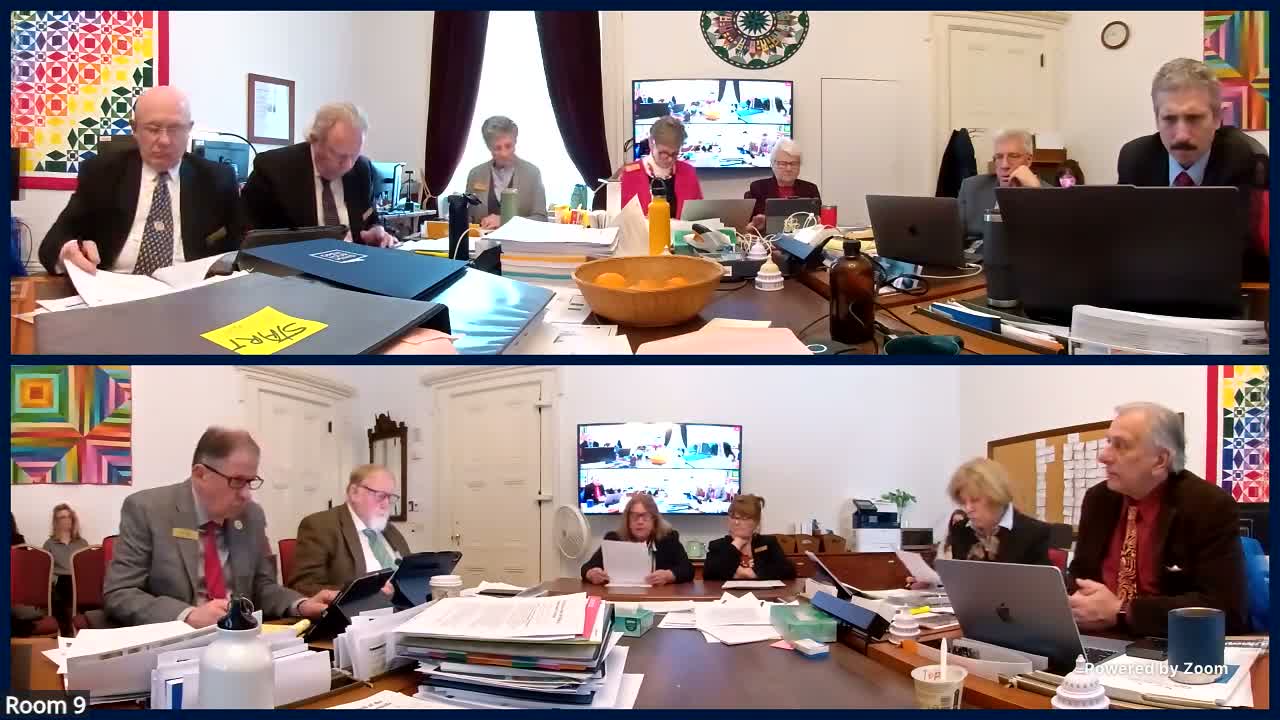
Montpelier — The House Appropriations Committee on Feb. 26 heard H.660, a standalone bill that packages fiscal-year 2027 appropriations from the opioid abatement special fund and proposes shifting four prevention items into the state’s Substance Misuse Prevention Special Fund. Committee members praised the bill’s clarity but pressed sponsors for more fiscal detail and coordination with existing prevention programs; the committee deferred a final vote until the next morning.
Appropriations Committee leadership opened the session by noting the bill does not touch the general fund. "General fund is not involved, so that makes it easier for us," the chair said. Teresa Wood, chair of the House Human Services Committee, and Rep. Steady briefed Appropriations on the package, which reflects a blend of committee and Department of Health recommendations.
"We have some questions and concerns about that," Wood said when describing the committee’s decision to move four prevention items out of the opioid abatement fund and into the substance-misuse prevention fund (seeded by the cannabis excise tax). Wood said the department agreed the items are prevention-related but preferred to keep them in its proposed budget instead.
Representative Steady walked the committee through program-level funding in H.660. Key FY27 appropriations from the opioid abatement special fund presented in the hearing include: $455,000 for outreach and case-management positions (funding portions of 26 community-based staff), $1.6 million for certified recovery residences, $850,000 for syringe-service programs, $1.1 million for peer recovery coaches in corrections and probation/parole offices, and line items for shelter-based harm reduction, transitional housing supports and targeted regional coordinators. Steady described geographic priorities for new recovery beds and said several items are intended as recurring expenditures "if fund capacity allows."
Steady also described technical adjustments to prior-year appropriations, including reallocating FY23 funds to support satellite medication-dosing locations and revising a wound-care telehealth pilot to $91,712.66. A prior one-time FY25 appropriation of $1 million for community-based stabilization beds was repealed in this package so funds can be reprioritized toward evidence-based, sustainable initiatives.
Noel Lang of the legislative fiscal office summarized the bill’s fiscal note and the fund picture. "There was approximately 11,800,000.0" in the opioid abatement special fund as of the office’s point-in-time estimate, Lang said, and he reported "1,400,000 in reversions" to the fund alongside "5,900,000.0 in appropriations," for an estimated net impact of roughly $4.5 million on the fund balance.
Lang cautioned that larger settlements tied to Purdue/Sackler remain unresolved and should not be counted until amounts and timing are finalized. "I would not recommend we spend it until we know how much it is and when it comes in," he said.
Committee members repeatedly pressed for clearer accounting and coordination. Several members asked how the 26 outreach positions are paid; staff clarified that some funded positions are community partner employees supported by grants rather than state payroll, while other field-based prevention staff are paid as state positions out of special funds. Members also asked whether prevention spending tied to the substance-misuse prevention special fund duplicates or coordinates with Medicaid- and education-funded prevention efforts; speakers said the committee had not received full documentation tying grant agreements to measurable outcomes and asked the health department and the Agency of Education to explain links between funding streams.
Wood and Steady told the committee they are proposing a pause on new appropriations from the opioid abatement fund for the next fiscal year except for four programs the committee recommends as ongoing annual items. The advisory committee that reviews opioid settlement proposals will be tasked with producing sustainability plans and outcome measures for previously funded projects if those programs seek ongoing support.
Members asked that the Human Services committee provide a comparison chart showing differences between the committee recommendations and the Department of Health/governor’s budget. Rep. Steady reported the Human Services committee approved the package with a 10-0-1 vote. Appropriations members said they would not vote on H.660 until they received the requested fiscal charts, grant lists and answers from agency staff; a final vote was scheduled for the next morning.
The Appropriations Committee also requested that medical personnel or clinicians be invited to discuss outcome measures and metrics the state should use to evaluate program effectiveness. The hearing closed with committee staff agreeing to circulate the requested materials prior to the next session.
Next steps: the Appropriations Committee plans to reconvene and take a final vote on H.660 the following morning after receiving the fiscal office charts and agency briefings.
Appropriations Committee leadership opened the session by noting the bill does not touch the general fund. "General fund is not involved, so that makes it easier for us," the chair said. Teresa Wood, chair of the House Human Services Committee, and Rep. Steady briefed Appropriations on the package, which reflects a blend of committee and Department of Health recommendations.
"We have some questions and concerns about that," Wood said when describing the committee’s decision to move four prevention items out of the opioid abatement fund and into the substance-misuse prevention fund (seeded by the cannabis excise tax). Wood said the department agreed the items are prevention-related but preferred to keep them in its proposed budget instead.
Representative Steady walked the committee through program-level funding in H.660. Key FY27 appropriations from the opioid abatement special fund presented in the hearing include: $455,000 for outreach and case-management positions (funding portions of 26 community-based staff), $1.6 million for certified recovery residences, $850,000 for syringe-service programs, $1.1 million for peer recovery coaches in corrections and probation/parole offices, and line items for shelter-based harm reduction, transitional housing supports and targeted regional coordinators. Steady described geographic priorities for new recovery beds and said several items are intended as recurring expenditures "if fund capacity allows."
Steady also described technical adjustments to prior-year appropriations, including reallocating FY23 funds to support satellite medication-dosing locations and revising a wound-care telehealth pilot to $91,712.66. A prior one-time FY25 appropriation of $1 million for community-based stabilization beds was repealed in this package so funds can be reprioritized toward evidence-based, sustainable initiatives.
Noel Lang of the legislative fiscal office summarized the bill’s fiscal note and the fund picture. "There was approximately 11,800,000.0" in the opioid abatement special fund as of the office’s point-in-time estimate, Lang said, and he reported "1,400,000 in reversions" to the fund alongside "5,900,000.0 in appropriations," for an estimated net impact of roughly $4.5 million on the fund balance.
Lang cautioned that larger settlements tied to Purdue/Sackler remain unresolved and should not be counted until amounts and timing are finalized. "I would not recommend we spend it until we know how much it is and when it comes in," he said.
Committee members repeatedly pressed for clearer accounting and coordination. Several members asked how the 26 outreach positions are paid; staff clarified that some funded positions are community partner employees supported by grants rather than state payroll, while other field-based prevention staff are paid as state positions out of special funds. Members also asked whether prevention spending tied to the substance-misuse prevention special fund duplicates or coordinates with Medicaid- and education-funded prevention efforts; speakers said the committee had not received full documentation tying grant agreements to measurable outcomes and asked the health department and the Agency of Education to explain links between funding streams.
Wood and Steady told the committee they are proposing a pause on new appropriations from the opioid abatement fund for the next fiscal year except for four programs the committee recommends as ongoing annual items. The advisory committee that reviews opioid settlement proposals will be tasked with producing sustainability plans and outcome measures for previously funded projects if those programs seek ongoing support.
Members asked that the Human Services committee provide a comparison chart showing differences between the committee recommendations and the Department of Health/governor’s budget. Rep. Steady reported the Human Services committee approved the package with a 10-0-1 vote. Appropriations members said they would not vote on H.660 until they received the requested fiscal charts, grant lists and answers from agency staff; a final vote was scheduled for the next morning.
The Appropriations Committee also requested that medical personnel or clinicians be invited to discuss outcome measures and metrics the state should use to evaluate program effectiveness. The hearing closed with committee staff agreeing to circulate the requested materials prior to the next session.
Next steps: the Appropriations Committee plans to reconvene and take a final vote on H.660 the following morning after receiving the fiscal office charts and agency briefings.
View the Full Meeting & All Its Details
This article offers just a summary. Unlock complete video, transcripts, and insights as a Founder Member.
✓
Watch full, unedited meeting videos
✓
Search every word spoken in unlimited transcripts
✓
AI summaries & real-time alerts (all government levels)
✓
Permanent access to expanding government content
30-day money-back guarantee
