Jack Smith tells House Judiciary he believed he had proof beyond a reasonable doubt in both probes
December 31, 2025 | House Committee on the Judiciary, House Committee, House, Legislative, Federal
This article was created by AI summarizing key points discussed. AI makes mistakes, so for full details and context, please refer to the video of the full meeting. Please report any errors so we can fix them. Report an error »
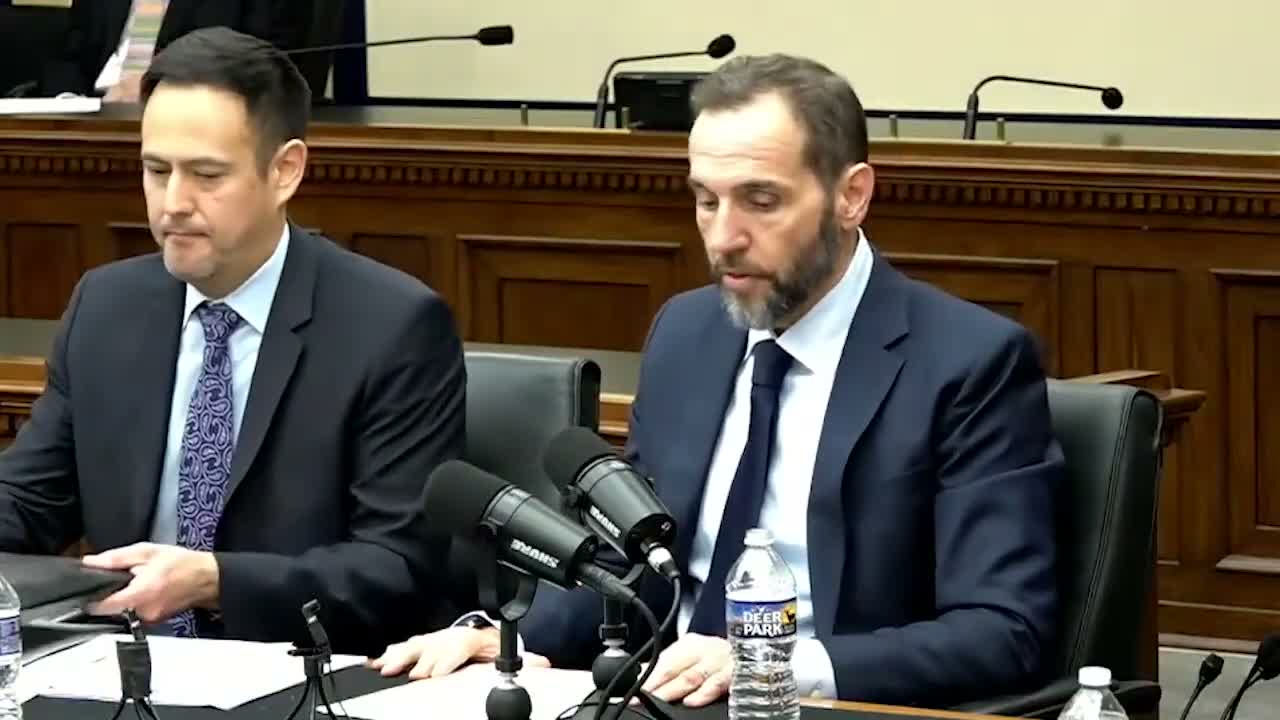
Former special counsel Jack Smith told the House Judiciary Committee in a closed-door deposition that he believed his investigations into the effort to overturn the 2020 election and the handling of classified documents produced evidence strong enough to secure convictions.
Smith opened by describing his three-decade prosecutorial career and the principles that guided his office. “I believe we had proof beyond a reasonable doubt in both cases,” he said when asked whether he had sufficient evidence to obtain convictions in the election‑interference and classified‑documents matters. He added that his team followed Department of Justice policies and consulted the Public Integrity Section and other DOJ components as appropriate.
Committee members pressed Smith on decisions about witness protection and gag orders. Smith said he sought gag orders under the court rules to protect witnesses and staff after public statements he said were intimidating; courts in the District of Columbia and the D.C. Circuit had, he said, found that the defendant’s public statements caused intimidation and risk to witnesses.
Smith and counsel discussed the limits on his testimony. He said Judge Cannon’s order and a December DOJ email constrained what he could say about material in Volume 2 of his report, which addresses the classified‑documents investigation; he told the committee he chose not to re‑review Volume 2 rather than risk violating the injunction. He also said he had offered to testify publicly and would welcome that opportunity, but that the committee declined to hold an open hearing.
On trial strategy, Smith described how the office would have relied on witnesses across multiple states — including some Republicans who refuted the fraud claims — and noncontent evidence such as toll records and contemporaneous documents to corroborate timeline and intent. He told lawmakers his office did not consider politics in its prosecution decisions and that any allegation it was weaponized was false.
Smith also warned about the consequences of the post‑investigation personnel changes at DOJ. He said career prosecutors and agents who served across administrations had been dismissed after the transition and that such departures risked long‑term loss of institutional expertise and could chill public‑service careers.
The deposition covered many other procedural and evidentiary questions; Smith repeatedly declined to discuss nonpublic details covered by the court order and DOJ guidance, saying he did not want to violate legal restrictions.
Smith opened by describing his three-decade prosecutorial career and the principles that guided his office. “I believe we had proof beyond a reasonable doubt in both cases,” he said when asked whether he had sufficient evidence to obtain convictions in the election‑interference and classified‑documents matters. He added that his team followed Department of Justice policies and consulted the Public Integrity Section and other DOJ components as appropriate.
Committee members pressed Smith on decisions about witness protection and gag orders. Smith said he sought gag orders under the court rules to protect witnesses and staff after public statements he said were intimidating; courts in the District of Columbia and the D.C. Circuit had, he said, found that the defendant’s public statements caused intimidation and risk to witnesses.
Smith and counsel discussed the limits on his testimony. He said Judge Cannon’s order and a December DOJ email constrained what he could say about material in Volume 2 of his report, which addresses the classified‑documents investigation; he told the committee he chose not to re‑review Volume 2 rather than risk violating the injunction. He also said he had offered to testify publicly and would welcome that opportunity, but that the committee declined to hold an open hearing.
On trial strategy, Smith described how the office would have relied on witnesses across multiple states — including some Republicans who refuted the fraud claims — and noncontent evidence such as toll records and contemporaneous documents to corroborate timeline and intent. He told lawmakers his office did not consider politics in its prosecution decisions and that any allegation it was weaponized was false.
Smith also warned about the consequences of the post‑investigation personnel changes at DOJ. He said career prosecutors and agents who served across administrations had been dismissed after the transition and that such departures risked long‑term loss of institutional expertise and could chill public‑service careers.
The deposition covered many other procedural and evidentiary questions; Smith repeatedly declined to discuss nonpublic details covered by the court order and DOJ guidance, saying he did not want to violate legal restrictions.
View the Full Meeting & All Its Details
This article offers just a summary. Unlock complete video, transcripts, and insights as a Founder Member.
✓
Watch full, unedited meeting videos
✓
Search every word spoken in unlimited transcripts
✓
AI summaries & real-time alerts (all government levels)
✓
Permanent access to expanding government content
30-day money-back guarantee
