Behavioral health providers ask subcommittee for steady funding, workforce investment and block-grant support
January 31, 2026 | Human Services Subcommittee, Ways and Means, Subcommittees, Senate, Committees, Legislative, Kansas
This article was created by AI summarizing key points discussed. AI makes mistakes, so for full details and context, please refer to the video of the full meeting. Please report any errors so we can fix them. Report an error »
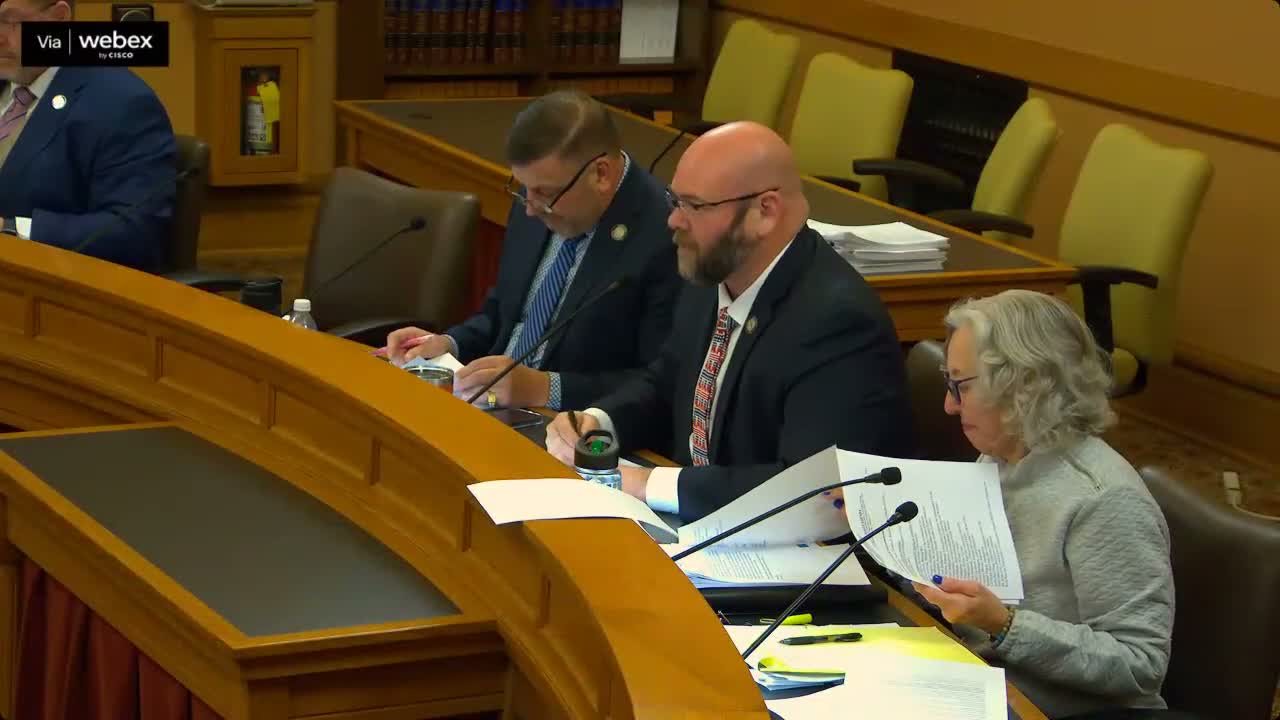
Multiple behavioral-health providers and advocacy groups urged lawmakers to preserve and expand funding streams that support community mental health, crisis response and addiction treatment.
Randy Kallstrom, president and CEO of Wyandotte Behavioral Health Network, asked the committee to continue a $4,000,000 allocation included in last year’s budget that underwrites services to uninsured clients, noting his organization provided over $5,000,000 in uncompensated care last year. “We are here today to request the continuation of the $4,000,000 to our grant funds that was included in the budget last year,” Kallstrom said.
Amanda Cunningham of Crosswinds Counseling and Wellness described how the Certified Community Behavioral Health Clinic (CCBHC) model expanded same-day access, mobile crisis response and vocational supports; she said nearly half of her clients are uninsured and urged continued state contract funding to sustain access. Joan Tammany of Comcare said the one-time $4,000,000 allocation for uninsured treatment last year should be made ongoing to support infrastructure and staffing.
Addiction-treatment providers asked for both workforce and block-grant supplements. Des Martins of Mirror requested $1,800,000 for a workforce development project to strengthen residential and outpatient treatment capacity, and Tyson McQuay urged a $6,000,000 state investment to preserve outpatient treatment capacity for uninsured residents after temporary COVID-era funds expire.
Clubhouse leaders described the model’s contributions to recovery and asked to raise a statutory lottery cap that would expand clubhouse funding without using state general funds. Andy Holtberg asked to increase the lottery-vending cap from $8,000,000 to $16,000,000 and said 25% of the additional funds would go to accredited clubhouses.
Providers and advocates said stable funding reduces reliance on hospitals, jails and emergency services and yields cost offsets. Comcare reported rapid intake access and high diversion rates from hospitalization; a recent study with KU estimated more than $5,000,000 in cost diversion for Comcare in 2024. Several witnesses tied funding directly to workforce retention and to the capacity to deliver community-based crisis services.
Committee members asked for follow-up about why some area agencies on aging did not receive prior proviso funds and discussed using the KDADS rate study as a guide for appropriate reimbursement. The subcommittee did not record votes during the hearing; staff indicated they will review written testimony and fiscal materials.
Randy Kallstrom, president and CEO of Wyandotte Behavioral Health Network, asked the committee to continue a $4,000,000 allocation included in last year’s budget that underwrites services to uninsured clients, noting his organization provided over $5,000,000 in uncompensated care last year. “We are here today to request the continuation of the $4,000,000 to our grant funds that was included in the budget last year,” Kallstrom said.
Amanda Cunningham of Crosswinds Counseling and Wellness described how the Certified Community Behavioral Health Clinic (CCBHC) model expanded same-day access, mobile crisis response and vocational supports; she said nearly half of her clients are uninsured and urged continued state contract funding to sustain access. Joan Tammany of Comcare said the one-time $4,000,000 allocation for uninsured treatment last year should be made ongoing to support infrastructure and staffing.
Addiction-treatment providers asked for both workforce and block-grant supplements. Des Martins of Mirror requested $1,800,000 for a workforce development project to strengthen residential and outpatient treatment capacity, and Tyson McQuay urged a $6,000,000 state investment to preserve outpatient treatment capacity for uninsured residents after temporary COVID-era funds expire.
Clubhouse leaders described the model’s contributions to recovery and asked to raise a statutory lottery cap that would expand clubhouse funding without using state general funds. Andy Holtberg asked to increase the lottery-vending cap from $8,000,000 to $16,000,000 and said 25% of the additional funds would go to accredited clubhouses.
Providers and advocates said stable funding reduces reliance on hospitals, jails and emergency services and yields cost offsets. Comcare reported rapid intake access and high diversion rates from hospitalization; a recent study with KU estimated more than $5,000,000 in cost diversion for Comcare in 2024. Several witnesses tied funding directly to workforce retention and to the capacity to deliver community-based crisis services.
Committee members asked for follow-up about why some area agencies on aging did not receive prior proviso funds and discussed using the KDADS rate study as a guide for appropriate reimbursement. The subcommittee did not record votes during the hearing; staff indicated they will review written testimony and fiscal materials.
Don't Miss a Word: See the Full Meeting!
Go beyond summaries. Unlock every video, transcript, and key insight with a Founder Membership.
✓
Get instant access to full meeting videos
✓
Search and clip any phrase from complete transcripts
✓
Receive AI-powered summaries & custom alerts
✓
Enjoy lifetime, unrestricted access to government data
30-day money-back guarantee
