Oregon committee hears hours of testimony on plan to limit state mortgage-interest deduction and fund down-payment aid
February 16, 2026 | Legislative, Oregon
This article was created by AI summarizing key points discussed. AI makes mistakes, so for full details and context, please refer to the video of the full meeting. Please report any errors so we can fix them. Report an error »
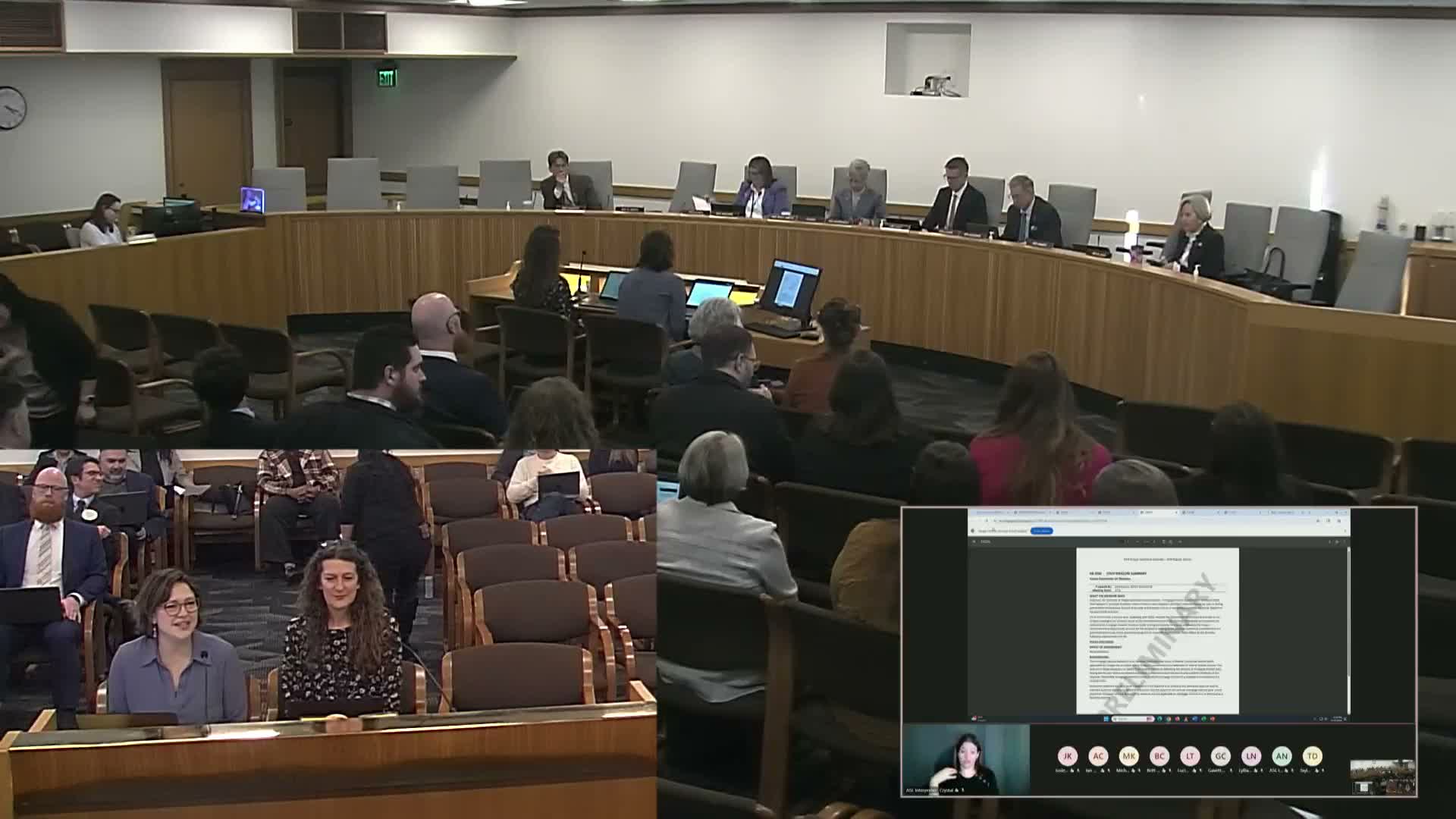
Representative Vanessa Hartman and supporters told the House Revenue Committee on Feb. 16 that House Bill 4136 would preserve the mortgage-interest deduction for primary residences but eliminate the deduction for secondary (non-rental) homes, directing the proceeds into a new Oregon Homeownership Opportunity Account to fund down-payment assistance programs.
Hartman, the bill sponsor, said the change would create a stable funding stream for down-payment assistance delivered by existing homeownership centers and would not require new state offices or HUD certification. "This bill ends state subsidy for personal use vacation properties that remain vacant for much of the year and redirects those dollars into a dedicated account for down payment assistance," she said.
Why it matters: Supporters argued the mortgage-interest deduction disproportionately benefits higher-income taxpayers and does not effectively increase homeownership among lower-income or first-generation buyers. Senator James Ivory Manning Jr. told the committee the measure is narrow in scope and "does not affect the vast majority of Oregon homeowners." Witnesses estimated the change would generate roughly $9–10 million per year for down-payment assistance; advocates said that could support about 250 low- and moderate-income households annually.
Proponents included housing counselors and nonprofit housing developers who described long waiting lists and rapid program deployment if funding is secured. Valencia Ocampo, a homeownership counselor at the Native American Youth and Family Center, said her caseload includes more than 100 mortgage-ready households and over 120 families on a waiting list for assistance.
Opponents — led by the Oregon Realtors and coastal realtors — warned the bill would raise taxes for some homeowners who rely on the deduction and could depress economic activity in communities that depend on second-home spending. Dr. Tony Kelly, president of Oregon Realtors, said the measure "would advantage cash buyers who already represent a quarter of Oregon transactions" and could increase taxes for second-home owners by thousands of dollars in early mortgage years.
Several witnesses raised technical and equity questions. Some industry witnesses said Oregon’s decision to diverge from federal mortgage-deduction rules could create uncertainty and risk further erosion of the deduction for primary residences. Other speakers urged amendments to split funds between homeownership and homelessness prevention.
The hearing produced no committee vote on HB 4136 that day. The committee closed public testimony after hearing from more than two dozen witnesses who offered both individual stories and organizational positions. The next procedural step, if any, was not set in the hearing record.
Ending: The committee completed its agenda and adjourned after closing the public hearing.
Hartman, the bill sponsor, said the change would create a stable funding stream for down-payment assistance delivered by existing homeownership centers and would not require new state offices or HUD certification. "This bill ends state subsidy for personal use vacation properties that remain vacant for much of the year and redirects those dollars into a dedicated account for down payment assistance," she said.
Why it matters: Supporters argued the mortgage-interest deduction disproportionately benefits higher-income taxpayers and does not effectively increase homeownership among lower-income or first-generation buyers. Senator James Ivory Manning Jr. told the committee the measure is narrow in scope and "does not affect the vast majority of Oregon homeowners." Witnesses estimated the change would generate roughly $9–10 million per year for down-payment assistance; advocates said that could support about 250 low- and moderate-income households annually.
Proponents included housing counselors and nonprofit housing developers who described long waiting lists and rapid program deployment if funding is secured. Valencia Ocampo, a homeownership counselor at the Native American Youth and Family Center, said her caseload includes more than 100 mortgage-ready households and over 120 families on a waiting list for assistance.
Opponents — led by the Oregon Realtors and coastal realtors — warned the bill would raise taxes for some homeowners who rely on the deduction and could depress economic activity in communities that depend on second-home spending. Dr. Tony Kelly, president of Oregon Realtors, said the measure "would advantage cash buyers who already represent a quarter of Oregon transactions" and could increase taxes for second-home owners by thousands of dollars in early mortgage years.
Several witnesses raised technical and equity questions. Some industry witnesses said Oregon’s decision to diverge from federal mortgage-deduction rules could create uncertainty and risk further erosion of the deduction for primary residences. Other speakers urged amendments to split funds between homeownership and homelessness prevention.
The hearing produced no committee vote on HB 4136 that day. The committee closed public testimony after hearing from more than two dozen witnesses who offered both individual stories and organizational positions. The next procedural step, if any, was not set in the hearing record.
Ending: The committee completed its agenda and adjourned after closing the public hearing.
View the Full Meeting & All Its Details
This article offers just a summary. Unlock complete video, transcripts, and insights as a Founder Member.
✓
Watch full, unedited meeting videos
✓
Search every word spoken in unlimited transcripts
✓
AI summaries & real-time alerts (all government levels)
✓
Permanent access to expanding government content
30-day money-back guarantee
