Committee hears competing views on enterprise zone overhaul, industrial-site funding and permitting reforms
February 16, 2026 | Legislative, Oregon
This article was created by AI summarizing key points discussed. AI makes mistakes, so for full details and context, please refer to the video of the full meeting. Please report any errors so we can fix them. Report an error »
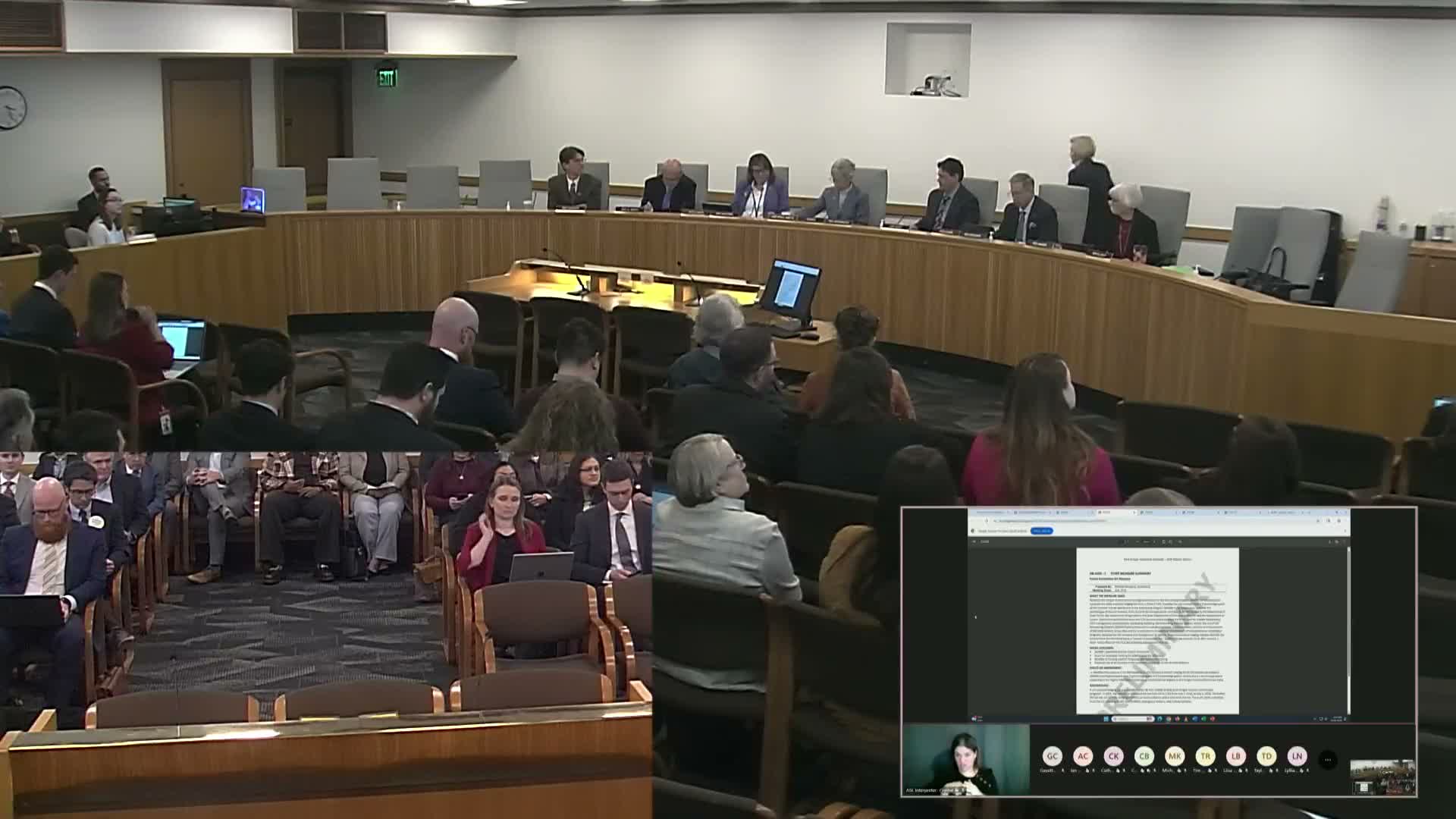
The House Revenue Committee heard extensive testimony Feb. 16 on House Bill 4084 A, a multi-part economic development package that would streamline permitting for large projects, add $40 million to the industrial site loan fund, and modernize the standard enterprise zone exemption.
Sarah Means, the governor’s workforce and economic development adviser, told the committee the bill would create a joint permitting council modeled on a federal Fast 41 program, require permitting transparency, and add $40 million to the industrial site loan fund housed at Business Oregon. Means said the dash-A5 amendment caps extended enterprise-zone exemptions at 10 years and narrows alternative performance criteria.
Local elected officials and business groups — including mayors, chambers of commerce, and trade associations — testified in favor, saying the changes would help communities prepare shovel-ready industrial land and attract capital-intensive projects. Tim Rosner of the Metropolitan Mayors Consortium and Sean O'Neil, mayor of Wilsonville, emphasized site readiness and the benefits of flexible enterprise zone criteria for locally tailored recruitment.
Opponents and cautious witnesses — including the Special Districts Association of Oregon and advocacy groups like Tax Fairness Oregon — raised fiscal concerns that lengthening property-tax abatements shifts costs to local taxing districts, notably schools and fire districts. Mark Landauer of the Special Districts Association urged stronger local approval mechanisms for extended abatements rather than delegating extension authority to a state agency. Several witnesses flagged tax subsidies for data centers as particularly costly and suggested limits or exemptions for such uses.
Committee action: Earlier in the meeting the committee held a work session on HB 4134; HB 4084A remained at the public-hearing stage and no committee vote on it is recorded in the hearing transcript.
Ending: The committee closed the public hearing on HB 4084 A after hearing from a broad set of stakeholders; witnesses left the committee with outstanding questions about local control over extended abatements and the performance of prior industrial-site programs.
Sarah Means, the governor’s workforce and economic development adviser, told the committee the bill would create a joint permitting council modeled on a federal Fast 41 program, require permitting transparency, and add $40 million to the industrial site loan fund housed at Business Oregon. Means said the dash-A5 amendment caps extended enterprise-zone exemptions at 10 years and narrows alternative performance criteria.
Local elected officials and business groups — including mayors, chambers of commerce, and trade associations — testified in favor, saying the changes would help communities prepare shovel-ready industrial land and attract capital-intensive projects. Tim Rosner of the Metropolitan Mayors Consortium and Sean O'Neil, mayor of Wilsonville, emphasized site readiness and the benefits of flexible enterprise zone criteria for locally tailored recruitment.
Opponents and cautious witnesses — including the Special Districts Association of Oregon and advocacy groups like Tax Fairness Oregon — raised fiscal concerns that lengthening property-tax abatements shifts costs to local taxing districts, notably schools and fire districts. Mark Landauer of the Special Districts Association urged stronger local approval mechanisms for extended abatements rather than delegating extension authority to a state agency. Several witnesses flagged tax subsidies for data centers as particularly costly and suggested limits or exemptions for such uses.
Committee action: Earlier in the meeting the committee held a work session on HB 4134; HB 4084A remained at the public-hearing stage and no committee vote on it is recorded in the hearing transcript.
Ending: The committee closed the public hearing on HB 4084 A after hearing from a broad set of stakeholders; witnesses left the committee with outstanding questions about local control over extended abatements and the performance of prior industrial-site programs.
Don't Miss a Word: See the Full Meeting!
Go beyond summaries. Unlock every video, transcript, and key insight with a Founder Membership.
✓
Get instant access to full meeting videos
✓
Search and clip any phrase from complete transcripts
✓
Receive AI-powered summaries & custom alerts
✓
Enjoy lifetime, unrestricted access to government data
30-day money-back guarantee
