Mayor Frank Scott Jr. highlights unity, local challenges at Little Rock MLK unity service; officials reiterate early-voting dates
January 19, 2026 | Little Rock City, Pulaski County, Arkansas
This article was created by AI summarizing key points discussed. AI makes mistakes, so for full details and context, please refer to the video of the full meeting. Please report any errors so we can fix them. Report an error »
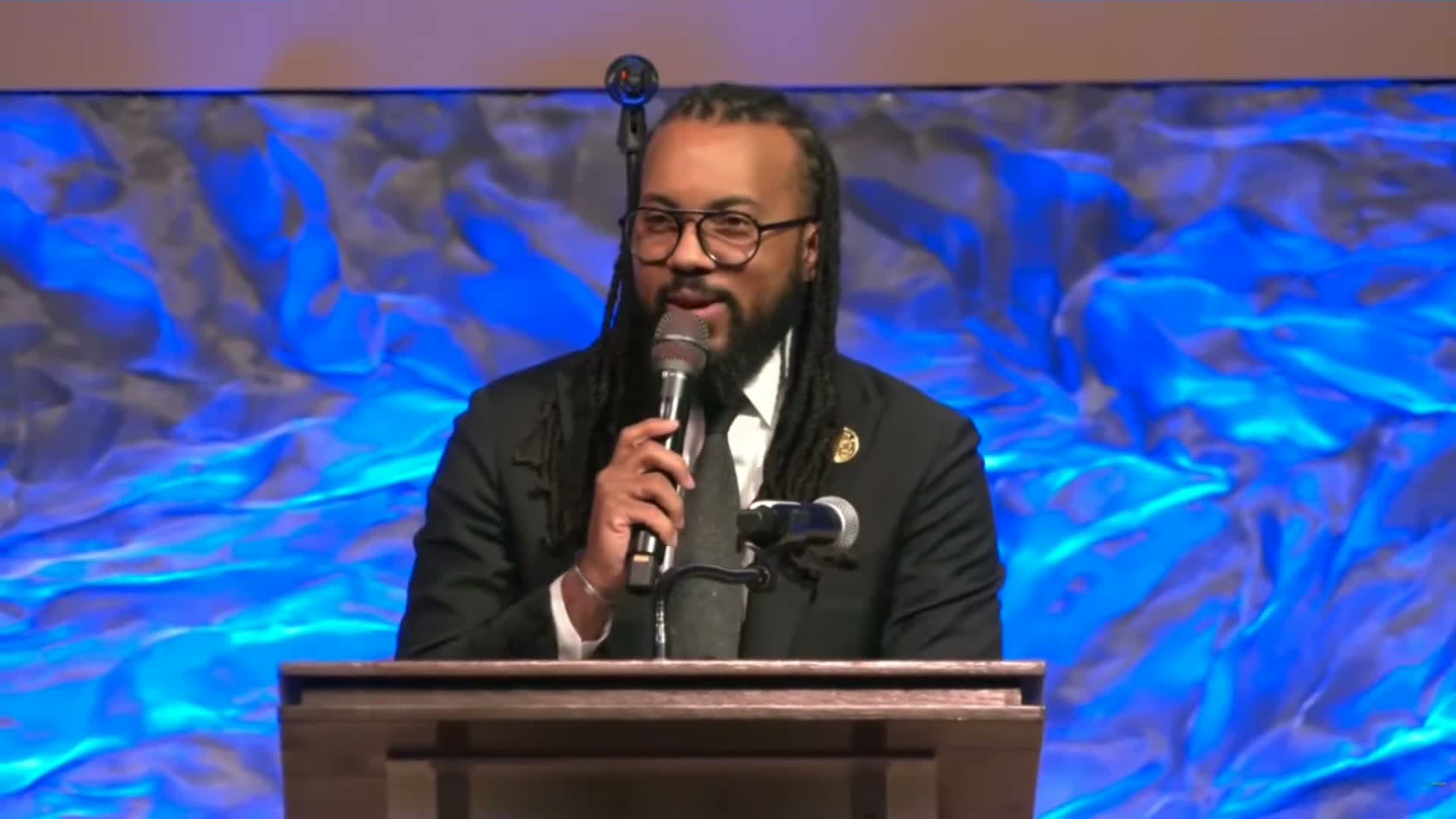
At a Martin Luther King Jr. unity service hosted Sunday evening at Saint Mark Baptist Church, Mayor Frank Scott Jr. and local clergy urged attendees to turn remembrance into action and highlighted challenges facing Little Rock.
An emcee introduced Mayor Frank Scott Jr., saying the city ‘‘has overseen the creation of more than 11,000 jobs to date’’ and that ‘‘Little Rock's population has grown to more than 203,000 residents.’’ Mayor Scott then addressed the congregation, invoking the Little Rock Nine and saying the city must ‘‘step up’’ to help neighbors in need amid trials such as homelessness, affordability pressures and public-safety concerns.
The program centered on the theme of active remembrance. ‘‘Remembrance requires action,’’ one preacher told the crowd, urging attendees not to treat the holiday as merely a day of rest but as a prompt for civic engagement and service. Multiple clergy led prayers and sermons asking congregants to pursue justice, feed the hungry and work toward unity across racial, religious and political lines.
Organizers used the gathering to communicate civic reminders. An on-stage announcement and a staff member identified onstage as Miss Cherry told the audience that early voting begins Tuesday, Feb. 17, and that the election is March 3; attendees were encouraged to look up their voting area online by entering their name and date of birth. The reminders appeared at several points in the program.
The event combined musical performances, communal prayer and brief civic remarks. The Philander Smith University Choir performed; university leadership was introduced from the stage. Clergy who spoke emphasized that honoring King’s legacy should include confronting ongoing institutional injustices and providing for basic needs in the community.
The service closed with a benediction and an invitation for program participants to join a group photograph. Organizers and speakers framed the evening as a call to translate remembrance into ongoing, organized action in Little Rock.
The mayor and event speakers did not announce specific new policy measures or votes at the service; the program mixed devotional elements with logistical announcements about voting and community engagement.
An emcee introduced Mayor Frank Scott Jr., saying the city ‘‘has overseen the creation of more than 11,000 jobs to date’’ and that ‘‘Little Rock's population has grown to more than 203,000 residents.’’ Mayor Scott then addressed the congregation, invoking the Little Rock Nine and saying the city must ‘‘step up’’ to help neighbors in need amid trials such as homelessness, affordability pressures and public-safety concerns.
The program centered on the theme of active remembrance. ‘‘Remembrance requires action,’’ one preacher told the crowd, urging attendees not to treat the holiday as merely a day of rest but as a prompt for civic engagement and service. Multiple clergy led prayers and sermons asking congregants to pursue justice, feed the hungry and work toward unity across racial, religious and political lines.
Organizers used the gathering to communicate civic reminders. An on-stage announcement and a staff member identified onstage as Miss Cherry told the audience that early voting begins Tuesday, Feb. 17, and that the election is March 3; attendees were encouraged to look up their voting area online by entering their name and date of birth. The reminders appeared at several points in the program.
The event combined musical performances, communal prayer and brief civic remarks. The Philander Smith University Choir performed; university leadership was introduced from the stage. Clergy who spoke emphasized that honoring King’s legacy should include confronting ongoing institutional injustices and providing for basic needs in the community.
The service closed with a benediction and an invitation for program participants to join a group photograph. Organizers and speakers framed the evening as a call to translate remembrance into ongoing, organized action in Little Rock.
The mayor and event speakers did not announce specific new policy measures or votes at the service; the program mixed devotional elements with logistical announcements about voting and community engagement.
View the Full Meeting & All Its Details
This article offers just a summary. Unlock complete video, transcripts, and insights as a Founder Member.
✓
Watch full, unedited meeting videos
✓
Search every word spoken in unlimited transcripts
✓
AI summaries & real-time alerts (all government levels)
✓
Permanent access to expanding government content
30-day money-back guarantee
