House oversight subcommittee hears warning on 'Stargate' data center’s costs, water use and privacy risks
February 26, 2026 | 2025-2026 House Legislature MI, Michigan
This article was created by AI summarizing key points discussed. AI makes mistakes, so for full details and context, please refer to the video of the full meeting. Please report any errors so we can fix them. Report an error »
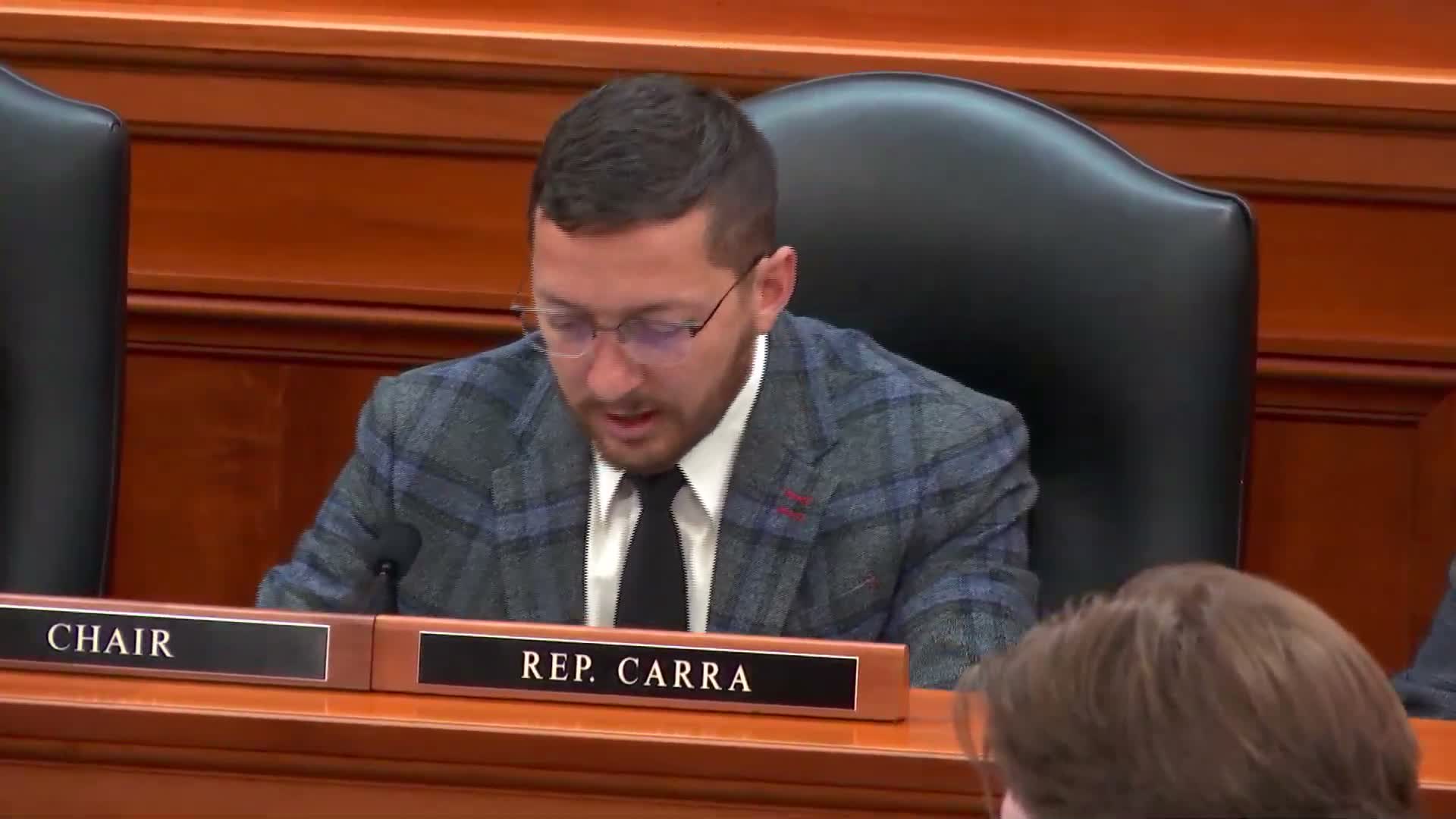
Christy Gillenwater, a retired senior management consultant, told the Michigan House Oversight Subcommittee on Corporate Subsidies and State Investments that the proposed Stargate hyperscale data center in Saline Township poses financial, environmental and privacy risks to Michigan.
Gillenwater described Stargate as "a $500,000,000,000 proposed AI infrastructure initiative" and said the overall consortium — which she listed as including NVIDIA, CoreWeave, Samsung, SK Hynix, Arm, G42, Oracle and others — aims to generate about 10 gigawatts of data‑center capacity. She told the committee Related Digital is the developer for the Saline Township site and estimated the local build at roughly $7 billion for 1.5 gigawatts of capacity.
Why it matters: Gillenwater argued that hyperscale data centers concentrate financial and physical risk. She warned that projects often omit full infrastructure costs and that utilities and taxpayers can be left to absorb upgrades or stranded‑asset liabilities. "By the time the impacts become concrete, the political leverage of local communities has largely evaporated," she told the committee.
Key claims and evidence: Gillenwater outlined three principal concerns. First, resource intensity: she said modern GPU‑heavy racks produce large heat loads and require advanced cooling and substantial water withdrawals, and that "hyperscale sites use hundreds of thousands and even millions of gallons of water a day." Second, fiscal exposure: she provided a conservative range, saying sales and use tax exemptions for Stargate Saline Township could cost Michigan between $190 million and $370 million per year. Third, privacy and surveillance: Gillenwater flagged G42 and other partners' work on biometric and genomic processing and said the consortium’s scale and partner mix raise risks around mass surveillance and data monetization.
Financing and market risk: The witness described Related Digital's role in lining up investors and said industry practice can include commission structures (roughly 2% to the developer, with about 1% to an individual vice president). She told the panel that private equity and special‑purpose vehicles can obscure project liabilities and that BlueOwl Capital previously declined to participate in the Saline Township financing, a development she cited as evidence of investor skepticism.
Committee questions: Members pressed Gillenwater on investor identity, the compensation and role of Related Digital and Ryan Fredericks (identified in the testimony as the spouse of Secretary of State Jocelyn Benson and listed as vice president of development), and whether the state is receiving measurable local benefits. Gillenwater said investors are being solicited by Related Digital and named potential institutional investors by category (for example, BlackRock, Vanguard, State Street) but stated specifics for Saline Township were "not known" to the witness.
Environmental and cleanup concerns: Representative Wigela and Gillenwater discussed wetlands impacts, the planned diesel backup generators and generator run time, and long‑term site cleanup liabilities. Gillenwater said some hyperscalers start operations using a patchwork of backup generation and that communities can face pollution and remediation responsibilities if sites are abandoned or become obsolete.
Conflicts of interest and timing: The testimony noted political donations and business ties, with Gillenwater saying the relationship between major developer interests and local political networks poses ethical concerns. She characterized the combination of large tax subsidies and private investments tied to local actors as "more than a conflict of interest" and "a hazard." Committee members recorded those concerns during questioning.
Outcome and next steps: The hearing concluded after questioning; the committee granted a procedural motion to excuse absent members by unanimous consent and adjourned. No formal policy decision or vote on Stargate subsidies occurred at this session.
Quotes from the hearing include: "Stargate is a $500,000,000,000 proposed AI infrastructure initiative," and "hyperscale sites use hundreds of thousands and even millions of gallons of water a day," both attributed to Christy Gillenwater.
The subcommittee did not vote on any changes to tax policy or project permits during the session. Members signaled concern on fiscal exposure, environmental impacts and potential surveillance uses; follow‑up items would include requests for more detailed investor disclosures and environmental permitting information.
Gillenwater described Stargate as "a $500,000,000,000 proposed AI infrastructure initiative" and said the overall consortium — which she listed as including NVIDIA, CoreWeave, Samsung, SK Hynix, Arm, G42, Oracle and others — aims to generate about 10 gigawatts of data‑center capacity. She told the committee Related Digital is the developer for the Saline Township site and estimated the local build at roughly $7 billion for 1.5 gigawatts of capacity.
Why it matters: Gillenwater argued that hyperscale data centers concentrate financial and physical risk. She warned that projects often omit full infrastructure costs and that utilities and taxpayers can be left to absorb upgrades or stranded‑asset liabilities. "By the time the impacts become concrete, the political leverage of local communities has largely evaporated," she told the committee.
Key claims and evidence: Gillenwater outlined three principal concerns. First, resource intensity: she said modern GPU‑heavy racks produce large heat loads and require advanced cooling and substantial water withdrawals, and that "hyperscale sites use hundreds of thousands and even millions of gallons of water a day." Second, fiscal exposure: she provided a conservative range, saying sales and use tax exemptions for Stargate Saline Township could cost Michigan between $190 million and $370 million per year. Third, privacy and surveillance: Gillenwater flagged G42 and other partners' work on biometric and genomic processing and said the consortium’s scale and partner mix raise risks around mass surveillance and data monetization.
Financing and market risk: The witness described Related Digital's role in lining up investors and said industry practice can include commission structures (roughly 2% to the developer, with about 1% to an individual vice president). She told the panel that private equity and special‑purpose vehicles can obscure project liabilities and that BlueOwl Capital previously declined to participate in the Saline Township financing, a development she cited as evidence of investor skepticism.
Committee questions: Members pressed Gillenwater on investor identity, the compensation and role of Related Digital and Ryan Fredericks (identified in the testimony as the spouse of Secretary of State Jocelyn Benson and listed as vice president of development), and whether the state is receiving measurable local benefits. Gillenwater said investors are being solicited by Related Digital and named potential institutional investors by category (for example, BlackRock, Vanguard, State Street) but stated specifics for Saline Township were "not known" to the witness.
Environmental and cleanup concerns: Representative Wigela and Gillenwater discussed wetlands impacts, the planned diesel backup generators and generator run time, and long‑term site cleanup liabilities. Gillenwater said some hyperscalers start operations using a patchwork of backup generation and that communities can face pollution and remediation responsibilities if sites are abandoned or become obsolete.
Conflicts of interest and timing: The testimony noted political donations and business ties, with Gillenwater saying the relationship between major developer interests and local political networks poses ethical concerns. She characterized the combination of large tax subsidies and private investments tied to local actors as "more than a conflict of interest" and "a hazard." Committee members recorded those concerns during questioning.
Outcome and next steps: The hearing concluded after questioning; the committee granted a procedural motion to excuse absent members by unanimous consent and adjourned. No formal policy decision or vote on Stargate subsidies occurred at this session.
Quotes from the hearing include: "Stargate is a $500,000,000,000 proposed AI infrastructure initiative," and "hyperscale sites use hundreds of thousands and even millions of gallons of water a day," both attributed to Christy Gillenwater.
The subcommittee did not vote on any changes to tax policy or project permits during the session. Members signaled concern on fiscal exposure, environmental impacts and potential surveillance uses; follow‑up items would include requests for more detailed investor disclosures and environmental permitting information.
View the Full Meeting & All Its Details
This article offers just a summary. Unlock complete video, transcripts, and insights as a Founder Member.
✓
Watch full, unedited meeting videos
✓
Search every word spoken in unlimited transcripts
✓
AI summaries & real-time alerts (all government levels)
✓
Permanent access to expanding government content
30-day money-back guarantee
