Disability council warns proposed forensic facility bill could sweep in people 'not restorable,' urges narrow definitions and independent oversight
February 26, 2026 | Judiciary, SENATE, Committees, Legislative , Vermont
This article was created by AI summarizing key points discussed. AI makes mistakes, so for full details and context, please refer to the video of the full meeting. Please report any errors so we can fix them. Report an error »
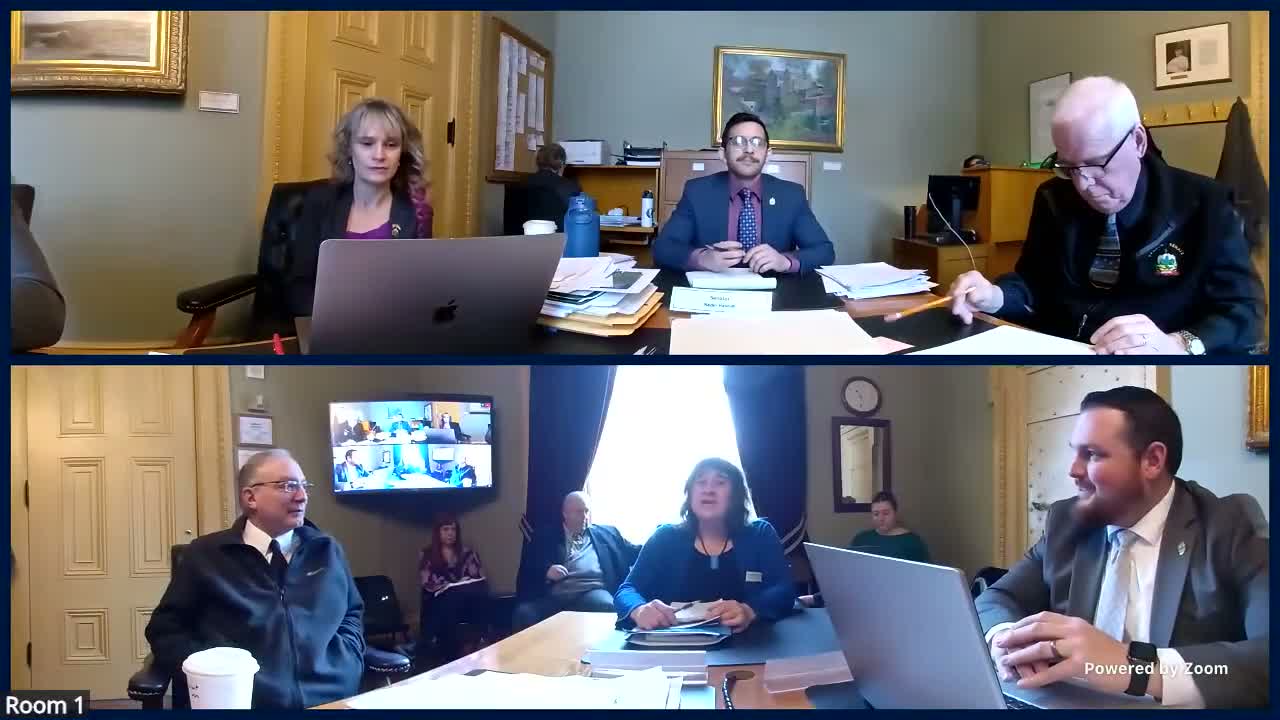
Susan Aronoff, policy staff for the Vermont Developmental Disabilities Council, testified to the Senate Judiciary Committee on Feb. 25 that a proposed bill to create a forensic competency restoration facility must be tightened to avoid detaining people who are unlikely to be restored to competence.
“Those are the words of record. They are very offensive to the people I serve,” Aronoff said of draft terms such as “mental disease and defect,” and she urged lawmakers to instead define the statute around the specific problem it seeks to solve: who can be made competent through restoration services. Aronoff warned the committee the current draft could admit people with intellectual or developmental disabilities and some treatment-refractory psychiatric patients who are unlikely to be restorable and who would therefore face indefinite confinement.
Aronoff drew on decades of experience representing people with disabilities and examples from other states. She cited Connecticut’s experiences at institutions such as Connecticut Valley Hospital and the Whiting Forensic Institute, and referenced the investigative findings at Woodside as evidence that mixing treatment and custodial roles can generate abuse without independent oversight. “The state cannot be both the ultimate regulator and the provider,” she said, arguing for outside oversight and clearer civil-rights protections for patients held in secure facilities.
Committee members asked whether the substitute phrase “qualifying condition” was intended to remove offensive terms; Aronoff urged the legislature to instead focus on a functional definition that limits admission to people whose competency can realistically be restored. She recommended excluding people with certain brain injuries or intellectual/developmental disabilities who, in practice, cannot meaningfully regain competency, and called for more resources and stronger community alternatives (including adequately resourced providers and housing) rather than defaulting to DOC settings.
Aronoff also recommended concrete oversight steps: specify which external bodies will review care, clarify patients’ rights to file complaints and lawsuits, and consider independent monitoring outside the Agency of Human Services. The committee asked staff to have Health and Welfare review the qualifying-condition language.
The committee did not take immediate action to adopt the recommended changes; members thanked Aronoff and recessed briefly to continue other agenda items.
“Those are the words of record. They are very offensive to the people I serve,” Aronoff said of draft terms such as “mental disease and defect,” and she urged lawmakers to instead define the statute around the specific problem it seeks to solve: who can be made competent through restoration services. Aronoff warned the committee the current draft could admit people with intellectual or developmental disabilities and some treatment-refractory psychiatric patients who are unlikely to be restorable and who would therefore face indefinite confinement.
Aronoff drew on decades of experience representing people with disabilities and examples from other states. She cited Connecticut’s experiences at institutions such as Connecticut Valley Hospital and the Whiting Forensic Institute, and referenced the investigative findings at Woodside as evidence that mixing treatment and custodial roles can generate abuse without independent oversight. “The state cannot be both the ultimate regulator and the provider,” she said, arguing for outside oversight and clearer civil-rights protections for patients held in secure facilities.
Committee members asked whether the substitute phrase “qualifying condition” was intended to remove offensive terms; Aronoff urged the legislature to instead focus on a functional definition that limits admission to people whose competency can realistically be restored. She recommended excluding people with certain brain injuries or intellectual/developmental disabilities who, in practice, cannot meaningfully regain competency, and called for more resources and stronger community alternatives (including adequately resourced providers and housing) rather than defaulting to DOC settings.
Aronoff also recommended concrete oversight steps: specify which external bodies will review care, clarify patients’ rights to file complaints and lawsuits, and consider independent monitoring outside the Agency of Human Services. The committee asked staff to have Health and Welfare review the qualifying-condition language.
The committee did not take immediate action to adopt the recommended changes; members thanked Aronoff and recessed briefly to continue other agenda items.
View the Full Meeting & All Its Details
This article offers just a summary. Unlock complete video, transcripts, and insights as a Founder Member.
✓
Watch full, unedited meeting videos
✓
Search every word spoken in unlimited transcripts
✓
AI summaries & real-time alerts (all government levels)
✓
Permanent access to expanding government content
30-day money-back guarantee
