Panel weighs volunteer retirement proposal modeled on Montana LOSAP
February 25, 2026 | 2026 Legislature ND, North Dakota
This article was created by AI summarizing key points discussed. AI makes mistakes, so for full details and context, please refer to the video of the full meeting. Please report any errors so we can fix them. Report an error »
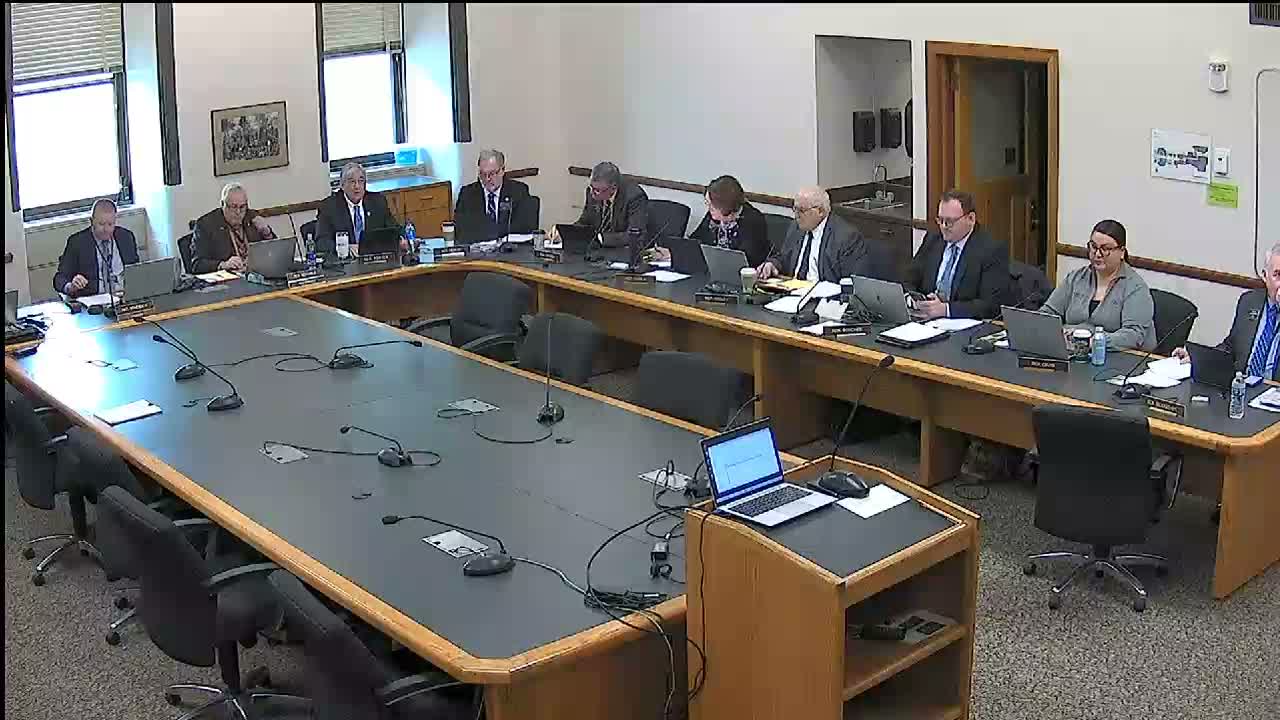
William Hollahan, executive director of Montana's Public Employee Retirement Administration, told North Dakota's Emergency Response Services Committee that Montana's length-of-service award plan (LOSAP) provides nominal pensions, disability and survivorship benefits for eligible volunteer firefighters and is funded by 5% of state fire insurance premium taxes and investment earnings. "Our plan in Montana is a multiple employer IRS tax qualified length of service award plan," Hollahan said, adding the trust held roughly $60,000,000 at the 06/30/2025 valuation and brought in about $4,000,000 in contributions last fiscal year.
Legislative counsel presented a draft North Dakota bill to create a volunteer retirement (LOSAP-like) plan administered by the North Dakota Public Employees Retirement System (PERS). Key draft features include opt-in eligibility for volunteer fire and EMS agencies, an annual reporting certificate to PERS (names, birth years, 30 hours of training and full-fiscal-year service), benefit formulas that scale — a base full benefit of $200 per month after 20 years of credited service (increasing with additional years) — and survivorship, disability and funeral reimbursements for line-of-duty incidents.
Committee members focused on funding and startup costs. The draft ties initial funding to changes in charitable-gaming transfers; committee members noted the gaming fund is projected to transfer tens of millions to the general fund in the biennium and discussed directing a portion to the new retirement fund. Representative Porter said indexing or tying the volunteer definition to a wage benchmark (rather than a fixed $10,000 nominal payment cap) could avoid an outdated dollar threshold; Senator Patton suggested using a benchmark such as a percentage of state minimum wage.
PERS staff advised the committee that establishing a new PERS-administered plan would require rulemaking, business-system changes and federal tax compliance review; PERS requested a later effective date (suggested 07/01/2028) to allow implementation and enrollment. The committee directed staff to prepare actuarial/fiscal estimates under alternate assumptions (for example, crediting up to 10 years and up to 15 years of prior service) and to evaluate separate scenarios for fire and ambulance volunteers.
Next steps: the committee asked legislative staff to produce fiscal and actuarial notes for 10-year and 15-year prior-service credit scenarios and to coordinate with PERS on timelines and rulemaking needs. If the committee proceeds, bills will be refined for introduction with funding options and an implementation schedule.
Legislative counsel presented a draft North Dakota bill to create a volunteer retirement (LOSAP-like) plan administered by the North Dakota Public Employees Retirement System (PERS). Key draft features include opt-in eligibility for volunteer fire and EMS agencies, an annual reporting certificate to PERS (names, birth years, 30 hours of training and full-fiscal-year service), benefit formulas that scale — a base full benefit of $200 per month after 20 years of credited service (increasing with additional years) — and survivorship, disability and funeral reimbursements for line-of-duty incidents.
Committee members focused on funding and startup costs. The draft ties initial funding to changes in charitable-gaming transfers; committee members noted the gaming fund is projected to transfer tens of millions to the general fund in the biennium and discussed directing a portion to the new retirement fund. Representative Porter said indexing or tying the volunteer definition to a wage benchmark (rather than a fixed $10,000 nominal payment cap) could avoid an outdated dollar threshold; Senator Patton suggested using a benchmark such as a percentage of state minimum wage.
PERS staff advised the committee that establishing a new PERS-administered plan would require rulemaking, business-system changes and federal tax compliance review; PERS requested a later effective date (suggested 07/01/2028) to allow implementation and enrollment. The committee directed staff to prepare actuarial/fiscal estimates under alternate assumptions (for example, crediting up to 10 years and up to 15 years of prior service) and to evaluate separate scenarios for fire and ambulance volunteers.
Next steps: the committee asked legislative staff to produce fiscal and actuarial notes for 10-year and 15-year prior-service credit scenarios and to coordinate with PERS on timelines and rulemaking needs. If the committee proceeds, bills will be refined for introduction with funding options and an implementation schedule.
Don't Miss a Word: See the Full Meeting!
Go beyond summaries. Unlock every video, transcript, and key insight with a Founder Membership.
✓
Get instant access to full meeting videos
✓
Search and clip any phrase from complete transcripts
✓
Receive AI-powered summaries & custom alerts
✓
Enjoy lifetime, unrestricted access to government data
30-day money-back guarantee
