House rejects amendment to change 10‑day enrollment drop rule after extended debate
February 26, 2026 | Joint & Standing, Committees, Legislative, Wyoming
This article was created by AI summarizing key points discussed. AI makes mistakes, so for full details and context, please refer to the video of the full meeting. Please report any errors so we can fix them. Report an error »
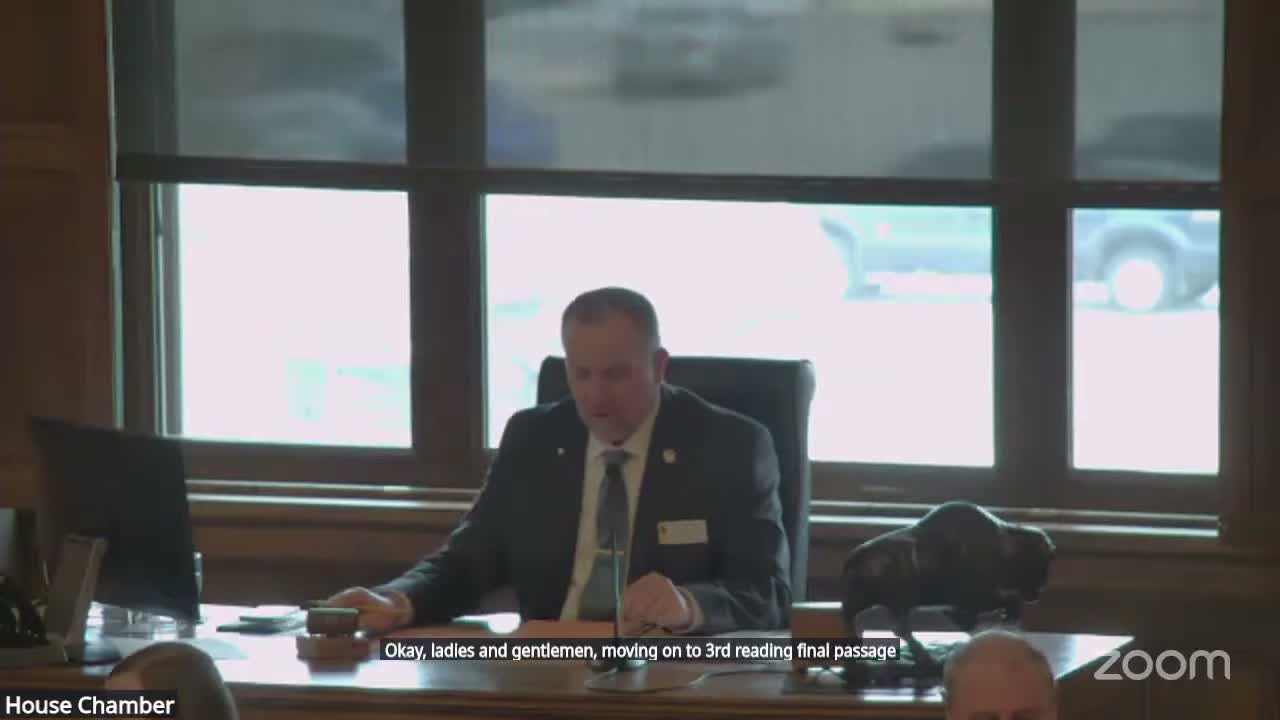
On third reading of Senate File 18 (student attendance and enrollment), Representative Jarvis moved a third‑reading amendment intended to exempt students who complete coursework early from the 10‑day automatic drop rule, arguing that districts currently retain students in low‑value study halls to preserve average daily membership (ADM) funding. Jarvis said, "The district will continue to receive full funding as long as the student is enrolled in school," and urged the body to allow districts to give credit and not 'hold kids hostage.'
Opponents, including Representative Lolli and Representative Ocean, countered that the amendment did not belong in this bill, that many exceptions already exist (homebound status, virtual learning) and that changing attendance percentages could inadvertently increase incentives for districts to manipulate schedules for funding. Speaker and members questioned whether the amendment was a policy change that should have been vetted in committee and through public testimony.
A second third‑reading amendment (No. 2) proposing changes to the percentage thresholds for full‑time attendance also drew extended debate touching on block schedules, homeroom periods and the state funding formula. Proponents said modest percentage adjustments would restore instructional minutes lost to homeroom and allow flexibility for work‑study or seminary release time without additional state cost; opponents said the changes would simply reward districts for reducing in‑class instruction and could increase ADM incentives.
Both amendments were ultimately not adopted on the House floor after roll calls and divisions were requested during the debate. After concluding the amendments discussion, the House voted to pass Senate File 18 by recorded roll call; the chief clerk reported the bill had received the affirmative vote of a majority of members present.
Lawmakers framed the exchange as a tension between preserving legislative intent, protecting students’ ability to earn credit outside the seat‑time model, and avoiding last‑minute policy insertions at the end of the legislative process. Several members urged that the topic could be pursued in committee with public testimony rather than on third reading.
Opponents, including Representative Lolli and Representative Ocean, countered that the amendment did not belong in this bill, that many exceptions already exist (homebound status, virtual learning) and that changing attendance percentages could inadvertently increase incentives for districts to manipulate schedules for funding. Speaker and members questioned whether the amendment was a policy change that should have been vetted in committee and through public testimony.
A second third‑reading amendment (No. 2) proposing changes to the percentage thresholds for full‑time attendance also drew extended debate touching on block schedules, homeroom periods and the state funding formula. Proponents said modest percentage adjustments would restore instructional minutes lost to homeroom and allow flexibility for work‑study or seminary release time without additional state cost; opponents said the changes would simply reward districts for reducing in‑class instruction and could increase ADM incentives.
Both amendments were ultimately not adopted on the House floor after roll calls and divisions were requested during the debate. After concluding the amendments discussion, the House voted to pass Senate File 18 by recorded roll call; the chief clerk reported the bill had received the affirmative vote of a majority of members present.
Lawmakers framed the exchange as a tension between preserving legislative intent, protecting students’ ability to earn credit outside the seat‑time model, and avoiding last‑minute policy insertions at the end of the legislative process. Several members urged that the topic could be pursued in committee with public testimony rather than on third reading.
Don't Miss a Word: See the Full Meeting!
Go beyond summaries. Unlock every video, transcript, and key insight with a Founder Membership.
✓
Get instant access to full meeting videos
✓
Search and clip any phrase from complete transcripts
✓
Receive AI-powered summaries & custom alerts
✓
Enjoy lifetime, unrestricted access to government data
30-day money-back guarantee
