Senate committee advances bill to clarify electronic-data searches after court ruling
February 25, 2026 | 2026 Utah Legislature, Utah Legislature, Utah Legislative Branch, Utah
This article was created by AI summarizing key points discussed. AI makes mistakes, so for full details and context, please refer to the video of the full meeting. Please report any errors so we can fix them. Report an error »
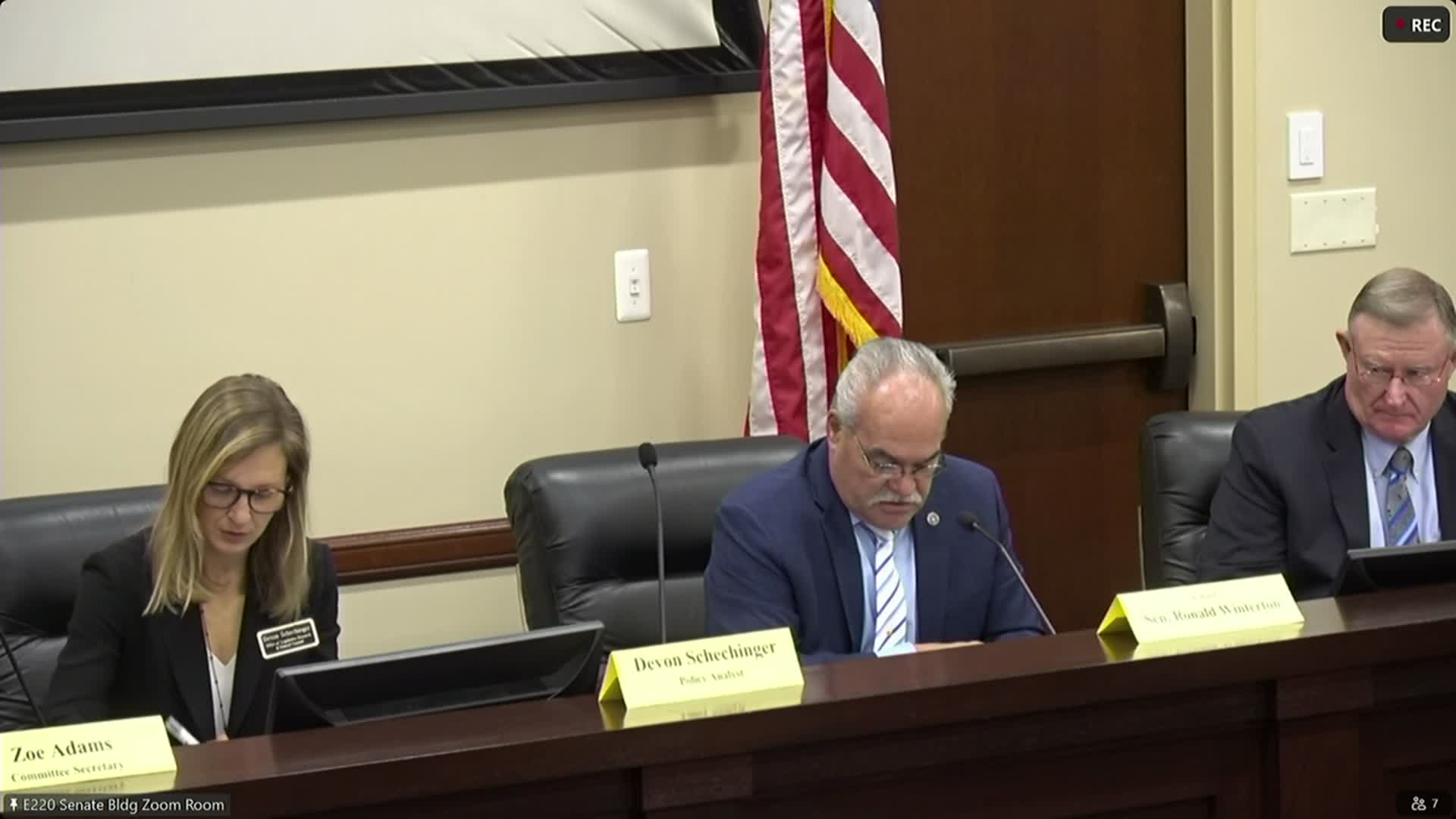
Second Substitute House Bill 261 moved out of the Senate Government Operations Committee on a 4–0 vote after its sponsor said the change will clarify how law enforcement obtains digital evidence while preserving Fourth Amendment protections.
Representative Jason B. Kyle told the committee the bill responds to a state supreme court decision and ‘‘puts a lot of clarity in the law’’ about when evidence covered by the Electronic Information Privacy Act may be obtained from another jurisdiction and when improperly obtained evidence should be suppressed. He said he worked with state stakeholders, including the Division of Public Safety and the attorney general's office, as well as defense attorneys, Comcast and the Libertas Institute, to reach the current compromise.
The bill’s sponsor and supporters said the change is intended to balance privacy and practical investigative needs. Jason Chipman, policy director for the Libertas Institute, told the committee the group was surprised by the court decision but supports the compromise, saying the bill “still allows law enforcement to do all of those interagency, investigations and trade information back and forth when they're doing that” while preserving privacy interests.
Committee members asked for concrete examples of how the measure would play out in practice. Representative Kyle explained the existing Electronic Information Privacy Act dates to 2014 and that the amendments are meant to reduce confusion about warrant and subpoena routes and prevent evidence from later being suppressed because procedures were unclear.
Senator Vickers moved the committee recommendation. The committee voted to favorably recommend the second substitute bill, and the measure will proceed to the next stage of the legislative process.
Representative Jason B. Kyle told the committee the bill responds to a state supreme court decision and ‘‘puts a lot of clarity in the law’’ about when evidence covered by the Electronic Information Privacy Act may be obtained from another jurisdiction and when improperly obtained evidence should be suppressed. He said he worked with state stakeholders, including the Division of Public Safety and the attorney general's office, as well as defense attorneys, Comcast and the Libertas Institute, to reach the current compromise.
The bill’s sponsor and supporters said the change is intended to balance privacy and practical investigative needs. Jason Chipman, policy director for the Libertas Institute, told the committee the group was surprised by the court decision but supports the compromise, saying the bill “still allows law enforcement to do all of those interagency, investigations and trade information back and forth when they're doing that” while preserving privacy interests.
Committee members asked for concrete examples of how the measure would play out in practice. Representative Kyle explained the existing Electronic Information Privacy Act dates to 2014 and that the amendments are meant to reduce confusion about warrant and subpoena routes and prevent evidence from later being suppressed because procedures were unclear.
Senator Vickers moved the committee recommendation. The committee voted to favorably recommend the second substitute bill, and the measure will proceed to the next stage of the legislative process.
Don't Miss a Word: See the Full Meeting!
Go beyond summaries. Unlock every video, transcript, and key insight with a Founder Membership.
✓
Get instant access to full meeting videos
✓
Search and clip any phrase from complete transcripts
✓
Receive AI-powered summaries & custom alerts
✓
Enjoy lifetime, unrestricted access to government data
30-day money-back guarantee
